Ten years ago, Europe was home to a host of cannabis trade shows: Spannabis Barcelona, Irun, Madrid, Málaga, Seville, Pamplona, Utrecht, Rome, Milan, Bologna, Naples, Vienna, Prague… Almost every European country had its own event—part trade show, part festival. Today, several of these events have disappeared or are on hiatus, and others have had to relocate.
However, the picture is not one of a general collapse. While some trade shows are fading away, others are breaking attendance records. Tighter regulations in certain countries and overall market trends are the main causes. The phenomenon resembles a consolidation rather than a disappearance: the landscape is narrowing to focus on a few major events, where the legal environment is most favorable. An in-depth look.
The Golden Age of European Trade Shows
The pioneers emerged in the early 2000s. CannaTrade, founded in Zurich in 2001, is considered the oldest hemp trade show in Europe, and Spannabis was established in Barcelona as early as 2002.
The 2010s saw this model expand and gain momentum. In Italy, Canapa Mundi established itself as the country’s largest event, with more than 28,000 attendees and 200 exhibitors in 2019. In Prague, Cannafest drew more than 31,000 visitors that same year. In the Spanish Basque Country, just a stone’s throw from the border, Expogrow—based in Irun—had become the go-to event for French enthusiasts, featuring concerts by bands like Cypress Hill when it first launched in 2012.
The business model was simple: seed banks, grow shops, and manufacturers of all kinds of growing equipment rented booths to reach an enthusiastic audience directly. For visitors, these events were much more than just a trade show—they were a place for socializing, activism, and celebration.
Between 2008 and 2015, the cannabis industry was booming in Europe, with countries like Spain and Italy showing greater tolerance than most other countries in the European Union. But starting in 2020, the tide began to turn, particularly in the wake of COVID-19, which—with a little hindsight—has significantly altered society as a whole, not to say that it has, in a way, weakened it.
Some trade shows are shutting down, while others are struggling to survive
Expogrow: a textbook example. The Irun trade show had already canceled its 2020 edition before returning in September 2022 to celebrate its tenth anniversary. A year later, the organizers announced another hiatus, citing, among other things, a decline in attendance that, in their view, reflected the state of the European and French cannabis markets. Since 2023, no return date has been announced. The fair’s loss of appeal is largely due to the fact that it was not possible to purchase the highest-quality feminized seeds directly from grow shops or seed shops in France.
Since 2015, this trend has changed drastically with the emergence of numerous retailers based in France, and the appeal for many visitors from France was clearly no longer the same. Expogrow was located just 300 meters from the French border; the concept made sense when it began in 2012, but a few years later, it was clearly no longer relevant, and the show naturally faded away over time. We attended every edition up through 2019—first with Dinafem, then the last one with SILENT SEEDS, for the 10th anniversary in 2022, the conclusion was clear and final…
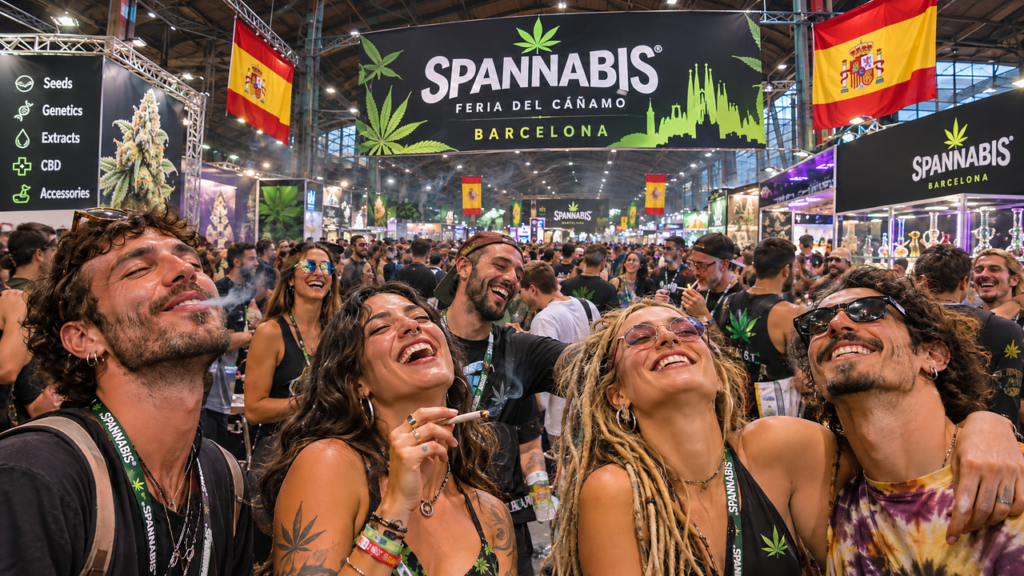
Spannabis, forced into exile. Europe’s most famous cannabis fair has left Barcelona after more than twenty years. The official reason: its venue in Cornellà was slated for demolition, with no suitable alternative available in the city. But the local climate had also grown harsher, with police raids on several cannabis clubs on the eve of the 2024 event and again for the final edition in 2025. Barcelona had everything it needed for extraordinary success: a community of more than 400 Cannabis Social Clubs within the city’s inner city limits, plus more than 10 days of high-quality events organized throughout the metropolis—events that sometimes drew far more interest from the general public than the Spannabis fair itself.
Furthermore, Barcelona offers a wealth of tourist attractions, including numerous options for fine dining, museums, a rich cultural heritage, and a very strong cannabis community in recent years—not to mention that it had undoubtedly become the epicenter of the industry in Europe. The move comes at a cost: the first edition in Bilbao, in April 2026, drew a fairly large number of visitors, but it still pales in comparison to the Barcelona event. Only time will tell what the future holds in the coming years.
Italy: An Industry in Turmoil. In April 2025, a security decree banned the processing and sale of hemp flowers, threatening some 3,000 businesses in the industry. The decree was signed on the very day Indica Sativa Trade—Italy’s oldest trade show in the sector—opened. For the organizers, seeing some of their potential exhibitors close down or leave the country is a direct threat.
Italy has clearly taken an incredible step backward, as it hosted no fewer than 5 or 6 cannabis trade shows until 2019; subsequently, the economic fragility caused by the COVID-19 pandemic and the political shift under the Meloni government have clearly undermined the entire Italian market—including CBD flowers and cannabidiol-containing products— as well as all grow shops and wholesale distributors.
The Causes of a Decline
The reasons behind all these gradual changes stem from general market trends, as the market reaches a certain level of maturity, but also from various legislative tightening measures, particularly in Spain, Italy, and France, while Germany—which had been very strict up until then—legalized the practice starting in the spring of 2024.
Persistent legal uncertainty. In most European countries, recreational cannabis remains illegal, and trade shows operate in a gray area. A change in the law, as in Italy, or a tightening of local regulations, as in Barcelona, can jeopardize an event overnight. Organizers must contend with uncertain permits and exhibitors who are reluctant to go public.
The Impact of COVID-19. The cancellations in 2020 and 2021 disrupted the momentum of many trade shows. Some, such as Expogrow and many others, never truly recovered, despite returning in 2022.
A dwindling audience. The initial excitement or “novelty effect” (around 2005–2008) has faded; many people are now equipped, or are making their purchases directly from online stores rather than at physical stores—whether franchised or not—such as the French franchise Culture Indoor, which was a mainstay in the French market and recently closed its doors for good.
Another factor is that the younger generation also seems, to some extent, less adventurous when it comes to taking up cultivation, which they perceive as too restrictive in various ways, or they have simply lost interest in this exciting hobby. This is understandable, since a country like Germany provides easy and legal access to finished products; it’s very easy to buy cannabis flowers at an attractive price-to-quality ratio, delivered right to any citizen’s doorstep by placing an order through a simple digital app. The quality may not be optimal, but access to the products is more than convenient.

It’s also important to note that consumption trends change over time; it appears that smoking is declining significantly among young people as well as in society as a whole, which is excellent news for public health and the overall well-being of the population—who, as a result, are naturally consuming less cannabis than in the past; that’s a fact.
Young people seem to be increasingly seeking a healthier lifestyle, adopting healthier daily habits—not only in terms of their diet but also by taking better care of their appearance through increased physical activity—and we can only encourage them in this regard.
High costs for exhibitors. Booth rental, travel, lodging, and staff: participating in several trade shows a year requires a significant budget. In an industry where many companies remain small, brands naturally tend to focus their spending on one or two major events.
Competition from the digital world. Social media, online stores, influencers: some of what trade shows used to offer—discovering new products and meeting brands—now takes place remotely, even though face-to-face interaction remains irreplaceable.
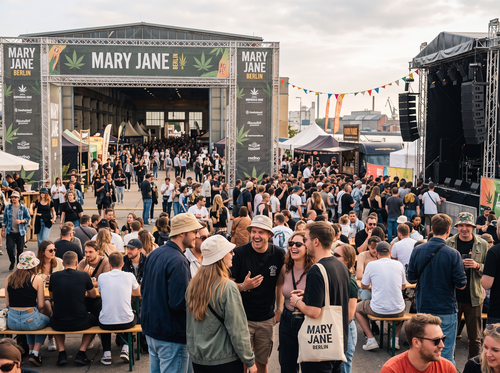
Germany’s appeal. Since the partial legalization in 2024, Germany has been drawing most of the attention and funding. Mary Jane Berlin grew from 28,500 visitors in 2023 to over 40,000 in 2024, then to about 60,000 to 65,000 in 2025. Every brand that invests in Berlin has fewer resources left for other European trade shows.
Those Who Persevere and Reinvent Themselves
At the other end of the spectrum, several events are doing very well. Mary Jane Berlin celebrated its tenth edition in June 2026 with more than 500 exhibitors and an expected 75,000 visitors, becoming the largest cannabis trade show in Europe. That same year, CannaTrade celebrated its 25th anniversary in Zurich, CULTIVA brought together more than 120 exhibitors in Vienna, and Cannafest is taking place in Prague from November 6 to 8 this year.
What the survivors have in common is that they have adapted their business model:
- More professionals. Buyer-only days, business areas, conferences: trade shows are becoming places where contracts are signed, not just parties. Some, such as the ICBC in Berlin, have even opted for a purely professional format, closed to the general public.
- A Focus on Medical Cannabis. Pavilions dedicated to healthcare professionals and regulatory discussions are supporting the growth of medical cannabis.
- The festival experience. Concerts, food trucks, talent contests: major trade shows are banking on events to attract a wider audience.
- A foothold in more open countries. Germany, Switzerland, the Czech Republic, Austria: thriving trade shows are often found where legislation is evolving.
New, smaller-scale events are also emerging, such as HamCan in Hamburg and Cannafair in Düsseldorf—proof that demand still exists when the legal framework is in place.
Conclusion
Cannabis trade shows aren’t disappearing from Europe—they’re consolidating. Smaller regional events, weakened by legal uncertainty, the pandemic, declining attendance, and exhibitors with limited budgets, are either shutting down or putting their events on hold. At the same time, a few major events based in more open-minded countries—Berlin foremost among them—are attracting the bulk of the audience and brands.
The future of these trade shows will depend largely on changes in the law. If other countries follow Germany’s example, new events could spring up. Conversely, every tightening of regulations risks causing others to disappear. One thing is certain: the culture of trade shows—a blend of business, networking, and celebration—still has a bright future ahead, though not necessarily as close to home as before.
This article is provided for informational purposes only. Cannabis laws vary by country: in France, the use and cultivation of cannabis containing THC remain prohibited.