
The fruit that's said to make you fly higher
You’ve probably heard it before—between puffs, on a forum, or from a friend who’s absolutely sure of what they’re talking about: “Eat a mango first; you’ll see, it hits twice as hard.” Some even specify the timing: 45 minutes beforehand, no more, no less. The tip has been circulating for years and has earned its reputation as fact simply through repetition.
We wanted to get to the bottom of it. And the verdict may disappoint fans of tropical fruits: to date, no scientific study has confirmed this tip, and the available data actually suggests otherwise. Here’s a look back at the history of a fragrant rumor.
In the beginning was myrcene
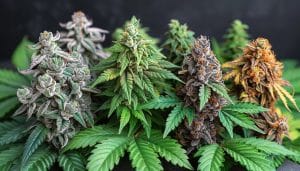
To understand the legend, we have to go back to a molecule with a rather strange name: myrcene. This terpene is part of the large family of aromatic compounds that give plants their scent. You’ll find it in the hops in your beer, in the basil in pesto, in thyme, lemongrass… and in mangoes. Most importantly, it’s one of the most abundant terpenes in many feminized cannabis strains on the market.
This gave rise to an intriguing theory: the myrcene in mangoes might pave the way for THC by helping it cross the blood-brain barrier—that natural filter that protects the brain. More THC in the brain means more effects. On paper, the theory holds up.
It’s even based on a grain of truth. Experiments conducted on rodents have shown that, in very high doses, myrcene has a calming effect, relaxes muscles, and can enhance the effects of certain sedatives. But there’s a world of difference between a lab mouse pumped full of myrcene and a recreational user who bites into a fresh, tasty mango before rolling a joint.

What Researchers Say
First observation—and it’s a significant one: no one has ever seriously tested the “mango trick” in humans. Not a single clinical trial, not a single controlled study. And there is nothing in the scientific literature to show that myrcene ingested through fruit leads to greater THC absorption in the brain (Terpenes and Testing).
When scientists examined the mechanism, the results were inconclusive. A study with the unequivocal title “Absence of Entourage” scrutinized six common terpenes, including myrcene. The result: none of them activate the CB1 and CB2 receptors—the brain’s “locks” that cannabis acts upon—and none of them alter THC’s effect on them.
The final blow comes from higher up. The entire argument rests on the famous “entourage effect”—the idea that terpenes enhance the effects of cannabinoids. However, a 2024 scientific review concludes that this synergy remains unproven (Entour), and Health Canada, in its authoritative summary on cannabis, deems the evidence in its favor to be quite slim (StratCann).
A Matter of Milligrams
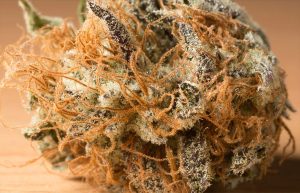
Let’s assume for a moment that myrcene does indeed have the power attributed to it, to some extent. That still leaves a problem of scale—or rather, of quantity: a mango contains less than one milligram, while a single gram of high-quality cannabis contains 5 to 20 mg.
| Source | Myrcene (order of magnitude) |
|---|---|
| A fresh mango | Less than 1 mg |
| 1 g of high-quality cannabis | 5 to 20 mg |
Put simply, the flower itself contains far more myrcene than the fruit that’s supposed to boost its levels (GreenState, StratCann). Add to that the fact that some of the ingested myrcene is broken down during digestion before it reaches the bloodstream, and we’re light-years away from the massive doses administered to laboratory animals.
To make matters more complicated, the content varies from one mango to another depending on the variety, ripeness, or harvest. Under these conditions, it’s hard to talk about a “miracle recipe.”
"And yet, I can tell the difference!"
This is the crystal-clear observation that comes up often, and it’s worth pausing for a moment to consider, because those who make it are often sincere.
The first suspect is the placebo effect. With cannabis, your state of mind and expectations matter a great deal. Anyone who eats a mango convinced they’ll get higher has every chance… of getting higher—or at least of feeling that way.
Then there are the contributing factors: the variety and the mood of the day, the dose, fatigue, whether your stomach is full or empty, and the atmosphere of the evening. All of these factors change the experience from one time to the next. Without a rigorous comparison, it’s impossible to know whether the mango really plays a fundamental role.
One thing remains obvious, though it’s easily overlooked: a thousand anecdotal accounts do not constitute proof. Controlled studies exist precisely to settle this kind of debate. When it comes to mangoes, however, such studies have simply never been conducted.

The verdict: a myth, until proven otherwise
At the end of the investigation, the mango comes out with a clean record—but also without any superpowers. Three pieces of evidence contradict the legend:
- No evidence in humans: no study has ever confirmed this effect.
- A mechanism that cannot be found: there is no evidence that myrcene helps THC reach the brain or that it acts on the same receptors.
- Ridiculously small amounts: Mangoes contain far less myrcene than cannabis itself.
But does that mean we should cross it off our shopping list? Absolutely not. Juicy, rich in vitamins, a powerful remedy for dry mouth, and so delicious—the mango remains an ideal companion in many situations. Enjoy it for what it is: an excellent fruit, not a substance that amplifies effects, as we might have thought until now.
A Final Word
The mango owes its reputation to a real molecule, an enticing theory, an urban legend, and, ultimately, a lot of word of mouth. But upon closer scrutiny, the claim doesn’t hold up: there’s no evidence, the mechanism remains unverifiable for now, and the available information on the subject is quite scant. To understand how you’re feeling, it’s best to consider the strain, its cannabinoid and terpene profile, and your current state of mind.
Research on terpenes is advancing rapidly and may hold some surprises. But until then, one thing is certain: the mango is, first and foremost, a delight—and that’s good enough for now!