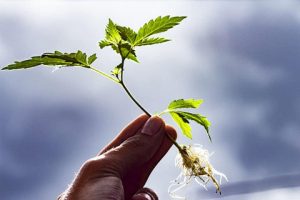
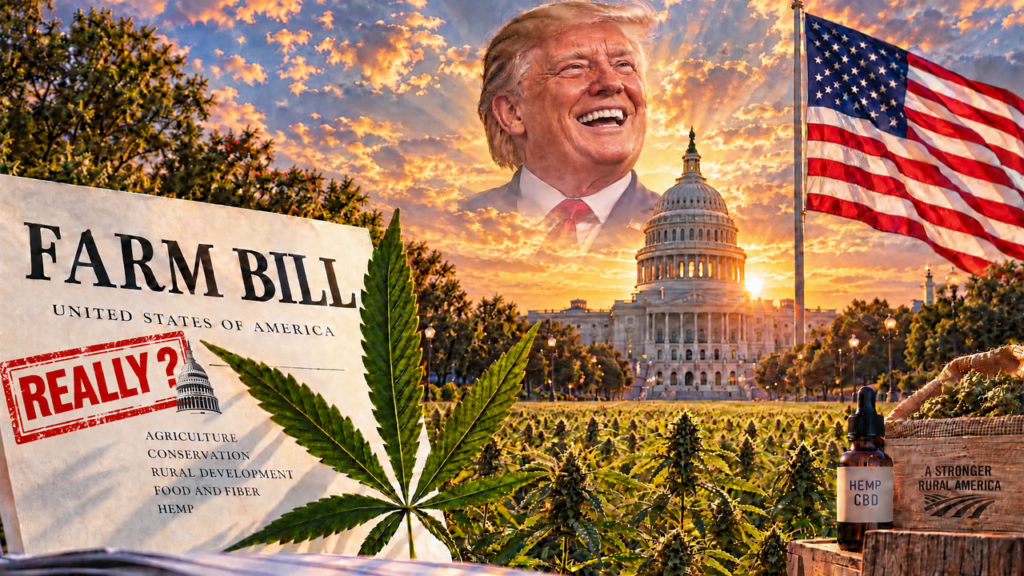
On December 11, 2026, cannabis seeds from THC-rich strains could lose their federal legal status in the United States. This shift does not stem from a major cannabis bill, but from a provision slipped into a budget bill signed in November 2025.
For seven years, the 2018 Farm Bill allowed hundreds of U.S. seed banks to freely ship their genetic material from one state to another. That model is coming to an end. Here’s a look back at a regulatory change that is causing concern among breeders, collectors, and growers far beyond U.S. borders.
2018: The Farm Bill Legalizes Hemp and Creates a Loophole
In December 2018, the Farm Bill removed hemp from the list of controlled substances. The bill defines hemp as any part of the Cannabis sativa L. plant, including seeds, containing no more than 0.3 percent delta-9 THC on a dry weight basis.
The criterion applies to a single molecule: delta-9 THC. Other cannabinoids, such as THCA or delta-8, are not included. This wording has given rise to what Americans call the “hemp loophole.”
For seeds, the outcome is decisive. A cannabis seed contains virtually no THC, regardless of how potent the plant it produces will be. When evaluated based on its own THC content, it therefore falls under the definition of hemp.
The Golden Age of American Seed Banks
In 2022, the DEA, the federal drug enforcement agency, confirmed in a letter that seeds with a delta-9 THC content of no more than 0.3% are indeed considered hemp. This statement has provided reassurance to an entire industry.
Online seed banks are popping up everywhere and shipping their strains to all 50 states, including those where recreational cannabis remains illegal. Breeders, collectors, and hobbyist growers now have access to a global catalog of autoflowering cannabis strains, fast-flowering, and feminized seeds are also included.
At the same time, this loophole is benefiting other products: THCA-rich flowers, delta-8 and delta-9 THC gummies, and tetrahydrocannabinol-infused beverages. It is this explosion of intoxicating products sold without regulation—even at gas stations—that has prompted Congress to take action.
November 2025: Congress redefines hemp
On November 12, 2025, Donald Trump signed the budget bill that ended the longest government shutdown in U.S. history (Public Law 119-37). Section 781 of the bill redefined the federal definition of hemp, without waiting for the next Farm Bill.
The main changes:
- Total THC instead of delta-9 alone: The 0.3% threshold now includes THCA, which converts to THC when heated.
- A limit of 0.4 mg of total THC per container for finished hemp-derived products.
- Exclusion of synthetic cannabinoids or those produced outside the plant.
- Exclusion of viable seeds from a plant containing more than 0.3% total THC.
Industrial hemp, grown for fiber or seed, remains explicitly protected. The Senate Appropriations Committee’s stated target: intoxicating products sold without regulation. The bill was set to take effect one year later, on November 12, 2026.
Why the Sale of Cannabis Seeds Is Under Threat
The new law no longer classifies a seed based on its own THC content, but rather on that of the plant from which it comes. A seed of a traditional variety, which contains almost no THC, will therefore be treated as the potent plant it will eventually become.
In practical terms, once the law takes effect, the seeds of virtually all THC-containing varieties—including autoflowering and feminized varieties—will no longer fall under the federal definition of hemp. They will be treated as marijuana under the Controlled Substances Act.
Expected effects:
- End of interstate shipments: send these cannabis seeds from one state to another would constitute the distribution of narcotics under federal law.
- National cannabis seed banks are under pressure: businesses that have built their operations around nationwide online sales will have to restructure, limit their operations to their own state, or go out of business.
- At-Risk Imports: Shipments from abroad containing genetic material that does not meet hemp standards may be held up.
- Seeds already purchased: The law targets commercial sales, not personal stockpiles acquired legally before the deadline.
- Only certified cannabis seeds derived from industrial hemp with low THC content will remain fully legal. One major unknown remains: how federal agencies—the FDA and the DEA—will enforce these rules in practice.
A reprieve until December 11, 2026
The restriction on seeds was scheduled to take effect on November 12, 2026. It was postponed to December 11, 2026, by a temporary funding bill signed on September 2, 2026 (H.R. 6500). Only cannabinoids that the plant cannot produce naturally remain subject to the restriction as of November 12.
| Date | Step |
|---|---|
| December 11, 2026 | Expected Effective Date of the Exclusion of Seeds and the Total THC Threshold |
| November 12, 2026 | Exclusion of Non-Natural Cannabinoids (Date Remains Unchanged) |
| September 2, 2026 | Signing of the 30-day extension (H.R. 6500) |
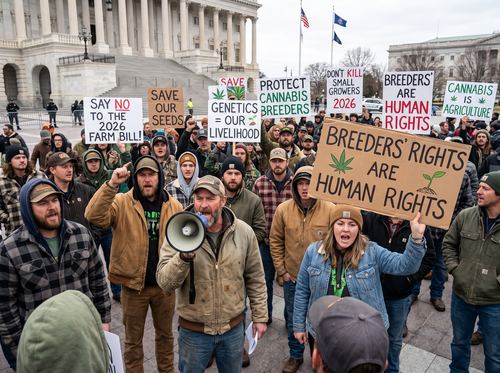
| August 6, 2026 | The 2026 Farm Bill Fails to Pass in the Senate Committee (10 to 11) |
| April 30, 2026 | The House Passes Its 2026 Farm Bill Without Changing the Ban |
| January 13, 2026 | Introduction of a bill to postpone the deadline to November 2028 (H.R. 7024) |
| November 12, 2025 | Signing of Public Law 119-37 |
| December 2018 | Farm Bill: Legalization of hemp containing 0.3% delta-9 THC |
The debate remains heated. On one side, lawmakers from both parties are advocating for a postponement until 2028, outright repeal, or a regulated framework with age limits and taxation. On the other hand, 35 state attorneys general have asked Congress to reject any further delays, and the White House has indicated that this 30-day extension would be the last one it would support. As of September 3, 2026, none of these bills had progressed beyond the committee stage (Hemp Law Group).
What are the implications for Europe and France?
U.S. law does not apply in Europe, but it is reshaping the global market. Major European seed companies—particularly those in the Netherlands and Spain—count the United States among their markets. Several of them are already warning their U.S. customers that international shipments of THC-containing genetics may dry up after December 11.
For European enthusiasts, the impact could be indirect: a reorganization of catalogs, market consolidation, or even fewer new genotypes from American breeders. Conversely, Europe could become a haven for the preservation and dissemination of varieties.
In France, the legal framework remains unchanged under this reform. The sale of cannabis seeds is tolerated there for collection purposes, while the cultivation of THC-rich plants remains prohibited. Only hemp varieties listed in the European catalog, with a THC content of less than 0.3%, may be legally cultivated.
Conclusion
Unless Congress passes a new bill by December 11, 2026, the United States will bring to a close the chapter opened by the 2018 Farm Bill of 2018. A reform designed to combat the unregulated sale of intoxicating substances will also put an end to the legal interstate trade in hemp seeds.
The reprieve granted in September shows that nothing is set in stone yet, and the coming weeks will be decisive. One thing is certain: the preservation and circulation of genetic material have never been more important to enthusiasts.