Is the golden age of cannabis in Spain coming to an end?
Over the past 20 years, Spain has been a fairly tolerant country when it comes to overall cannabis policies. It has been an attractive European destination in this regard since the early 2000s, with the emergence of grow shops and internationally renowned seed banks. At that time, Spain was home to cannabis fairs , as well as the emergence of “Cannabis Social Clubs” across the country, particularly in Barcelona, where many cannabis enthusiasts made their pilgrimage. Flowers and CBD products have recently created a veritable tsunami. Lately, it seems that the Iberian landscape is changing and that we are even witnessing a step backward: but what is currently happening in the land of Don Quixote?
The Rise of Spanish Grow Shops
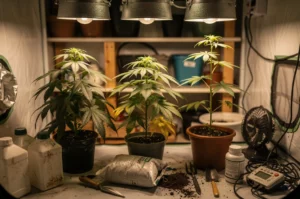
In the late 1990s, a new and rather exotic phenomenon began to emerge on the Iberian Peninsula; a new kind of store was popping up: grow shops. These stores were stocked with all the equipment needed to grow cannabis (lights, ventilation systems, grow tents, fertilizers, plant care products, growing media, pots, seeds, books, etc.)—which until then had been seen exclusively in the Netherlands—were gradually arriving in Spain. They appeared and rapidly multiplied in number throughout the country. Most of them resembled small, somewhat cluttered shops with a slightly mystical atmosphere inside. In reality, they were very welcoming places where any enthusiast could share their knowledge and experiences, acquire equipment and strains, and spend pleasant moments in the company of many cannabis growers, within this fabulous “old-school” gathering spot. Let’s remember that back then, the Internet wasn’t as widespread as it is today, so these places were true gold mines for enthusiasts of this amazing plant. The availability of both cultivation information and specialized products was much scarcer 20 years ago. That’s why grow shops enjoyed unprecedented success.

But in recent months, it appears that certain grow shops, located throughout the country, have been targeted by the Civil Guard, which is cracking down on, among other things, cannabis flowers CBD in these establishments. The authorities want to verify that these floral products comply with the legal limit of 0.2% THC, without taking CBD content into account. The traceability of the products’ origin, the corresponding administrative documents, and accounting records are also subject to verification and investigation. Some businesses have also been accused of complicity in or direct involvement in drug trafficking, as was the case with a grow shop in Almería, where 18 people were detained, including several employees. According to the Spanish police, the grow shop maintained a direct relationship with drug traffickers and acted as “collaborators directly involved in the development of an illegal activity.” In this case, the charges brought against them include several offenses against public health as well as membership in a criminal organization. The major issue is a lack of legal regulation that would allow each party to know precisely what options are available to them. This is clearly a dramatic shortcoming of the current Spanish system—a market that has been tolerated for more than twenty years and has now reached a considerable size. Unfortunately, it is not governed by any dedicated or appropriate legislation. This is a tragic situation for all stakeholders in the sector.
The Emergence of Spanish Seed Banks

If we put things in context, back then, the cannabis scene was largely dominated by the Dutch. It was the early 2000s, and Amsterdam was undoubtedly the iconic capital of recreational cannabis in Europe—"the place to be" back then. Every enthusiast felt compelled to make a pilgrimage worthy of the name to experience the legendary atmosphere of Dutch coffee shops, where they could indulge in the tempting array of products on offer. Strain names like Jack Herer, White Widow, Skunk #1, Super Skunk, Silver Pearl, Super Silver Haze, White Rhino, and Orange Bud were well known, and the growing word-of-mouth buzz reflected the public’s increasing fascination. The most popular most popular at the time were Sensi Seeds Bank, Dutch Passion, MR Nice, Serious Seeds, Green House Seeds, KC Brains, Sagarmatha Seeds, Soma Seeds, Homegrown Fantasy Seeds, and Nirvana. All of these seed banks were exclusively Dutch.
This dominance or monopoly was short-lived, however, because the success of Spanish grow shops was such that growers’ knowledge and experience rapidly advanced throughout Spain. Furthermore, the political climate in the Netherlands unfortunately took a turn for the worse starting in 2003–2004, with the emergence of a more repressive policy. This led to a sharp slowdown in the cannabis industry in the Netherlands and the relocation of most Dutch companies to Spain. The Spanish thus reacted quickly to the shift from the Netherlands and were able to make the most of the opportunity presented to them. So much so that they have become leading specialists in feminized cannabis seeds—something the Dutch had not yet managed to achieve at that time. This is how we saw the first cannabis seed banks emerge in Spain around 2005, with the founding of Dinafem, Sweet Seeds, Medical Seeds, Cannabiogen, Resin Seeds, Reggae Seeds, Eva Seeds, and others. It’s worth noting that most of these brands were originally founded by entrepreneurs from grow shops. Most of them ran both businesses simultaneously, as they were at the forefront of this market. The market’s response exceeded all expectations, as most of these seed banks achieved incredible success. The growth of some of them was so strong and rapid that their popularity spread worldwide. This was made possible by the global expansion of the Internet and extremely high demand. These Spanish companies have become true international leaders in the field. The legal trade in cannabis seeds in Spain had previously been supported by a 2003 ruling by the “Tribunal Supremo.”
"The Spanish have become leading experts in feminized cannabis seeds."

Over the past 20 years, Spain has been a fairly tolerant country when it comes to overall cannabis policies. It is a European country that has seemed attractive in this regard since the early 2000s, with the emergence of grow shops and internationally renowned seed banks. At that time, Spain was hosting an increasing number of cannabis fairs, as well as seeing the emergence of “ Cannabis Social Clubs ” popping up across the country, particularly in Barcelona, where many cannabis enthusiasts made the pilgrimage. Cannabis flowers and CBD products have recently created a veritable tsunami. Lately, it seems that the landscape in Spain is changing and that we may even be witnessing a step backward: but what exactly is happening right now in the land of Don Quixote?
Today, one year after the events, the case is still under investigation, with no further details available. This means that while their business model certainly worked for more than 20 years, despite their status as major players in the European cannabis industry, no one now knows how things will unfold for other companies engaged in the same activity. The dizzying growth of these companies—driven by strong demand and a booming market—has not, however, led to the establishment of a legal and regulatory framework. And that is the crux of the problem: you cannot build an empire on shaky foundations. The lack of political will in this regard further highlights the fragility of the entire system.