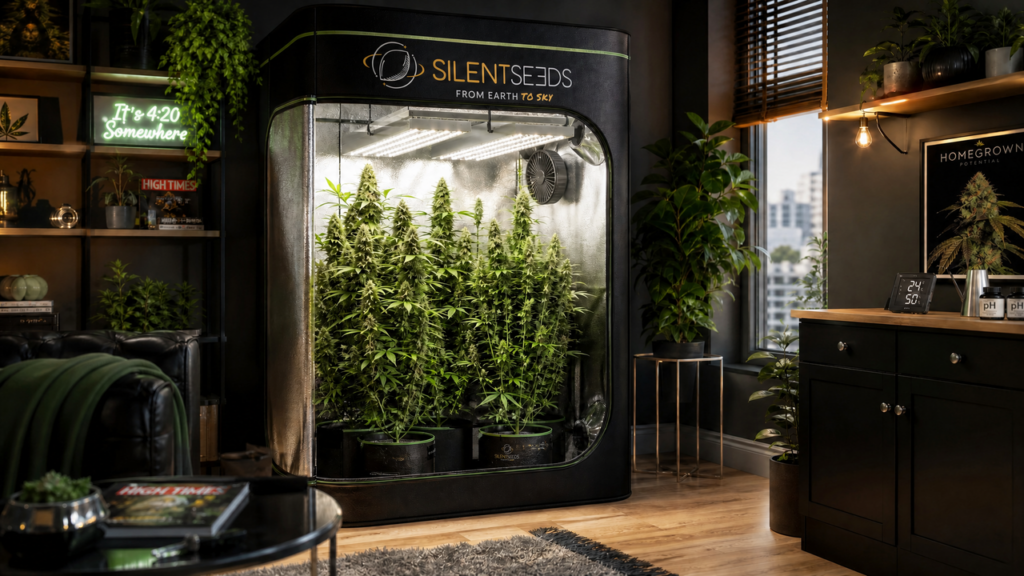
Growing your own cannabis is becoming increasingly popular, and the first step is, of course, to buy the highest-quality feminized cannabis seeds. This allows you to control the quality of your product, know exactly what you’re consuming, and—for many—save money in the long run. However, growing high-quality cannabis at home requires a bit of planning, patience, and a good understanding of the plant’s needs.
This comprehensive guide explains how to grow high-quality crops with dense, aromatic, and clean buds, whether you're a beginner or an intermediate grower.
The Benefits of Growing Your Own Cannabis
Growing your own cannabis has many benefits:
- Complete quality control: You know exactly what was used (fertilizer, growing medium, variety or varieties, methods).
- Optimal freshness: You harvest, dry, and store at the optimal time.
- Cost savings: In the short, medium, and long term, the cost per gram is well below the market rate. You’ll clearly enjoy lasting savings.
- Customization: You choose the varieties based on your tastes and goals.
- Personal satisfaction: Successfully growing your own plants is rewarding and educational. Growing cannabis is a fascinating activity that allows you to acquire a wealth of technical knowledge in various fields (electricity, gardening, DIY, etc.) and ultimately offers the opportunity to explore every stage of the production process—including the composition of all the natural elements that make up the plant, such as its flowers—down to the finest details.
Before You Begin: The Essentials
1. Learn about the law
Before you begin, make sure that growing cannabis is legal in your country or region. In some places, it is strictly regulated or prohibited. Complying with the law is essential to avoid legal problems. SILENT SEEDS expressly SILENT SEEDS anyone from violating the laws of any country in order to grow cannabis if such activity is illegal or prohibited in that country.
2. Choose a suitable growing area
You can grow:
- Indoors: in a grow tent, a dedicated room, or a converted closet.
- Outdoors: in a garden, on a balcony, in a greenhouse, or even directly in the ground, depending on the climate.
Indoor growing allows for complete control over the environment (light, temperature, humidity, air circulation, etc.), while outdoor growing offers potentially higher yields and abundant natural light.
3. Choose the Right Seeds
Choosing the right seeds is crucial for a high-quality harvest. Opt for:
- Top-quality SILENT SEEDS seeds.
- Varieties tailored to your space, your experience, and your needs.
- Stable, vigorous strains with a good flavor profile and a good yield.
Key Steps to Successful Home Gardening
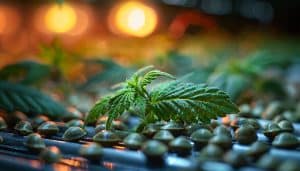
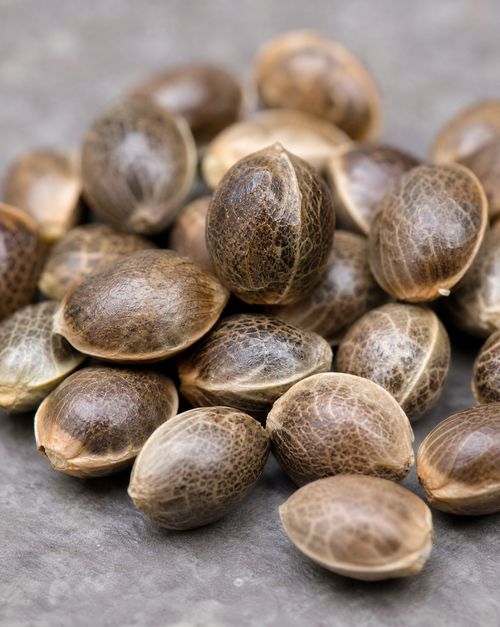
Step 1: Germination
Germination is the first stage of the cannabis life cycle. There are several methods:
- Paper Towel Method: Place the seeds between two damp paper towels (moistened with lukewarm water [about 26 °C]) in a dark, warm place (22–26 °C).
- Direct sowing in soil: Plant the seed 1–2 cm deep in a light, well-aerated growing medium, and maintain sufficient moisture without saturating the soil, in order to gradually promote high-quality “dryback” (a natural mechanism for respiration and oxygenation of the growing medium) from the earliest stages of the young seedlings.
- Germination in water: Soak the seeds in a glass of water for about one to eight days (lukewarm water at about 26°C / air temperature between 22 and 26°C), and check the seeds daily to ensure they germinate properly and do not rot, before finally planting them in soil.
Once the root is clearly visible, the seedling can be transplanted into its permanent pot.
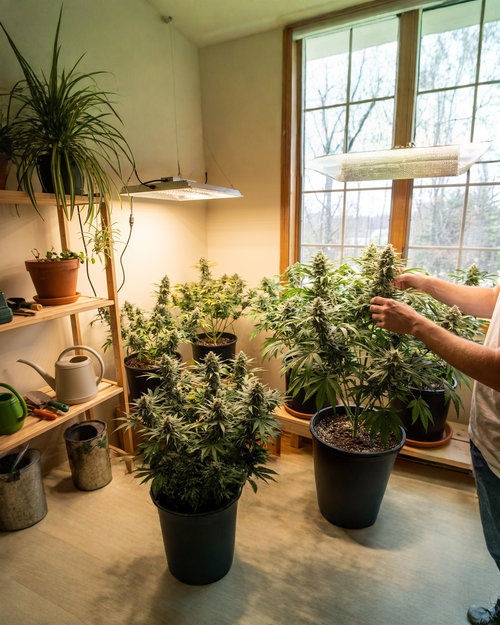
Step 2: The Vegetative Phase
During this phase, the plant develops its leaves and stems. To optimize growth:
- Lighting: 18 hours of light / 6 hours of darkness indoors.
- Temperature: 20–28°C during the day, 17–20°C at night.
- Humidity: 50–70%.
- Watering: moderate; allow the potting mix to dry out slightly between waterings to promote aeration (dryback).
- Nutrients: Enriched with nitrogen (N) to promote leaf growth, as well as growth of all parts of the plant.
This is also the time to apply training or pruning techniques (LST, trellising, SOG/SCROG, lollipopping, light or heavy defoliation, etc.) to maximize light exposure on all branches.
Step 3: Flowering
Flowering begins when the plant receives 12 hours of light and 12 hours of darkness per day. This is the phase during which buds form.
- Lighting: Strict 12/12 cycle.
- Temperature: 20–26°C during the day, 17–20°C at night.
- Humidity: 40–50% to prevent mold and disease.
- Nutrients: Reduce nitrogen; increase phosphorus (P) and potassium (K).
- Monitoring: Inspect the plants regularly for pests, mold, or possible nutrient deficiencies.
Flowering generally lasts between 8 and 12 weeks, depending on the variety, for the vast majority of today's traditional, autoflowering, and exotic strains.
Key Factors for Maximizing Quality
1. Genetics
The final quality depends largely on the strain chosen. The varieties in the SILENT SEEDS catalog SILENT SEEDS naturally richer in terpenes, cannabinoids, and flavonoids, and offer exceptional aromatic profiles.
2. The Environment
A stable and controlled environment promotes optimal growth:
- Good air circulation.
- Constant temperature and humidity.
- High-quality lighting (F.O.G. (Future Of Grow) horticultural LEDs recommended).
3. Nutrition
Use fertilizers that are appropriate for each stage:
- Growth: high in nitrogen.
- Flowering: rich in phosphorus and potassium.
- End of flowering: Rinse with clean water containing natural enzymes to help remove fertilizer residue.
4. Size and Training
Techniques such as LST (Low Stress Training), ScrOG (Screen of Green), and defoliation help optimize light penetration to all buds and significantly increase yield.
5. Harvesting at the Right Time
The timing of the harvest directly affects potency and flavor. Examine the trichomes with a magnifying glass:
- Clairs: Not ready yet.
- Milky: high THC content, ideal for a powerful, clear, invigorating, and balanced high.
- Amber: more relaxing effect; CBN levels gradually increase significantly.
- Optimal: Harvest when 30% of the trichomes are amber—this offers the best balance.
Harvesting, Drying, and Storage: The Final Steps
1. The Harvest
Cut the plants at the base or branch by branch. Handle them carefully so as not to damage the trichomes.
2. Drying
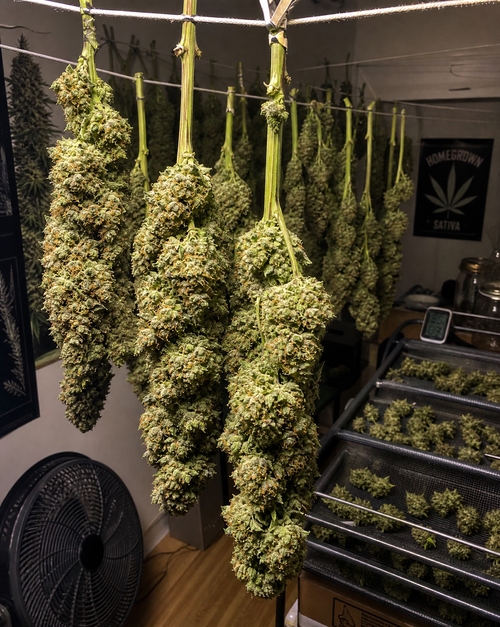
- Hang the branches in a dark, well-ventilated area where the temperature is consistently maintained at 15–20°C and the humidity is consistently maintained at 50–60%.
- Let it dry for 14 to 31 days, until the small twigs snap cleanly.
- Make sure the drying area has sufficient airflow—but not too much—to avoid the opposite effect of drying your harvest too quickly. Good airflow is necessary to prevent mold from forming during this stage, which could result in the loss of a significant portion of your harvest.
3. Curing (aging)
After about a month, place the heads in airtight jars:
- Open the jars 1 to 2 times a day for the first 2 weeks.
- Store in a cool, dark place where the temperature is preferably between 15 and 20 °C and the humidity is consistently between 40 and 50%.
- Curing improves the aroma, flavor, smoothness of the smoke, and burn quality of your flowers.
Common mistakes to avoid
- Overwatering or poor drainage.
- Excessive growth time.
- Neglecting ventilation.
- Harvesting too early or too late.
- Using the wrong type of fertilizer or applying it in the wrong amounts.
- Don't forget to rinse at the end of the flowering stage.
- Drying too quickly or under the wrong conditions.
Recommended Equipment for Successful Home Gardening
To grow the highest-quality cannabis at home, equipment plays a crucial role. Good equipment helps create a stable, optimized environment that allows your plants to reach their full genetic potential. Here are the essential pieces of equipment to consider.
1. Horticultural lighting: the heart of your system
Light is the driving force behind photosynthesis. Choosing the right lighting is therefore the most important investment you can make to maximize quality and yield.
Horticultural LED Lights
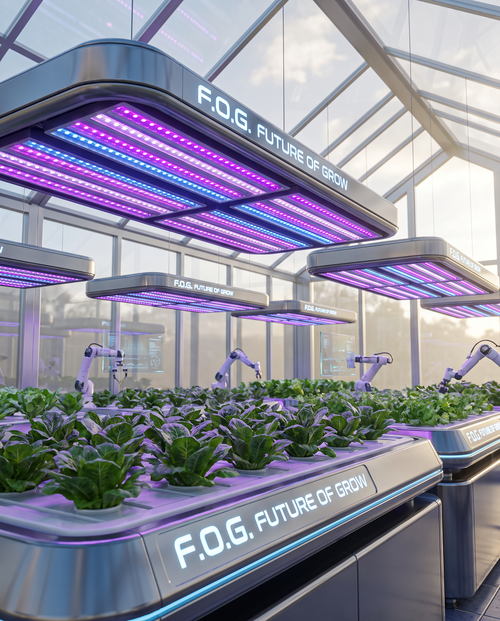
LEDs are now the gold standard for indoor gardening, thanks to their energy efficiency, long lifespan, and optimized light spectrum.
Benefits:
- Low electricity consumption.
- Generates little heat.
- Customizable light spectra (growth, flowering, full spectrum).
- Lifespan (50,000 hours on average).
Recommended brands:
- Future Of Grow (F.O.G) (Switzerland, high-end, recommended by Silent Seeds).
- Mars Hydro (e.g., TS 1000, decent value for the price).
- Lumatek (professional model).
- Spider Farmer (very popular among homeowners).
Recommended power:
- 300–400 W LED per 1 m².
- 600–1,000 W LED for 1.5–2 m².
HPS (High-Pressure Sodium) Lamps
Although they are older, HPS lamps are still used for their high output and their red/orange-rich spectrum, which is ideal for flowering.
Benefits:
- A spectrum that has been proven over decades.
- Good light transmission.
- Lower initial cost than high-end LEDs.
Disadvantages:
- Generates a lot of heat (requires good ventilation).
- Higher power consumption.
- Shorter service life (10,000 hours).
- Spectrum that is uncomfortable to the human eye
2. Ventilation and Air Extraction
Proper ventilation is essential for:
- refresh the air (by adding CO₂).
- dispel excess heat and moisture.
- prevent mold and disease.
- ensure proper oxygenation of the roots.
- eliminate pockets of stale air.
Air Extractors
There are several types of extractors, each designed to meet different needs:
Single-speed extractors:
- Simplicity and durability.
- Continuous operation.
- Ideal for small installations.
3-speed exhaust fans:
- Precise flow control.
- Adjustable based on temperature and humidity.
- Perfect for evolving crops.
Temperature-controlled extractors:
- Automatic adjustment based on temperature.
- Energy savings.
- Ideal for automating climate control.
Soundproofed exhaust fans:
- Significant reduction in noise.
- Perfect for sensitive environments (apartment, house).
Recommended brands:
- Prima Klima.
- Can-Fan.
- Garden HighPro.
- Winds.
- AC Infinity (with Wi-Fi control).
Sizing:
- Calculate the volume of the room (length × width × height).
- Aim for one complete air change per minute.
- Add an activated carbon filter to neutralize odors.
3. Climate Controllers
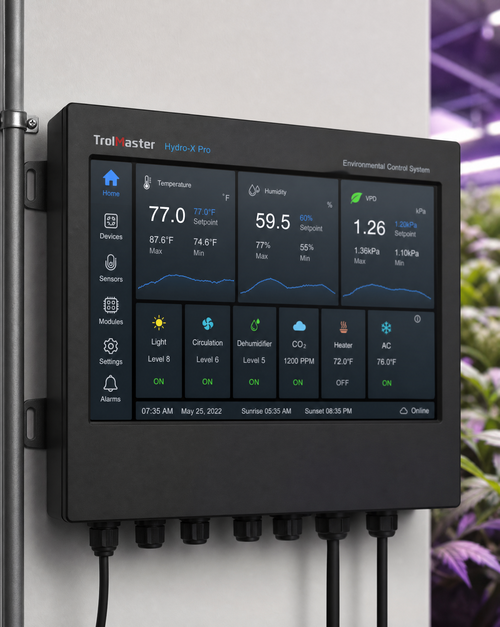
Climate controllers help automate and stabilize environmental parameters, which are essential for producing high-quality crops.
What they help manage:
- Temperature: via thermostat and sensors.
- Humidity: via a hygrostat and humidifiers/dehumidifiers.
- Ventilation: Exhaust Fan Speed.
- Photoperiod: light/dark cycles.
- Negative pressure: to optimize extraction and filtration.
Types of controllers:
Basic controllers:
- Simple thermostat.
- Hygrometer.
- Mechanical or digital timer.
Advanced controllers:
- Touchscreens.
- Wi-Fi or Bluetooth connectivity.
- Mobile apps for remote monitoring.
- Multi-device management (exhaust fans, ventilators, humidifiers, lamps, CO₂, etc.).
Recommended brands:
- AC Infinity (smart system with app).
- Trolmaster (temperature, humidity, and negative pressure control).
- GSE (temperature, humidity, and negative pressure control).
- Cli-Mate (specializing in cannabis).
- UCI (digital controllers).
Why invest in a controller?
- Climate stabilization (prevents plant stress).
- Energy savings (optimized operation).
- Disease prevention (mold, powdery mildew, etc.).
- More abundant and higher-quality harvests.
4. Other Essential Equipment
Activated Carbon Filters
- Neutralize odors from flowering plants.
- Must be sized according to the exhaust fan's airflow rate.
- Brands: Can-Filters.
Grow tent
- Reflects light (Mylar or reflective fabric).
- Provides thermal insulation.
- Makes climate control easier.
- Standard sizes: 60×60 cm, 80×80 cm, 100×100 cm, 120×120 cm, or 150×150 cm.
Pot and growing medium
- Fabric pots (air pots) for better root aeration.
- Specialized cannabis potting mix or coconut coir.
- Appropriate fertilizers (for growth, flowering, and boosters).
Irrigation System
- Manual watering (for beginners).
- Automatic system (drip irrigation, flood irrigation).
- Irrigation controllers for automating irrigation cycles.
Measuring Instruments
- Thermohygrometer (temperature + humidity).
- pH meter (for water and substrate).
- EC meter (electrical conductivity, for nutrients).
- Magnifying glass or microscope (for observing trichomes, pests, and certain pathogens).
5. Estimated budget for a complete installation
Here is a sample budget for a 100×100 cm tent:
| Equipment | Average budget |
| Grow Tent (100×100×200 cm) | 100-150 € |
| LED Light (400–600 W) | 300-1000 € |
| Extractor + charcoal filter | 100-200 € |
| Climate Controller | 50-150 € |
| Pots, potting mix, fertilizer | 50-100 € |
| Measuring Instruments | 30-80 € |
| Total | 630-1680 € |
This budget may vary depending on the quality of the equipment and the brands chosen.
Conclusion
Growing your own cannabis is an excellent way to produce a high-quality product tailored to your needs and preferences. With a little patience, a controlled environment, and a good understanding of the plant’s needs, you can achieve impressive harvests that are rich in aroma and effects.
Whether you’re a beginner or an experienced grower, the important thing is to learn, experiment, and always prioritize quality over quantity. Over time, you’ll naturally produce high-quality harvests, and you’ll eventually realize that these are the best in every way. An artisanal product usually offers an unparalleled tasting experience.