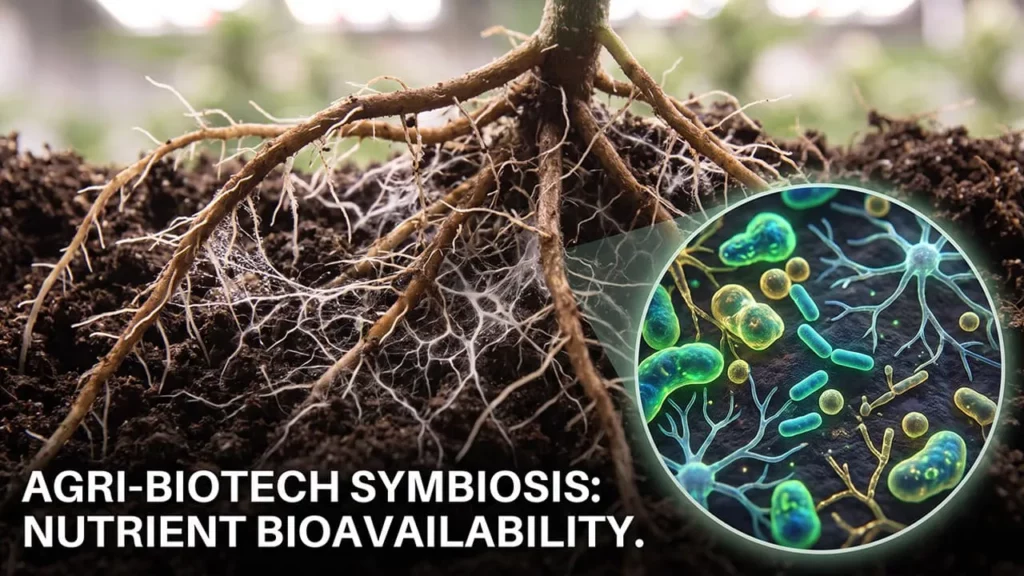
When we talk about growing cannabis, we often think of light, nutrients, or pH. Yet the true driving force behind a healthy, vigorous plant lies right beneath our feet: living soil. One gram of fertile soil can contain several billion microorganisms—such as bacteria, fungi, and protozoa—that work in symbiosis with the roots. Understanding and nurturing this invisible ecosystem means adopting an organic and sustainable cultivation approach—often referred to as “living soil”—which yields more resilient plants, more abundant harvests, and superior aromatic quality, with greater intensity and complexity.
In this article, the team at SILENT SEEDS explores with you the main beneficial microorganisms for cannabis cultivation, their specific roles, and how to effectively incorporate them into your growing medium.
Why is soil life so important?
Soil is not merely a physical medium for roots; it is a complex biological system. The microorganisms that inhabit it perform several essential functions:
- Decomposition of organic matter: They break down plant residues and compost into nutrients that plants can absorb.
- Nutrient fixation and solubilization: Certain bacteria make elements such as nitrogen, phosphorus, and iron available to plant roots—elements that would otherwise be inaccessible to them.
- Protection against pathogens: A rich microbial community occupies space and resources, limiting the growth of harmful fungi and bacteria.
- Improved soil structure: fungal filaments and bacterial exudates promote particle aggregation, aeration, and water retention.
- Boosting the plant's natural defenses: Certain microbes trigger induced systemic resistance (ISR), making cannabis more resilient to stress.
Biologically active soil thus reduces dependence on chemical fertilizers and pesticides, while producing plants that are perfectly balanced as a whole. The richness and biological complementarity of the elements present result in remarkable natural harmony.
The Major Families of Beneficial Bacteria
1. Nitrogen-fixing bacteria (Azotobacter, Rhizobium)
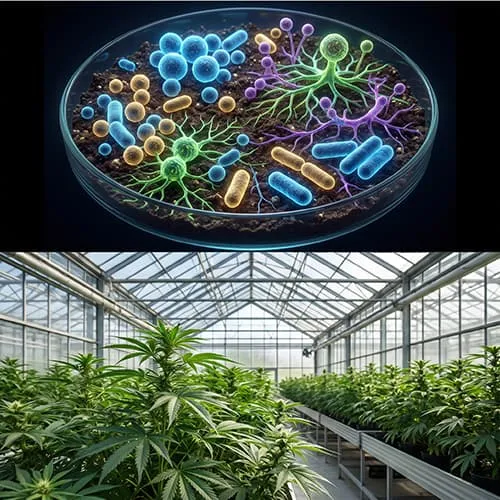
Atmospheric nitrogen (N₂) cannot be used by plants in its natural form. Bacteria such as Azotobacter (which live freely in the soil) or Rhizobium (which live in symbiosis with legumes) convert this gaseous nitrogen into ammonium, a form that can be absorbed by the roots. Although cannabis does not form root nodules like legumes do, introducing these bacteria into the growing medium helps naturally increase nitrogen availability, a key element for vegetative growth. These biological agents therefore enable optimal nitrogen fixation in the soil, providing the plant with all the nutrients it needs during the growth phase.
2. Phosphorus-solubilizing bacteria (Bacillus megaterium, Pseudomonas fluorescens)
Phosphorus is often present in the soil, but in chemically bound forms, and is therefore not readily available. Bacteria such as Bacillus megaterium and Pseudomonas fluorescens produce organic acids that release the bound phosphorus, making it available to the roots. This nutrient is particularly crucial during flowering, for the development of flowers and roots.
3. The genus Bacillus: Versatility and Protection
Species of the genus Bacillus ( including B. subtilis, B. licheniformis, and B. amyloliquefaciens) are among the most widely used in organic farming. They offer several advantages:
- Production of enzymes that break down organic matter.
- Secretion of antifungal compounds that limit root diseases (fusarium wilt, pythium).
- Formation of resistant spores, making them easy to store and apply.
4. Pseudomonas: Allies in the Fight Against Pathogens
Bacteria of the genus Pseudomonas are known for their ability to rapidly colonize the rhizosphere (the area near the roots) and to produce natural antibiotics that inhibit pathogens such as Rhizoctonia and Fusarium. They also contribute to the production of siderophores, molecules that capture iron from the soil and make it available to the plant while rendering it unavailable to pathogens.
5. Actinomycetes (Streptomyces)
This group of filamentous bacteria, which are halfway between bacteria and fungi, plays a major role in the decomposition of complex organic materials such as cellulose and lignin. Streptomyces are also known to produce natural antibiotics, which protect roots against certain fungal infections.
Mycorrhizal fungi: indispensable partners
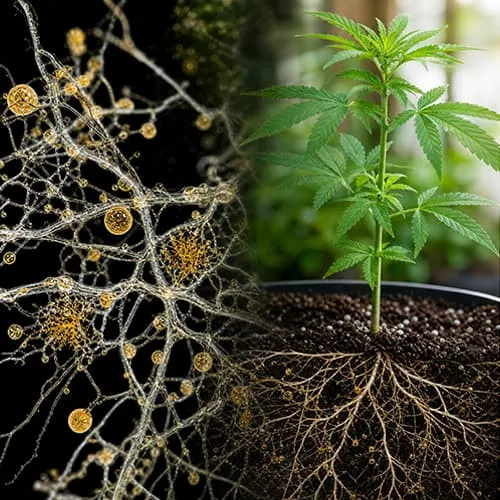
Although they are not bacteria, mycorrhizal fungi (particularly arbuscular mycorrhizae, or AM) deserve a central role in any discussion of soil life. These fungi form a symbiotic relationship with cannabis roots:
- They expand the root system through their filaments (hyphae), increasing the surface area available for absorbing water and nutrients, particularly phosphorus.
- In return, the plant provides them with sugars produced through photosynthesis.
- They improve tolerance to water stress and disease.
Inoculating the substrate with mycorrhizal spores at the time of transplanting is a very common practice among growers who use living soil.
How to Incorporate These Microorganisms into Your Crop
Compost and vermicompost
Mature, well-decomposed compost is one of the best natural sources of beneficial bacteria. Vermicompost (produced by earthworms) is particularly rich in active bacteria, enzymes, and humic acids, which stimulate overall microbial activity.
Compost tea
Compost tea is made by steeping high-quality compost in hydrogen peroxide, often with the addition of molasses as a sugar source to feed the microorganisms during the brewing process. When applied as a soil drench or foliar spray, it quickly inoculates the soil and leaves with a diverse microbial community.
Commercially Available Microbial Inoculants
Many commercial products offer blends of selected bacterial and fungal strains (Bacillus, Trichoderma, mycorrhizae, etc.). They are useful for establishing a growing medium or reviving weakened biological activity, particularly after stress or treatment for a potential fungal disease or pest infestation. This beneficial blend effectively restores the soil life in your garden, helping your plants quickly regain their vigor and achieve a healthy, protective balance overall.
Organic mulch
Covering the ground with organic mulch (straw, fallen leaves, wood chips) creates a moist, protected environment that promotes the growth of microorganisms—especially in the summer—while reducing evaporation and limiting weed growth.
Avoiding Destructive Practices
Certain habits can seriously harm the microbial life in the soil:
- The excessive use of synthetic chemical fertilizers, which can disrupt the pH balance and inhibit certain bacterial populations.
- Broad-spectrum fungicides and bactericides, which indiscriminately destroy both beneficial and harmful organisms.
- Excessive watering leads to anoxia (lack of oxygen), which promotes the growth of pathogenic anaerobic bacteria at the expense of beneficial aerobic bacteria.
- Intensive tillage, which disrupts fungal networks and aggregate structure.
Signs of a biologically active soil
A living, balanced soil generally exhibits certain observable characteristics:
- A crumbly, airy texture rather than a dense one.
- A pleasant earthy smell (often associated with geosmin, which is produced by actinomycetes).
- The visible presence of earthworms and other microorganisms visible to the naked eye.
- Rapid decomposition of organic matter added to the surface.
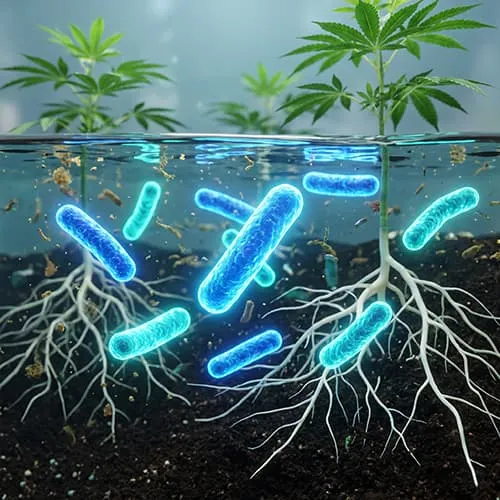
- Vigorous, branched white roots, often covered with a light mycelial fuzz when mycorrhizal colonization is good.
Conclusion
Growing cannabis by relying on soil life means adopting a philosophy in which the plant is no longer simply nourished, but supported by an entire living ecosystem. Nitrogen-fixing bacteria, phosphorus-solubilizing bacteria, and protective bacteria such as Bacillus and Pseudomonas, along with mycorrhizal fungi, together form a complex network that optimizes nutrition, disease resistance, and soil structure. The team at SILENT SEEDS strongly encourages you to use organic cultivation methods to produce the highest-quality cannabis plants using premium seeds with a deep and diverse flavor profile—but also, and above all, to ensure a healthy harvest that is completely free of pathogens and harmful insects.
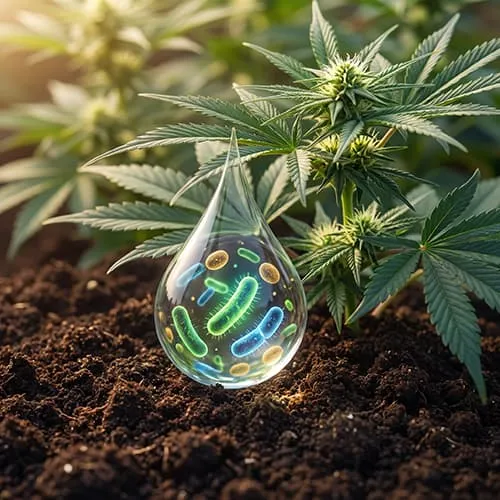
By incorporating high-quality compost, microbial inoculants, and practices that respect this underground ecosystem, growers can reduce their reliance on chemical inputs while improving the overall health of their plants and the quality of their crops. Living soil is not just a passing trend: it is a return to the very foundations of sustainable agriculture, applied to cannabis cultivation.