Growing your own cannabis from seeds has many advantages. These days, most cannabis growers will have no trouble finding a selection of high-quality cannabis seeds to choose from.
In fact, many seed companies now cater to all kinds of customers, from medical cannabis users to old-school ganja enthusiasts. Regardless of how you plan to use your purchase, they offer a wide variety of strains. So, if you want to grow cannabis, how do you go about finding the right seeds? In this article, you’ll find all the information you need to choose cannabis seeds.
What should you consider before buying cannabis seeds?
When it comes to choosing seeds for growing cannabis, there are various factors to keep in mind. It essentially comes down to what you need, what you want, and what you have (space, energy, etc.). You’ll find a wide range of seeds available: Autoflowering Cannabis Seeds, Feminized (Female) Cannabis Seeds,Outdoor Cannabis Seeds, and much more. But first, you need to assess your specific needs and the conditions under which you want to germinate your cannabis seeds. So keep the following criteria in mind.
Decide how and where your seed will grow
Before you buy your seeds, there are a few quick ways to narrow down your choices. First, you should seriously consider how and where you’ll be growing your cannabis. This comes down to whether you’ll be growing indoors or outdoors. Next, what’s the climate like? Will you be using hydroponics or soil? Do you have any experience with growing cannabis plants?
The answers to these questions can make all the difference between a successful purchase and a poor choice. Obviously, the space you have available—whether you’re growing indoors or outdoors—will also largely determine which plant you choose.
Make a wish list of what you're looking for in a variety of
This part is a little more fun to think about; what does your dream cannabis look like? Do you want a strain to help relieve certain symptoms, like the b-45 seed, or to serve as inspiration for some fun times ahead (Amnesia seed)? Do you enjoy an energizing high, or do you prefer to chill out on the couch? And then there’s the flavor to consider. Are fruity strains your thing, or do you prefer something earthier and spicier? You can make a “wish list” to help you know what to look for when choosing your seeds. This step—which is often overlooked—is crucial. Because once the germination process has begun, you won’t be able to change the final result.
Take the time to check the seed descriptions
A reputable seed company will always provide useful information about its cannabis seeds so you know exactly what you're getting. That way, you'll have an idea of:
- The effects and flavor of a particular strain;
- How easy or difficult it is to grow;
- The yields you can expect and how long it will take until harvest.
It is therefore advisable to consult professionals, whom you can find online or at local stores, if cannabis legalization is permitted in your area.
Your Checklist for Selecting Cannabis Seeds
Once you have the basic factors for your choice in mind, the next step is to explore the various decision-making factors. Depending on whether you want a plant that tastes like the b-45 seedor the Amnesia seed, you can also conduct an in-depth search. But below, you’ll find a comprehensive checklist of variables to consider when purchasing your seeds.
Cannabis sativa, indica, or hybrid: Which one should you choose?
The first thing you’ll probably want to consider when choosing a strain is its effect. To do this, it’s essential to understand the three main types of cannabis seeds: Indicas, Sativas, and hybrids. Here’s a brief overview of their different effects and growth profiles. Keep in mind that most modern cultivars are some sort of hybrid, combining the effects of different strains in varying proportions.Indica cannabis
Among experienced users, Indicas are primarily enjoyed at night. Indeed, they produce a pleasant and physically relaxing effect that experts best describe as a “high.” Strong Indicas can in fact be so relaxing that they induce what is known as the “ haze ”—a state of near-immobility resulting from the aforementioned physical sedation. During growth, Indicas typically remain fairly stocky, rarely exceeding one meter in height and featuring short internodes. Most Indica plants, however, are also short and perform well indoors, whether or not you start with autoflowering seeds.Cannabis sativa
Then there are the sativas associated with weed. These cerebral and energizing strains are known for producing a remarkable buzz that is euphoric and uplifting. Some sativas are even described as “psychedelic” to indicate their effect on cognition. In fact, they have a high THC concentration.
These strains are obviously not ideal if you want to relax or fall asleep, but they make for an excellent smoke before hikes, creative projects, and social outings. Pure sativas can reach massive heights of over 3 meters and resemble tall, majestic trees. In short, sativas are more or less giant plants characterized by a long flowering period. Starting with autoflowering sativa seeds makes it easier to grow these tricky plants indoors.Hybrids
Simply put, hybrids are strains that carry both sativa and indica genes. Therefore, depending on the results you’re hoping for, you should consider the dominance of indica over sativa—and vice versa—when making your purchase. For example, you can find strains that are 70% indica and 30% sativa, which are called indica-dominant hybrids.
These strains likely still produce a deep, physically relaxing effect due to their strong Indica influence, but the Sativa effects help balance the experience. The same rule applies to other genetic ratios. Hybrids vary widely in terms of growth; some are compact, others bushy, but they very rarely exceed 2 meters in height.
It’s also important to keep in mind that it’s not just the genotype (genetics) that plays a role in strain selection. The chemotype, also known as the chemical profile, is another factor to consider. THC and CBD—not to mention terpenes—ultimately play a huge role in shaping a strain’s final effects.
Medical or recreational cannabis: What does that mean for you?
These days, many people use cannabis not (just) to get high, but for medicinal purposes. Some use cannabis to treat pain, while others use it to relieve anxiety or help them fall asleep. The condition you’re trying to alleviate plays a role in choosing your strain. After all, some medicinal strains—such as those high in CBD and low in THC—don’t produce a high at all, offering instead purely therapeutic benefits. Other medicinal strains contain high levels of THC to treat the symptoms of specific conditions, such as loss of appetite. For the most part, medical strains tend to have a good amount of CBD with a low concentration of THC.
Ultimately, the meaning of medical cannabis depends on you. Recreational cannabis is even easier to describe. It’s the weed you simply use for your own enjoyment. If a strong high is what matters most to you, you’ll probably want an indica or a potent hybrid that’s mostly THC. Otherwise, sativa is the way to go.
Types of Cannabis Seeds to Buy
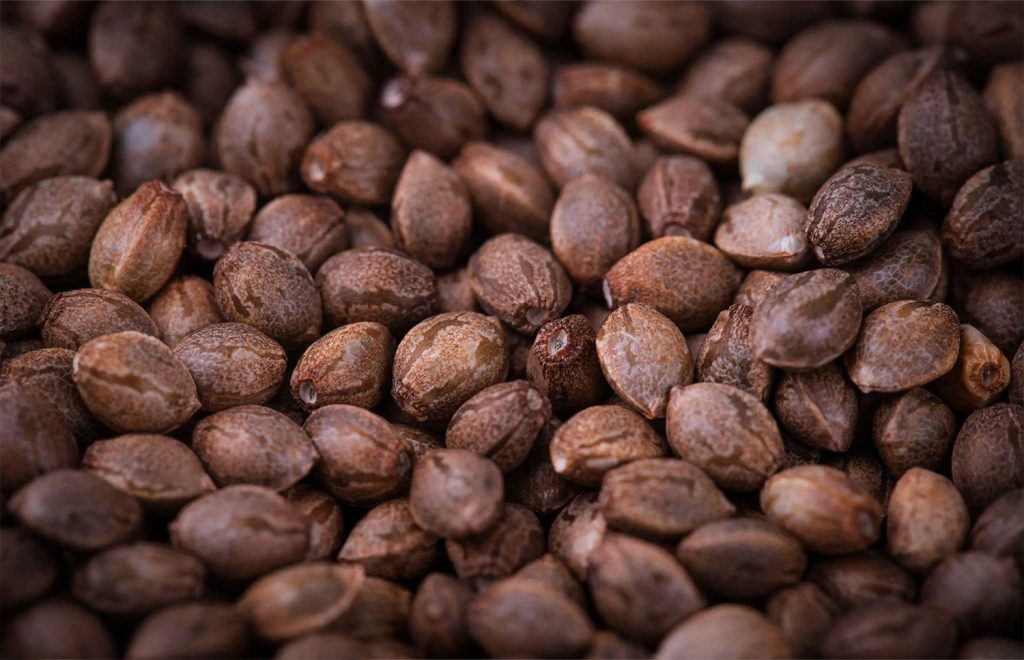
You can order cannabis seeds online from seed banks, but it can be confusing with all the different types of seeds available. When growing cannabis, the type of seed you choose is also very important. There are three types of seeds to choose from.
- Regular seeds;
- Feminized photoperiod seeds; and
- Autoflowering seeds.
So, which variety of cannabis seeds do you want to grow?
Regular seeds
Regular cannabis seeds can develop into either female or male plants. They aren’t as popular as they used to be, although experienced growers swear by them, claiming they produce the best results. The downside to regular seeds is that the average grower will need to quickly identify the males and remove them to prevent them from pollinating the females. That said, if you’re growing cannabis, you’ll obviously need male plants.Feminized photoperiod seeds
Since it is the female plants that produce resin-rich buds, this is the choice most growers make. If you’re growing indoors, you’ll control the growth stages of your photoperiod feminized cannabis plants using a timer for your grow lights.
During the vegetative stage, grow them under 18 to 24 hours of light, then start the flowering phase by setting the timer to 12 hours of light and 12 hours of darkness. The photoperiod essentially means that plants will only flower once light exposure is reduced enough to mimic the natural change of seasons. This means that feminized photoperiod plants grown indoors can technically be kept in the vegetative stage for as long as you like if they are given enough light.Autoflowering seeds
Unlike photoperiod cannabis, autoflowering cannabis begins to flower on its own after about 4 weeks. The exact timing may vary, but autoflowers always bloom based on the weather, not light exposure. Autoflowering seeds are also feminized, so they won’t produce males. But unlike photoperiod plants, indoor growers don’t need to adjust the light cycle to trigger flowering. Growers can simply keep autoflowering under 18 to 24 hours of light throughout the entire growth cycle.
This makes them an excellent option for new growers who haven’t yet learned the ins and outs of indoor growing. In addition, autoflowering have a much faster seed harvest time, maturing much more quickly than some photoperiod strains. Many autoflowering s are also very compact, making them ideal for small indoor setups. Their drawbacks include lower yield potential and reduced potency.
So, which type of seed is best for you? If you’re growing indoors under grow lights, you’ll probably want feminized cannabis seeds—whether photoperiod or autoflowering. If you have limited space or want to germinate your seeds without worrying about turning off your lights, autoflowering cannabis seeds are definitely the best choice. And of course, breeders looking to create new cannabis strains should stock up on regular seeds for their experiments.