The Hop Latent Viroid, often abbreviated as HLVd or HpLVd, has become a major concern for cannabis professionals and growers working with clones as well as the highest-quality feminized seeds. Its danger lies less in immediate symptoms than in its ability to remain hidden, latent, and therefore asymptomatic, before eventually causing—in certain strains—a marked decline in growth and flowering.
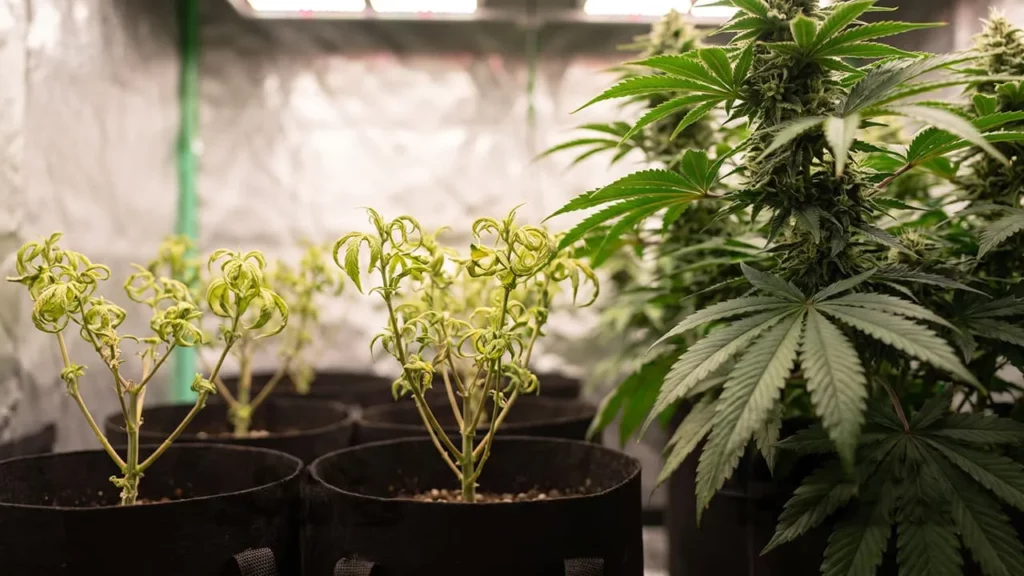
It is sometimes referred to as the “COVID of cannabis,” a comparison made by the media that should be treated with caution: HpLVd is not a human virus, but a plant viroid—that is, a small RNA molecule capable of replicating within plant cells. Studies link infection with this viroid to stunted, weaker plants with fragile stems and less developed, smaller, and less dense inflorescences or buds, as well as a possible reduction in the highly sought-after resin trichomes. Consequently, the final yield will automatically be lower. It is therefore clear that the plant’s overall development is compromised.
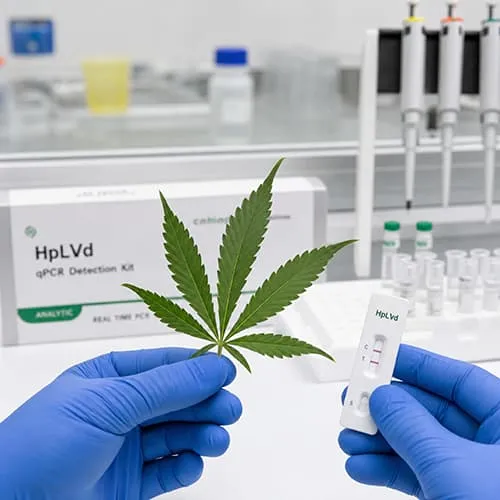
Important: The presence of symptoms alone is not sufficient to confirm HpLVd. A laboratory test, typically by RT-PCR or RT-qPCR, is required. Other pathogens, such as Fusarium, for example, can cause symptoms that are quite similar.
Table of Contents
- Understanding Plant Viruses and Viroids
- What is HpLVd?
- Why Clones Are Particularly Vulnerable
- Possible symptoms in a crop
- How to Confirm an Infection
- Prevention and Hygiene
- What should you do if you test positive?
- Methods for Collecting Plant Material
- Limitations of the Available Data
- Conclusion
1. Plant Viruses and Viroids
Plant viruses are infectious agents consisting of genetic material—usually RNA or DNA—enclosed in a protein coat. They use plant cells to replicate and can disrupt the plant’s growth, metabolism, or development.
Viroids are even simpler. They lack a protein coat: they are small circular RNA molecules that hijack their host’s cellular machinery. HpLVd belongs to this category.
This simplicity does not mean they are harmless. Their small size and mechanical transmission can make them difficult to detect and eradicate, particularly in facilities that regularly handle cuttings. For this reason, impeccable hygiene practices must be strictly maintained when cleaning the various tools and equipment that come into direct contact with plant material.
Symptoms that are sometimes absent
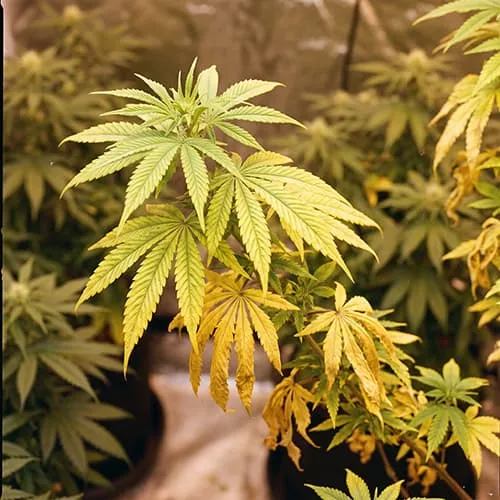
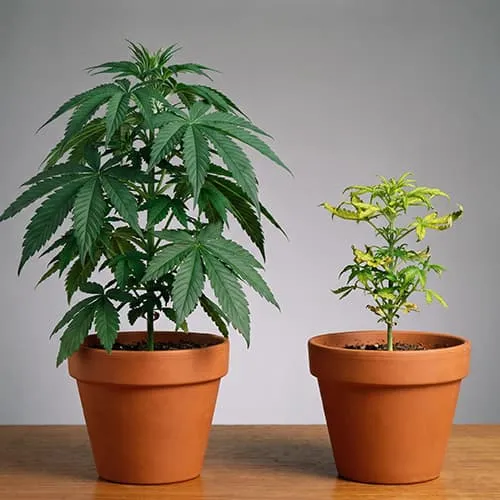
An infected plant may remain visually normal during part of its development, typically during the growth phase. Symptoms may appear later during flowering, or when the plant is subjected to environmental stress. The growth stage, the variety being grown, the stability of growing conditions, and the presence of other pathogens strongly influence the expression of symptoms of the latent hop viroid. When purchasing or exchanging cuttings, they may appear a beautiful deep green, indicating vibrant health and vigor, yet a few weeks later you may gradually discover the symptoms to your astonishment. It is therefore risky to assume that a vigorous plant in the vegetative growth phase is automatically healthy.
2. The History of HpLVd
The name " Hop Latent Viroid" comes from hops, its historically identified host. Hops and cannabis both belong to the Cannabaceae family, which partly explains the scientific interest in this viroid.
In hops, HpLVd can remain latent and cause only limited symptoms. In cannabis, research conducted since the late 2010s has linked it to “cannabis stunting disease,” characterized by reduced growth and impaired flower production. A study published in 2019 detected HpLVd in all symptomatic plants examined, as well as in one apparently asymptomatic plant.
More recent research has confirmed that the viroid can be present in mother plants and cuttings without visible symptoms. The studies also examined its persistence in sap, dried plant tissue, and recirculated nutrient solutions.
3. Why Clones Are a Major Means of Spread
Clones are genetically identical to the parent plant. This characteristic is useful for preserving a variety, but it also means that an infectious agent present in the parent plant can be transmitted to the vegetative offspring.
Spread can occur through:
- cuttings taken from an infected mother plant
- pruning shears, scalpels, or blades contaminated with sap
- poorly cleaned hands, gloves, and surfaces
- hydroponic or aeroponic systems that share a nutrient solution
- successive handling of healthy and infected plants
Recent studies have detected HpLVd in recirculated nutrient solutions, as well as in the nozzles of propagation systems. They have also shown that the virus may spread through the roots in certain hydroponic setups.
Transmission via seeds
Transmission via seeds and pollen must be presented with nuance. It has been considered secondary in historical data on hops, but recent studies on cannabis have reported seed-borne transmission in certain experiments, with high rates observed in the batches studied.
This means it is best to view seeds as a risk that must be assessed, rather than as an absolute guarantee of the absence of HpLVd. The level of risk depends on the source, the batch, and the tests performed. Based on our experience at SILENT SEEDS , we have observed a contamination rate of approximately 10 to 15% in seeds. It is important to note that all of our batches of the highest-quality feminized cannabis seeds are tested, and this applies to every new batch of all the strains in our catalog.
4. Possible symptoms
The symptoms associated with HpLVd are neither mandatory nor specific. They may resemble problems related to nutrition, roots, light, watering, or other plant diseases.
Vegetative symptoms
Reported symptoms include, among others:
- slowed growth or stunted appearance
- shorter hop lengths
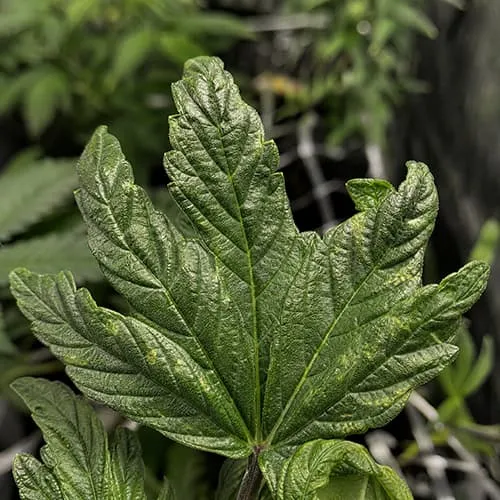
- smaller, misshapen, or chlorotic leaves
- unusual lateral growth
- brittle stems
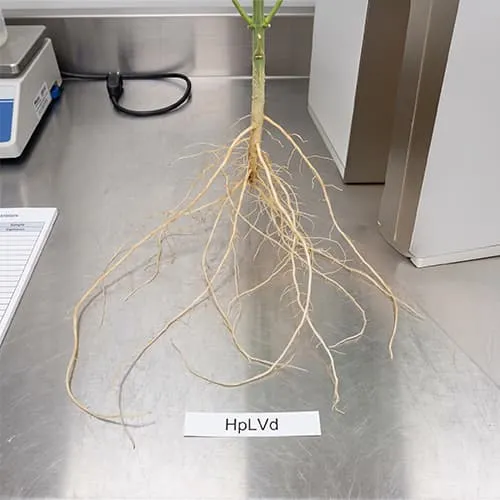
- weaker root system
- general loss of vitality
- reduced water absorption
These symptoms have been described in several studies on the viroid in cannabis.
Signs of Blooming
In susceptible or affected plants, the symptoms may become more noticeable during flowering:
- Smaller flowers or flowers that aren't very compact
- low flower mass
- abnormally slow floral development
- decrease in trichome production
- less pronounced and/or slightly different aromas
- decrease in the overall production of cannabinoids, terpenes, and flowers
A recent study has also linked the infection to increased susceptibility to certain diseases, including root rot and powdery mildew, suggesting that the hop latent viroid (HpLVd) may significantly weaken the plant’s immune system, making it more vulnerable to other biological stresses.
Why Visual Diagnosis Is Insufficient
Symptoms may be absent, vary in severity, or be caused by several different problems. A stunted plant is not necessarily infected with HpLVd, and a plant without symptoms is not necessarily healthy.
Visual diagnosis is therefore used to identify an abnormality, but not to reach a thorough and definitive conclusion. That is why it will be necessary to perform a specific PCR test, such as one of those listed below.
5. How can an infection be confirmed?
The reference method is based on molecular analysis:
- RT-PCR
- RT-qPCR
- possibly newer rapid detection methods, depending on the laboratory.
Samples must be collected according to the laboratory’s instructions. In a collection of parent plants, it is advisable to develop a sampling strategy that covers newly introduced plants, plants intended for cloning, and individuals showing suspicious signs.
The Limitations of a Single Test
The viroid load can vary depending on the tissue and stage of development. A single negative result should not necessarily be interpreted as a permanent guarantee, especially for a plant intended to produce numerous cuttings.
A policy of periodic testing, developed in consultation with a laboratory or a plant pathologist, is more reliable than a single test conducted only after symptoms appear.
6. Prevent the introduction and spread
Prevention is generally simpler and less expensive than restoring a contaminated collection.
Carefully select suppliers
Before introducing new plant material:
- request the available medical history
- give preference to suppliers who can provide test results
- isolate the new batches
- Do not take cuttings immediately to distribute them throughout the facility
- maintain traceability of the variety, lot, and date of introduction
Trust in a supplier is no substitute for a quarantine protocol.
Separate Zones and Flows
Organizing by zones reduces the risk of spread:
- Incoming Materials and Quarantine
- mother plants
- multiplication
- growth
- blooming
- positive or suspicious material
Tools, gloves, protective clothing, and equipment should not be moved freely between these areas without following the appropriate cleaning procedures.
Clean the tools between plants
Pruning is a critical step, as it exposes the sap to the blades. Tools must be cleaned and disinfected in accordance with approved health guidelines.
Recent data indicate that properly prepared chlorine solutions can degrade HpLVd RNA under experimental conditions. Hypochlorous acid is also among the options being studied.
However, it is important to distinguish between:
- the concentration of the commercial product
- the actual concentration obtained after dilution
- contact time
- pre-cleaning of organic matter
- Compatibility with surfaces and equipment
Improperly prepared disinfection can give a false sense of security.
Managing Water and Recirculating Systems
In above-ground systems, nutrient solutions and nozzles can be important control points. Sharing equipment between healthy and suspect batches increases the risk.
For this reason, professional producers must evaluate:
- recirculation of the solution
- the separation of the tanks
- pipe cleaning
- disinfecting the tables and nozzles
- Replacing components that are difficult to decontaminate
7. What should you do if you test positive?
The first step is to avoid panic and unnecessary actions. A positive result must be confirmed and interpreted in consultation with the laboratory, especially if the financial implications are significant.
Immediate Measures
- isolate the affected plant material
- suspend the collection of cuttings
- Avoid moving plants between areas
- Identify the batches and the people who handled the equipment
- Clean tools and surfaces that may have been exposed
- conduct additional tests on the associated plants
There is no simple treatment that can instantly restore an infected plant to a healthy state. Decisions regarding disposal, quarantine, or recovery depend on the genetic value of the plant material, the level of contamination, and the applicable regulatory framework.
Shutdown and Restart
In some facilities, removing plants that have tested positive and restarting operations with material that has tested negative is the most predictable approach.
Plant waste must be handled in a way that prevents sap and plant fragments from spreading. We also recommend disposing of it as quickly as possible. Cleaning the area, tools, and irrigation systems should be part of the recovery plan.
8. Is it possible to recover contaminated genetic material?
Laboratory methods can sometimes be used to produce disease-free plant material:
- meristem culture
- micropropagation
- thermotherapy combined with tissue culture
- repeated tests after regeneration
Meristem culture involves isolating very small growth zones, which may contain a reduced viral load. Thermotherapy is intended to promote the regeneration of healthy tissue, but it must be performed in a specialized laboratory.
The results vary depending on the variety. A recent study found that certain genotypes responded better than others to the combination of heat treatment and meristem culture, and that confirmation by RT-qPCR after treatment remained essential.
Recovery is therefore not a guarantee, but rather a means of preserving high-value genotypes.
9. What research still needs to clarify
Several questions remain unanswered:
- the sensitivity specific to each variety
- the exact role of the various genetic variants of the viroid
- the conditions that trigger symptoms
- the actual significance of seed transmission
- The comparative effectiveness of disinfectants on different surfaces
- the longevity of plants certified as disease-free
- the development of more tolerant or resistant varieties
Recent studies also show that research is moving toward faster and more sensitive detection methods, particularly systems that combine RT-LAMP and qPCR.
Conclusion
HpLVd poses a serious risk to cannabis crops that rely on mother plants, cuttings, and intensive propagation cycles. Its main danger lies in its stealth: a plant may appear healthy while serving as a source of infection.
The strongest strategy is based on four principles:
- introduce plant material from controlled sources
- Regularly test mother plants and susceptible lots
- Follow strict hygiene practices when cutting and handling food
- Quickly isolate the suspicious equipment and document each step.
Prevention does not guarantee a completely risk-free installation, but it greatly reduces the likelihood that a single clone will compromise an entire collection. In a legal and professional context, working with a plant pathology laboratory remains the best way to obtain a reliable diagnosis and a tailored action plan.