When we grow cannabis from seeds that meet the highest global quality standards, it’s always an interesting and exciting adventure: it allows us to experiment and discover plants with slightly varying characteristics within the same genetic line.
It is a unique process, more entertaining and full of more surprises than growing plants solely from cuttings. This method gives us the opportunity to marvel at characteristics that can reveal exceptional uniqueness in the individual expression of a cannabis plant.
This is certainly one of the most exciting stages, even for the most skilled and experienced growers. Why? Because there is an artistic aspect combined with an element of rarity: it’s possible that the specimen encountered will exhibit a variety of unique qualities, all embodied in a single individual.
For all these reasons, growers may be tempted to preserve and maintain all the desirable traits found in this unique plant. However, the qualities that dazzle us about it can sometimes be misleading: here, then, is a guide to help you make the right choice.
What are the different selection criteria for choosing the right cannabis mother plant?
Selection criteria vary and are subjective, as they depend primarily on your personal preferences and expectations, or on aspecific professional goal you are pursuing. Here are the eight key points to consider before choosing your future mother plant.
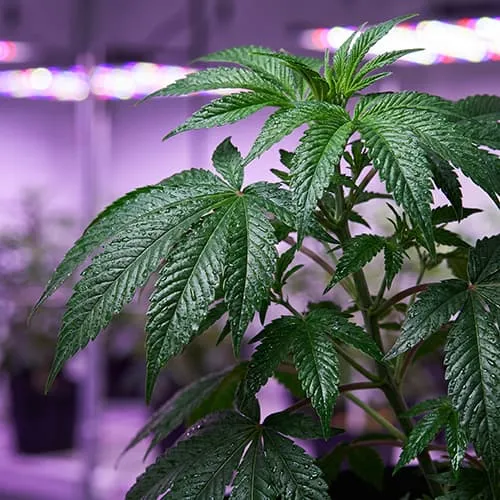
1. The germination rate of cannabis seeds
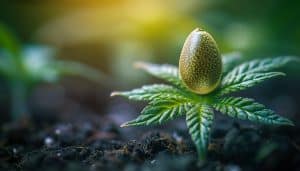
Seed germination vigor is a key factor to consider: it is the very first qualitative indicator of the vitality and overall potential of the genetic material you have.
This vigor may depend directly on the genetics themselves and constitute a characteristic specific to the lineage, since most of the hybrids on the market today are actually quite complex polyhybrids (the vast majority of U.S. varieties).
In practical terms, this means that the breeder who developed a new variety sought to obtain one or more specific traits. But since we’re dealing with living organisms, we’re always talking about statistics within a population: there are therefore always variations among the different individuals of the same lineage. It is thus very difficult to find an individual that possesses all the ideal characteristics, because perfection does not exist.
Just keep in mind that strong germination is generally a good indicator, although this can vary depending on the cannabis strain being grown.
2. Root System Development
Another important factor is the vigor and speed with which the root system develops. The root system is, in a sense, the plant’s “digestive system”: it enables the plant to develop a strong, robust structure while also providing it with a highly resilient immune system.
Rapid and vigorous root development also offers another advantage, which is inextricably linked to the first: it determines the plant’s future ability to be propagated from cuttings. It is essential to understand this dual aspect. By this stage, you will already have a good idea of your “favorite plant’s” rooting potential—and thus its potential for propagation from cuttings.
3. The Development of the Vegetative Structure
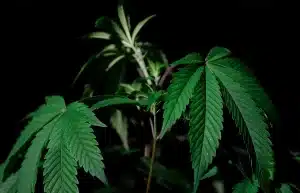
It is important to pay attention both to the vigor displayed during the plant’s growth and to the uniform and robust development of its various parts: the central stem, the nodes (internodal distance), and the secondary branches. Do not hesitate to cull certain problematic phenotypes that exhibit abnormal traits, such as deformities or strange mutations ( plants with bizarre structures, leaves that are not uniformly colored, etc.), even if this type of plant produces a delicious aromatic profile during tasting; keep in mind that a well-developed, vigorous vegetative structure with numerous branches will always ensure a better yield.
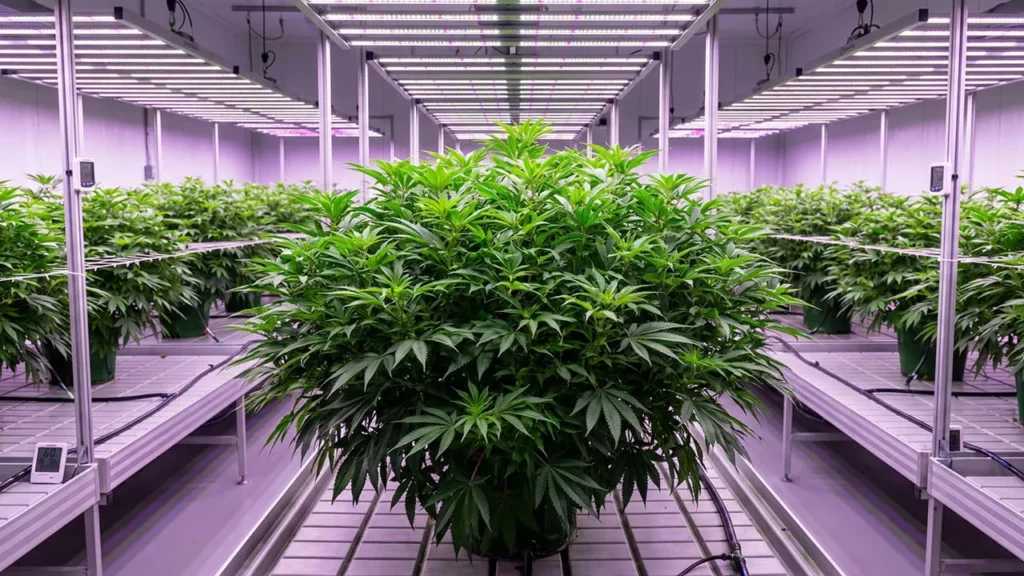
This is why, at least for professional and commercial use, it is imperative that the selected mother plant possess the most complete set of characteristics possible. These observations will provide you with direct insight into the speed of development during the vegetative phase, how to manage the plant to achieve a specific result, and its capacity for flower production (flowering pattern). Ultimately, this has a direct impact on the total duration of the growing cycle as well as on the final yield.
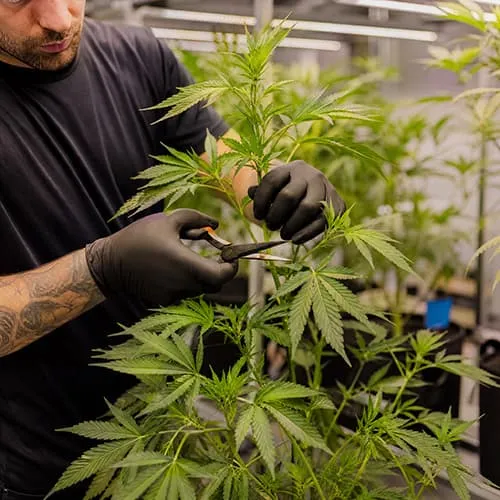
4. Leaf Mass Development
It is important to examine this organ in great detail: the uniform structure of the petiole, the intensity of its color, and the clarity of the leaf and its veins. Regardless of the variety’s dominance (Sativa, Indica, or Ruderalis), it is preferable that the individual leaf segments be similar in size and shape, without any wrinkling or deformation. (crocodile skin appearance, fairly pale color, inconsistent size or shape).
5. Resistance to fungi and insects
This is a point that should not be overlooked, as it can lead to numerous problems during the plant’s various stages of development, both during growth and flowering . This aspect depends directly on the genetic heritage and combination of one or more strains. It provides reliable information about the level of immune resistance of the individual you plan to preserve for your future projects. Some cannabis strains are naturally more resistant than others to these harmful phenomena, particularly due to the shape and density of their resin trichomes, as well as their unique aromatic profile.
6. Hermaphroditism
This is a sensitive topic that often raises questions—and even doubts—among many growers, as well as among the most experienced breeders.
All professionals in the industry know that this phenomenon is difficult to control. Contrary to popular belief, its occurrence—whether mild or pronounced—is not necessarily a sign of poor breeding practices. The reasons are often more profound: the inheritance of recessive or dominant male genes present in the genetic makeup of one or more bloodlines, which are present in varying proportions when a new variety or hybrid is created.
Since most of the high-quality cannabis seeds available today are F1 hybrids, this sometimes results in unpredictable combinations, opening the door to billions of possibilities within a single strain. This is a fascinating aspect, as it allows for the discovery of very different and unique plants within the same genetic line.
It is also important to keep in mind that virtually all of the varieties currently on the market are polyhybrids, which increases the instability and the wide range of possible variations associated with this phenomenon, making it very difficult to fully control.
In practical terms, these variations can result in individuals in which the appearance of male flowers is either short-lived or long-lasting. Rigorous intergenerational selection, along with stress tests, makes it possible to assess a variety’s response to various stresses and to minimize this phenomenon of hermaphroditism as much as possible— though , since we are dealing with living organisms, it is not possible to guarantee complete control over it.
In most cases, this undesirable phenomenon is fortunately temporary and short-lived. That is why it is generally recommended to remove the male flowers as they appear during flowering. In most cases, male flower production stops after 5 to 6 days at most. That’s why, for certain exotic varieties where this phenomenon occurs on rare occasions, we sometimes recommend simply removing all the male flowers from the affected plant and remaining highly vigilant for about a week, which should allow you to save your harvest overall.
On the other hand, if the problem persists repeatedly and becomes difficult to manage, it is best to isolate the affected plant and then dispose of it if the situation does not improve. A strain with this trait will continue to exhibit it indefinitely; this is an important point to consider before making your final choice.
7. Flower Development
During the flowering phase, carefully monitor the rate of development as well as bud formation. It is best for the buds to have a uniform structure with a good flower-to-leaf ratio; the density of resin trichome production is also a key factor.
Another interesting aspect is identifying the exact moment when the flowering “boom” occurs, so you can adjust the nutrition and optimize both the yield and the overall quality of your flowers. Certain strains have this distinctive trait: they seem to grow more slowly during the first few weeks of both vegetative growth and flowering, and then, quite surprisingly and suddenly, everything accelerates favorably overall, ultimately yielding an excellent harvest of top-quality cannabis flowers.
8. Post-harvest analysis (smoke report)
After harvesting and drying comes a crucial moment: the objective analysis of all the qualities of your cannabis flowers—their overall appearance (shape and “bag appeal”), density, flower-to-leaf ratio, aromatic profile, taste, effect, resin content, as well as the overall final yield per plant and the harvest as a whole.
It is at this very moment that you will be able to make an informed decision about whether it’s worth keeping the plant that has caught your attention throughout the growing cycle. It’s also the moment when you may experience major disappointments… or, on the contrary, fabulous surprises!
Conclusion
If you observe significant weaknesses in the key areas discussed in this article—such as a plant that has difficulty taking root, slow growth, a fragile structure, one or more deformities, or a marked susceptibility to pests and pathogens—these are all signs that the plant in question is vulnerable.
However, it is entirely possible that the quality of this same plant’s aroma, flavor, or effect is exceptional, and thus justifies keeping it as a parent plant. A clone with imperfect characteristics can still be retained for one or more specific reasons within a moderately sized cannabis grow operation, but when considering its use for commercial production, its viability will quickly be compromised. As mentioned throughout this article, these are personal and subjective reasons that depend entirely on your own selection criteria.
So make your choices based on your priorities: that's the best way to get the most enjoyment out of your favorite hobby!