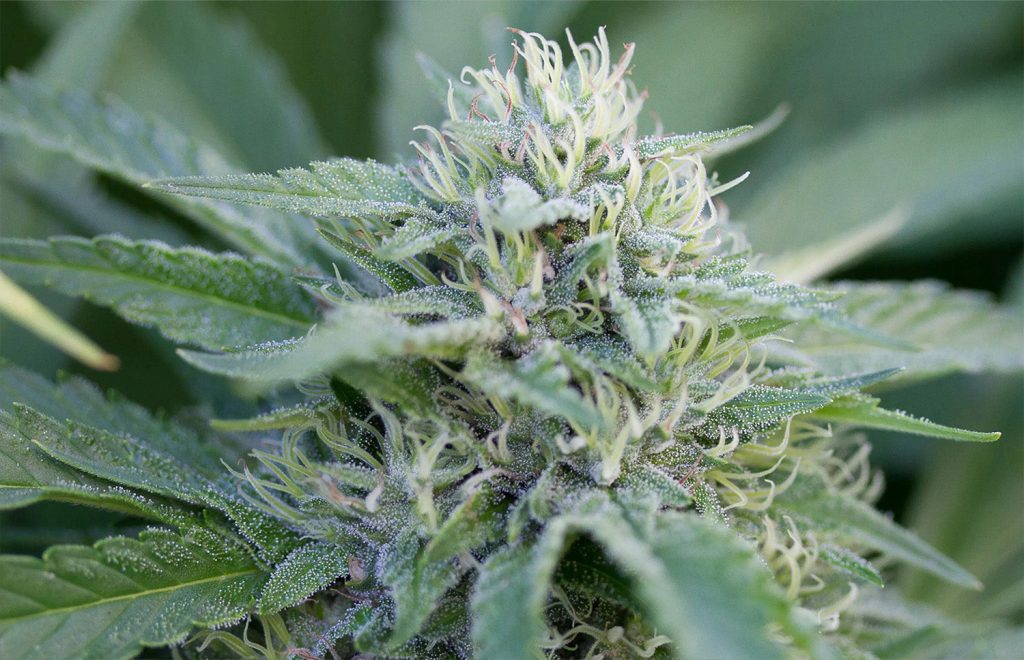
- Summer is a warm season and ideal for growing cannabis outdoors; Mother Nature helps us with the tasks involved in caring for our beloved plants, but we mustn’t forget that we are still the key players in the success of this fascinating activity.
- Depending on how you’ve set up your garden—whether you’re growing in open ground or in a greenhouse—for most of us, summer brings to mind vacations, the beach, barbecues, outings, and outdoor activities. However, it’s also a crucial time to prepare our outdoor crops properly in order to ensure a high-quality harvest.
- In this article, we’ll explain the key points to keep in mind when your outdoor cannabis plants begin to flower. Follow along…
Summer is the perfect time for vacations, long, enjoyable evenings with family or friends, or simply relaxing after what is often a long winter. However, it’s also a crucial time for the healthy development of our beloved cannabis plants, which will spend many weeks growing outdoors, as a lot can happen from germination through the growth stage—followed by the flowering period—before the long-awaited harvest finally arrives.
Although each step mentioned here is currently intended for outdoor cultivation, it also applies to achieving a good harvest indoors. It’s important to take the time to prepare and give careful consideration to each phase, especially since, during this time of year, the stress caused by high temperatures in certain parts of the world can become a real problem for some. Many growers will choose either photoperiod feminized cannabis seeds or an autoflowering option that is better suited to their needs.
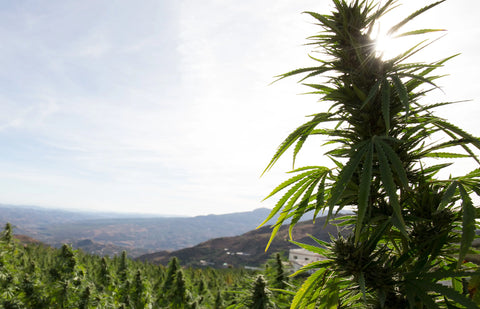
No matter which option you choose, the main goal is to grow healthy cannabis plants at every stage of the growing cycle. These plants must therefore receive proper care, including sufficient water, nutrients, and light, in order to produce delicious cannabis flowers bursting with resinous trichomes. Depending on the location, you’ll also need to keep a close eye on humidity levels to prevent fungal problems from developing.
Below, we outline the five key areas on which you should focus your efforts as the flowering period begins: watering, mulching, providing structural support for the plants, defoliation or leaf thinning, and the importance of high-quality lighting throughout the entire cycle.
Optimal Watering
From the very beginning—that is, early on during the germination stage or seedling development, and then throughout the growth phase (vegetative stage)—it is very important to provide water in amounts that meet each plant’s needs, in order to avoid potential water deficiencies that could harm your cannabis crop. I would even go so far as to say that you need to anticipate these issues when you’re growing, because it’s often much better to be safe than sorry. There’s a twofold benefit during this phase: while hydration is essential, nutrient supply is just as important.
It’s also important to note that global warming has disastrous consequences in this regard, as the widespread rise in temperatures does us no good at all. For this very reason, it’s crucial to provide your cannabis plants with all the necessary nutrients during every phase of the growing cycle, week after week, to strengthen their immune systems.
That is why you should use a high-quality fertilizer that meets the plants’ varying needs during both the growth and flowering periods. But that’s not all: using a root stimulator (applied once a week) will promote root health and development, resulting in robust growth and optimal nutrient absorption.
Using Trichoderma (harzianum) will also benefit the health, protection, and balance of your soil. We recommend that you always water your plants in the morning or evening, when temperatures are still fairly cool or moderate, to avoid stressing the plants or causing root burn. Therefore, avoid watering your cannabis plants between 11 a.m. and 6 p.m., as it is generally very hot in most countries around the world during this time of day in the summer.
Be sure to use water at a temperature that matches the ambient air temperature to avoid any potential thermal shock to the soil. It’s also important to avoid watering at night (especially during and at the end of flowering), as humidity levels naturally rise significantly in the air. This depends on the climate, but it’s a fairly common trend around the world. This can be a critical issue if you’re growing cannabis strains that aren’t very resistant to fungal diseases.
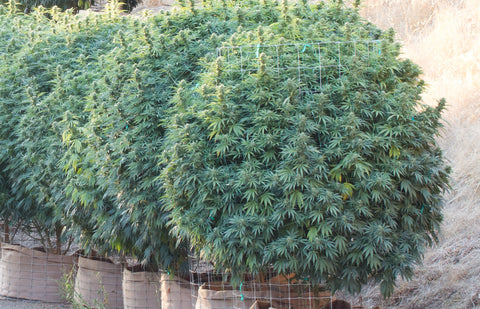
Another important detail is that we focus our efforts on providing water to each plant at ground level, but there is also a major benefit to hydrating, cooling, and rinsing all the leaves, since we must keep in mind that the stomata on these leaves actively participate in various gas exchanges during photosynthesis week after week.
Please note that it is especially important to rinse the leaves during the vegetative growth stage, because if we repeatedly spray water on the pistils of cannabis flowers, we risk damaging them; they could also suffer some sunburn when grown outdoors. The same applies to indoor cultivation, as artificial lighting will have the same effect.
Whether indoors or outdoors—and this applies to CBD plants as well—you must also be very careful when rinsing the leaves to ensure that no large drops of water remain on them, as this creates a magnifying glass effect and can cause fairly severe surface burns, which may slightly hinder each plant’s photosynthesis.
We recommend using a good growth fertilizer until you see a sufficiently high density of pistils, as this is a sign that your photoperiod cannabis plants have well and truly entered the flowering phase. After that, it’s advisable to transition between the different fertilizers by gradually shifting—over a period of about 7 to 12 days—from the changing nutrient requirements of the growth phase to those needed during the flowering stage.
One factor that may be of some importance to growers in hot regions where water supply is difficult to manage is that autoflowering strains generally tolerate water shortages better than photoperiod strains. This is due to the Ruderalis genetics, which are resistant to a wide range of harsh weather conditions—a trait explained by the nature of their original habitat (Eastern Europe, Siberia, Hungary, Bulgaria, and Central Asia).
It’s good to know that an Indica cannabis strain is more sensitive to water shortages than a Sativa plant, for example; this is easy to understand, since the vast majority of these strains come from warm countries, which also explains why the buds they produce are airier and more elongated—a structure that helps them better withstand high humidity and, above all, the various pathogens that might appear and gradually ruin the entire crop. Starting with high-quality seeds is essential.
It’s true that if you’re just starting out, it might be a good idea to grow autoflowering plants from high-quality seeds such as Critical+2.0 Auto, Moby Dick Auto, Critical Jack Auto , or L.A. Vanilla Cake Auto. They require less special care, are less sensitive to high temperatures, and have a shorter growing time, all while yielding a harvest of high-quality buds covered in resinous trichomes.
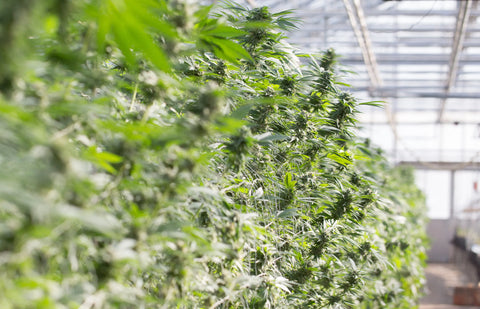
Soil Insulation and Protection Through Mulching
When we talk about mulching in English, we’re referring to the potential use of natural or synthetic materials, such as agricultural straw, bark, wood chips, perlite, or simply the grass clippings from mowing your lawn—to limit water evaporation and prevent temperature fluctuations in the growing medium of your cannabis plants during the vegetative growth stage or the flowering phase, allowing you to harvest the highly sought-after, high-quality cannabis flowers.
Mulching is an excellent preventive method for protecting the top layer of your growing medium and ensuring the overall well-being of all your cannabis plants. As mentioned earlier, this protective layer on the soil is most often made up of plant matter, woody debris, or mineral rock, and should be between 2 and 5 cm thick, depending on the intensity of the heat in the region where you’re growing.
If the temperature within the growing medium gets too high, it could disrupt the soil’s microbial life, especially when using organic methods. When many growers are just starting out, they don’t think about these kinds of structural details, even though they’re essential week after week for ultimately achieving the long-awaited harvest.
This method of soil protection is widely used in California, for example, simply because summers there are very hot—as evidenced by the numerous wildfires (megafires) in recent years—but also because organic farming is well established there, and soil life plays a major role in ensuring that this farming method works optimally.
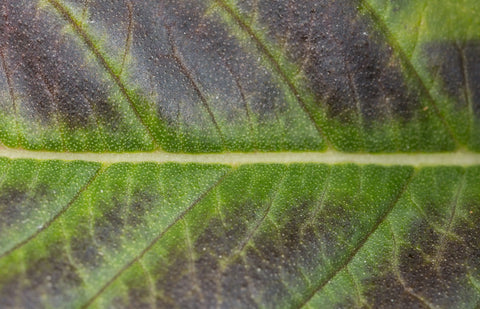
When we say that soil is alive, it’s a fact—and that’s precisely why geotextile pots are commonly used; they directly improve the substrate’s ability to breathe and also promote oxygenation of the soil’s microbial life. The end result is that this stimulates various aerobic metabolic processes, as well as interactions among the different biological agents present in the soil. Carefully selecting high-quality cannabis seeds helps overcome many challenges.
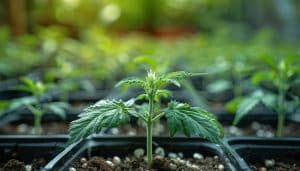
Special care must be taken when transplanting seedlings outdoors after germination, as they are highly fragile during the first 3 to 4 weeks. All of these tips also apply to CBD plants. That’s why, during this vegetative growth phase, it’s best to prepare them properly—possibly under artificial lighting indoors—to strengthen them before they are moved to their final growing location.
Support for the cannabis plant's structure
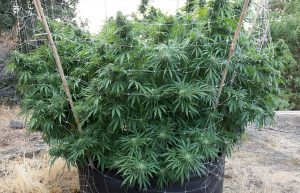
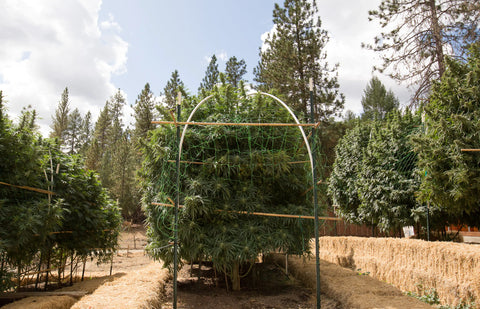
The use of an effective support system for the vegetative structure of the cannabis plant has become an important step in recent years, especially with the emergence of modern American photoperiod varieties on the global cannabis scene. Previously, cannabis plants had a more uniform vegetative structure, typically taking the shape of a well-defined Christmas tree.
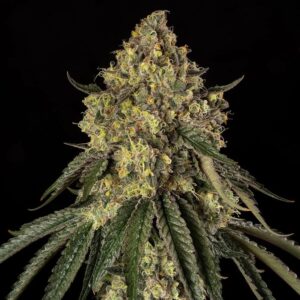
It must be said that these days, the cannabis plant is evolving rapidly on various levels. Varieties that have become very popular—such as “OG Kush ,” for example—require structural support to guide and sustain their vegetative growth. But that’s not all, because the true purpose of such a support system is primarily to reinforce the plant’s structure so it can bear the weight of the large, thick, compact buds that will need to be harvested at the end of the growing cycle. The same applies to certain CBD-rich hybrids.
The structural support for a cannabis plant is made either from perforated nylon mesh or from a cylindrical metal cage, which is often constructed from the wire mesh used to build fences for private homes. Alternatively, you can use standard stakes; the only problem with these is that the support for the cannabis plants will not be uniform and may sometimes be insufficient.
Most of the time, this type of system supports a single cannabis plant; it should be set up either around the plant or horizontally across it, so as to guide the plant’s growth to the desired height. Some growers sometimes install a first support net at the base of the cannabis plants, followed by a second one at the level of the buds, to relieve the pressure exerted by the weight of the flowers.
If this phase isn’t completed—or is completed too late—you can expect some branches to break under the weight of the heavy buds full of resin trichomes. It would be a shame to have put in so much effort, money, and time overall, only to end up with significant losses at the end of the cycle, right at harvest time. Especially when it can be avoided…
Defoliation or leaf thinning
Defoliation is a simple method that involves removing all the leaves that block light from reaching the parts where what we’re all looking for grows: the precious cannabis buds packed with resinous trichomes. It makes sense that this principle applies more to Indica plants than to Sativa plants.
However, even though this general trend holds true, with so many photoperiod polyhybrids available on the market today, this method can be used on virtually any variety grown from feminized cannabis seeds.
This method works wonders at the start of the flowering phase for a strain like L.A. Vanilla Cake, for example, but it also works perfectly well on Grape Juice, Cookielato, Watermelon Runtz, Gorilla Frost, Starfire OG , and Zkittlez 2.0. Reducing humidity within the canopy is crucial to prevent the emergence of harmful pathogens. This also applies to any variety with a high CBD content.
All of these varieties either produce a large number of leaves or produce leaves that grow too large in relation to the overall size of the cannabis plant in question. The result is the same: these leaves generally prevent the buds from swelling and developing optimally, as the production of resin trichomes, terpenes, and flavonoids is also affected.
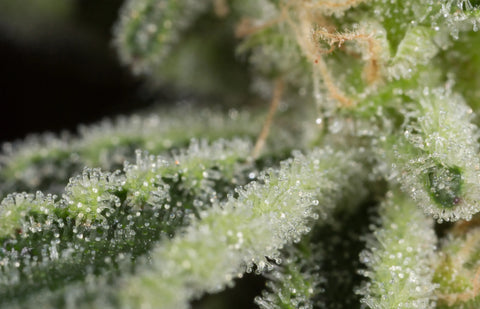
It is essential to pay close attention to how light penetrates the plant’s canopy, as this will have a greater or lesser impact on the production of cannabis flowers to be harvested—and, consequently, on the overall yield of the crop.
In addition, this foliage can cause moisture to accumulate on certain parts of the plant, which may lead to the growth of harmful fungi. Density varies from plant to plant; generally speaking, a Sativa plant is naturally more densely foliated than an Indica.
Some cannabis hybrids have varying distances between nodes, as the foliage density differs from one variety to another. This is most often an inherent trait of the hybrid you are growing, but it can also be caused by an excessive supply of nutrients during the growth phase.
Be aware of the opposite effect: if you prune the leaves excessively, the plants may experience too much stress, which can hinder essential photosynthesis, thereby slowing the plant’s optimal growth and also reducing the production of beautiful, delicious buds full of resinous trichomes.
The Importance of Lighting
The quality of lighting plays a key role in ensuring optimal growth of your cannabis plants—and not just during the flowering stage. It is of the utmost importance to give careful consideration to the quality and intensity of the lighting, whether you’re growing indoors or outdoors.
This is much more important than you might imagine, because once your seeds come to life after germination and reach the seedling stage, that’s when the need for lighting with the right intensity and quality really becomes clear.
For all growers who use pots—whether indoors or outdoors—it may be a good idea to move them around within your growing area, since light levels vary depending on where each plant is placed. The amount of light each plant receives is therefore unpredictable.
By moving them, you’ll optimize this, which will maximize bud production as well as the amount of resin trichomes, while at the same time reducing transpiration and improving the plant’s ability to breathe.
If you’re growing outdoors in open ground, it may be a good idea to prune or clear away surrounding vegetation as the site allows, while taking care to maintain a certain degree of privacy, in order to maximize the even distribution of light.