- High relative humidity, combined with certain environmental conditions (high temperature, light, and poor air circulation), creates an environment that can promote the growth of fungi that are harmful to cannabis cultivation.
- Fungi usually appear on your cannabis plants without warning; they grow rapidly and can significantly affect your harvest by causing various problems if you don’t manage to eliminate them in time.
- It is essential to remain highly vigilant, as the initial symptoms are often hidden either underground near the roots, within a canopy with overly dense foliage, or even on the flower heads scattered throughout the plant. It’s important to know how to identify the fungus attacking our crops, but also—and above all—to apply the right treatment at the right time. Follow this guide!
First and foremost, it’s important to know that the appearance of harmful fungi is not a matter of chance; it can usually be prevented by taking certain preventive measures, as described below:
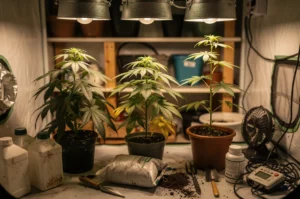
Maintaining a clean indoor growing environment is essential to preventing the unwanted growth of any potential pathogenic fungi. That is why we recommend thoroughly cleaning your growing space (floor, walls, and ceiling) between each growing cycle, as well as all tools and equipment that come into direct contact with your plants.
To do this, you can use either 5% bleach or fungicides diluted to the appropriate concentration. During cultivation, be sure to keep the area clean. To prevent potential contamination from outside sources, you can change your clothes to avoid contamination from spores brought in from outdoors.
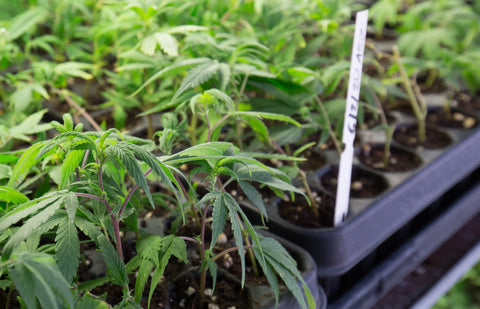
When it comes to outdoor gardening, managing this aspect is much more complicated; however, if you clean your tools thoroughly, it will help drastically reduce this problem.
Above all, you must remove and discard both fallen leaves and plant debris, as they provide an ideal environment for the growth and development of these fungi.
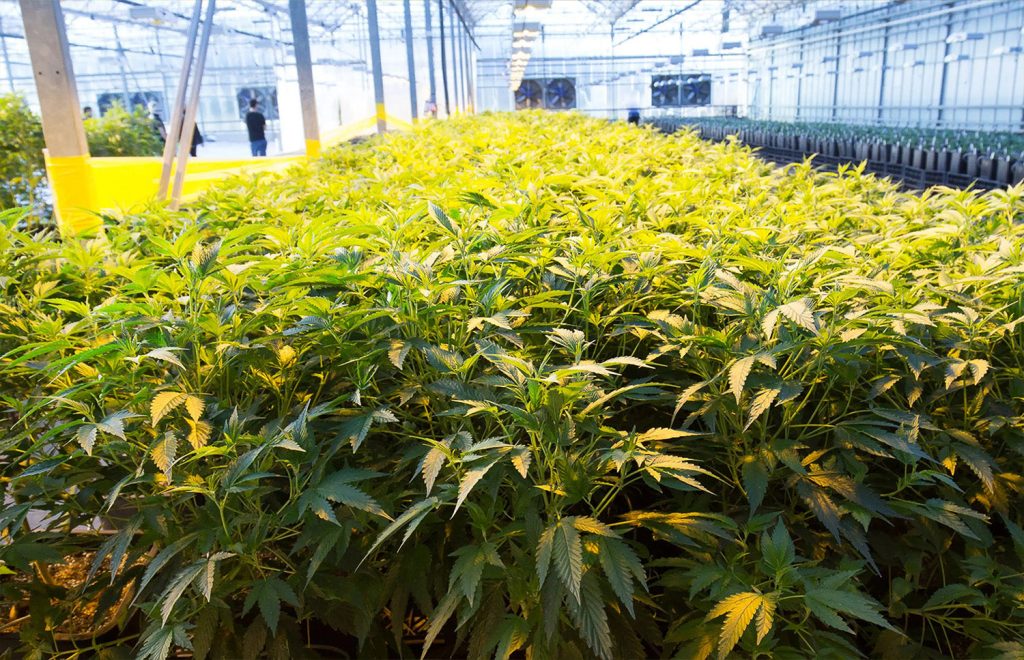
Be sure to always maintain environmental conditions (humidity and temperature) that are favorable for the proper development of each stage of the plant’s growth, whether during the vegetative phase or flowering. This type of fungus thrives when environmental conditions are favorable—that is, when both temperature and humidity are high, and air circulation is insufficient. If you have the appropriate climate control equipment to ensure your grow space is well-ventilated, that humidity is around 50 to 55% during flowering, and that the temperature in your space is between 23 and 26 °C, then you have no reason to worry.
When it comes to outdoor gardening, the key factor is, first and foremost, choosing the highest-quality seeds to address these types of issues. Simply put, if you live in a region with high rainfall or early drops in temperature, you’ll need to carefully select the variety or varieties you plan to grow—choosing those with a short flowering period—to prevent potential fungal infections and give your crop the best chance of success.
If you are working with cuttings, it is crucial to ensure that they come from a healthy mother plant. Otherwise, all the work done during the preliminary preparation phase will be for nothing, and you may see certain fungal problems develop in the short term.
By following this brief guide to basic rules, you can significantly reduce the likelihood of their appearance. Since they originate from highly volatile spores that can settle and grow in even the tiniest spaces, it is impossible to guarantee their complete eradication.
The most important thing is to be able to detect their presence early enough in the crop so that their impact on each cannabis plant is as minimal as possible, and to eliminate them as quickly as possible to ultimately prevent a buildup of problems that could be more serious for the future of our precious harvest.
Below, you’ll learn which fungi can harm cannabis cultivation; we’ll also provide information on how to accurately identify each one and how to actively eliminate them.
Powdery Mildew
Powdery mildew is certainly one of the most common fungi affecting cannabis cultivation, as it requires a temperature of at least 20°C and high humidity to thrive. Sudden temperature fluctuations promote its growth and reproduction. It’s fairly easy to detect a powdery mildew infestation on a cannabis plant, and applying the appropriate treatment is straightforward, but you’ll need to know how to respond before it’s too late.
As with most pathogenic fungi, it is better for them to appear during the growing season rather than during flowering; otherwise, the flower heads could become contaminated and unfit for consumption—or even dangerous to your health, particularly to your respiratory system.
How can you detect powdery mildew?
You’ll be able to tell that your crop is infected with powdery mildew, as this fungus usually appears on the leaves and buds of cannabis plants. At first, you’ll notice scattered, whitish, circular spots— consisting of a powdery substance— covering the surface of the upper parts of the buds and leaves. As the infection progresses, you’ll see these characteristic white spots multiply in number. In the advanced stages, the stems and buds will be more severely affected.
Treatment of Powdery Mildew
It’s far from being the hardest fungus to get rid of, but you need to take action as soon as it first appears, because if it manages to reach our prized, high-quality heads of lettuce, they’ll become unfit for consumption. To prevent this fungus from developing, you can apply a foliar spray of either sulfur or copper sulfate, a horsetail decoction, or even baking soda—the latter being very effective and easy to prepare.
Simply add three level tablespoons of baking soda to one liter of water, then add two tablespoons of olive oil, mix vigorously, and spray for a healing effect. Propolis is also useful as a preventive measure. Tricoderma harzianum, a beneficial (antagonistic) fungus, neutralizes the growth and development of certain harmful fungi. We recommend adding it when preparing your potting mix and during repotting.
If you choose to use chemical fungicides, we recommend that you apply them with the utmost caution, especially in a confined indoor environment, as it will be essential to wear various protective gear (cartridge mask, gloves, coveralls, appropriate footwear, etc.) to protect your health. Please read the instructions for use carefully regarding the proper dosage, and be sure to follow all safety precautions, including the restricted access period for the contaminated growing area. Any crop that is severely affected must be discarded without hesitation.
Botrytis
How can you identify the presence of Botrytis?
Botrytis, or gray mold, is a very common harmful fungus in cannabis cultivation. Fortunately, it is easily identifiable because it causes necrosis in all parts of the affected plants (roots, stems, leaves, and buds). Its characteristic appearance resembles that of a spider’s cocoon, as it features a fairly dense, filamentous growth with a color ranging from brown to gray.
The affected areas are also very dry and appear dead. The insidious thing about Botrytis is that it spreads incredibly quickly—it can wipe out your entire cannabis crop in just a few days—which is why you need to take action immediately.
Treatment of Botrytis
If you want to prevent Botrytis from appearing on your cannabis plants, you’ll need to carefully control the humidity level indoors, making sure it never exceeds 60% during the last four weeks of flowering, since Botrytis always appears during this period.
If this fungus is clearly present, you should first remove and discard all affected parts of the plant, including a few extra centimeters of the healthy portion, as a precaution for your health and to prevent the fungus from spreading to other parts of the plant or to other plants. It is best to avoid consuming flower heads affected by Botrytis to protect your respiratory system.
After removing the contaminated parts and placing them outside the growing area, be sure to thoroughly ventilate the room to remove airborne spores and effectively lower the humidity level, aiming for a relative humidity of approximately 50 to 60% maximum, with an ambient temperature of 26 or 27 °C, to sanitize the area. If Botrytis suddenly appears during the final days of flowering and progresses rapidly and adversely—whether indoors or outdoors—do not delay; please harvest your plants as soon as possible.
If you lack both the physical and material resources to stop the resurgence of this disastrous fungal infection, then the only way to halt its spread is to permanently cut down all the cannabis plants. In the event of a fairly severe infestation, please spray beneficial antagonistic fungi such as Trichoderma harzianum, Ulocladium atrum orGliocladium roseumdirectlyonto the plants. These should inhibit the overall development of Botrytis.

We recommend against using chemicals to treat plants affected by Botrytis, for the simple reason that these fungicides will leave chemical residues that are harmful to human health.
It’s easy to understand that all fertilizers containing nutrients essential for the optimal growth of our beloved cannabis plants—as well as the plant protection products we use to protect them—will end up, at least in part, in the plant tissues of the delicious, high-quality flowers we grow for our own consumption. As the old saying goes, prevention is better than cure—so keep a close eye on the relevant environmental factors (temperature, humidity) and maintain impeccable hygiene.
Seedling Rot or “Damping Off”
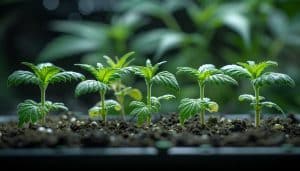
Seedling rot, also known as “damping off, ” is a fungal disease caused by a fungus called Pythium. It affects young plants from a very early stage, most often when they are still young seedlings. Pythium most often appears in unsterilized growing media or soil that is excessively moist and poorly aerated.
How can you tell if seedlings are wilting?
Pythium typically affects the lower part of the cannabis plant—that is, the lower section of the stem near the ground. A typical symptom of this fungal disease is a significant and abnormal constriction of the lower part of the stem, which gradually weakens until it bends completely.
What happens next is quite logical: since the plant is no longer receiving nutrients—because the flow of sap containing water and nutrients is blocked at that specific point—it can no longer feed itself, which will quickly halt its growth and gradually lead to its death in the short term. Pythium is a particularly insidious pathogen because it can lie dormant in high-quality cannabis seeds for a long time and then begin to grow when we germinate those same seeds.
Treatment for Seedling Blight
Unfortunately, damping-off—which is directly caused by the presence of Pythium—is difficult to control within a population of young plants. This is simply because, at this stage of growth, young seedlings have a weak and fragile immune system, which will lead to their complete loss in most cases.
However, you’ll need to act quickly by removing any affected young plants in the vicinity to prevent Pythium from spreading throughout the area. You can apply a specific treatment by spraying orlightly watering the growing medium with Pythium oligandrum, a beneficial fungus that acts as an antagonist against damping-off.
Late Blight (Phytophthora infestans)
The Phytophthora infestans strain of late blight is a fungal disease that exhibits virtually the same characteristics as powdery mildew, though it has a few distinctive features that must be taken into account in order to differentiate between the two conditions.
How can you tell if there's downy mildew?
Signs of a fungal disease such as downy mildew can be seen on the stem, the upper surfaces of the leaves, and the flowers—but not only there, because unlike powdery mildew, we also observe its presence and development on the undersides of the leaves. The primary symptoms indicating a downy mildew infection are small, yellowish to translucent spots on the leaves, and a thin layer of white powder similar to that seen with powdery mildew may also be present. However, it’s important to note that this last symptom does not necessarily appear when the disease is present.
Treatment of Downy Mildew
To gradually reduce the spread of downy mildew and with the goal of completely eliminating it in the short term, you must prune and discard the affected parts of the plants and quickly dispose of them at a waste disposal site located a safe distance from where you grow your crops. It is also important to avoid overcrowding your plants in your growing area; instead, you should ensure good air circulation and ventilation throughout the entire growing space to prevent downy mildew from developing.
An effective way to actively combat downy mildew is to treat the plants with a contact fungicide such as Cymoxanil, Chlorothalonil, or Imazalil. It is also possible to apply a systemic chemical fungicide such as Myclobutanil, Metalaxyl, Fosetyl-Al, Triadimenol, Tebuconazole, or Bitertanol.
Bordeaux mixture is also an effective treatment against this pathogen. We recommend that you always carefully review the instructions for use, as well as the safety measures required by law, before applying any type of plant protection product. If the spread of the disease is not stopped in time, it can easily lead to an infestation of pests and, at the same time, a significant loss of the total yield from your cannabis plants.
Fusarium (oxysporum)
Fusarium is a fungal disease, and thus belongs to a category that includes a large group of filamentous fungi that grow in the soil or substrate. Fusarium is a saprophytic parasitic fungus, meaning it feeds on the decomposing remains of other organisms. Fusarium causes root rot and also attacks the base (lower part) of the plant’s stem.
How can you detect the presence of Fusarium?
The main symptoms we can observe during a Fusarium infection are rot at the base of the stems, as well as small necrotic spots on older leaves, such as those on the lower part of the plant. You may also notice some leaves curling upward, followed by a gradual yellowing of these leaves, which will cause them to wither and eventually die. We can also detect the presence of Fusarium by the lignification of the stems; a good way to confirm with certainty that plants are indeed suffering from Fusarium wilt is to make a cross-section of the stem.
If you notice that the inside is a reddish-brown color, then you’ll have your confirmation. In any case, it’s clear that the plant’s immune system is weakened, as the plants appear generally unhealthy. Depending on the plant’s stage of development, you’ll see either slowed growth or flowering that results in a significant loss of final bud yield. This unfavorable situation could also lead to the presence of insect pests at the same time.
Treatment for Fusarium
If you want to prevent a Fusarium infection, you’ll need to keep the substrate temperature below 29°C, as Fusarium thrives in acidic soil and a hot, dry climate. Maintain impeccable hygiene as much as possible, since a clean space free of plant debris will deter this unwanted guest from entering your indoor garden. We recommend avoiding fertilizers with excessively high nitrogen concentrations; however, be sure to add all the necessary nutrients to your nutrient solution to meet the needs of your cannabis plants.
You can also add between 20 and 30 cc of hydrogen peroxide to your nutrient solution once a week, as it contains hydrogen peroxide, which helps eradicate Fusarium while improving oxygenation of your growing medium at the same time. It is also possible to add an antagonistic fungus such as Trichoderma harzianum to your growing medium, which naturally combats and eliminates the harmful effects of Fusarium.
Be sure to provide good ventilation at the base of your plants, ensure effective air circulation throughout the entire space, and avoid air pockets. Be sure to spray organic fungicides, such as horsetail or nettle decoctions, before sowing your cannabis seeds.
Alternaria
Alternaria is a fungal disease belonging to the Pleosporaceae family, which includes at least 44 identified species. Its primary cause is the decomposition of organic matter. This explains why it devastates more than 20% of agricultural crops worldwide. Alternaria can cause allergies or respiratory problems in humans (bronchial asthma, rhinitis, etc.). It appears that 10 to 15% of the world’s total population is affected by Alternaria.
How can you identify the presence of Alternaria?
Signs of a fungal disease such as Alternaria include dry, circular spots that are fairly dark gray, brown, or black in color, appearing on the leaves and even on the stems of cannabis plants. These spots have a necrotic appearance, which impairs photosynthesis because the surface area available for the leaves to capture light is reduced.
Alternaria causes a gradual slowdown in the plant’s growth by significantly weakening its immune system. This generally gives the impression that the plants are not absorbing water and nutrients properly, as their physical appearance suggests they may be deficient in various minerals.
Treatment for Alternaria
To prevent Alternaria from appearing in your cannabis crop, it is essential to always keep your growing area as clean as possible and, above all, to avoid leaving decomposing organic matter (plant waste) lying around. You must ensure good, even ventilation throughout the space and try to maintain stable environmental conditions by minimizing fluctuations in humidity and temperature as much as possible.
Please water regularly, using just the right amount of water, fertilizer, or nutrients to meet your garden’s needs. Don’t hesitate to apply preventive treatments using a broad-spectrum fungicide. One last thing: Be sure never to reuse spent growing medium.