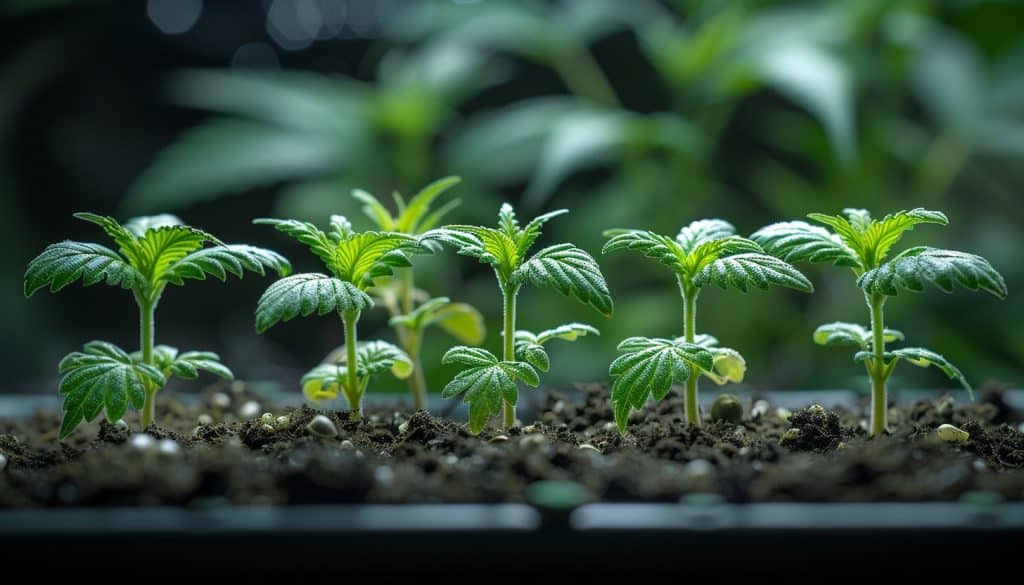
Exposing germinated cannabis seeds to light is a crucial step in the growing process. Understanding the ideal time to start lighting your seedlings can make a significant difference in their health and future growth. This article explores best practices and timing for effectively lighting your young cannabis plants.
The crucial role of light in cannabis germination
Light plays a crucial role from the very beginning of a cannabis plant’s life. After germination, when the first set of leaves (cotyledons) appears, the young seedlings need light to begin photosynthesis. Light is therefore essential not only for growth but also for the plant’s structural development, enabling it to properly absorb the essential nutrients present in the soil.
The first few days after germination
In the days following germination, it is best to place the seeds under a source of soft, indirect light. This helps prevent the stress that overly intense light could cause to the delicate seedlings. Specialized plant grow lights offer a wide range of suitable light spectra, ranging from blue light that promotes early growth to red light that is beneficial during flowering.
Choosing the Right Light Source
When it comes to choosing a light source for your cannabis seedlings, there are several options available. Each has its own specific advantages depending on the plant’s different growth stages.
Compact fluorescent lamps (CFLs)
CFLs are often recommended for the early stages of seedling growth because of their low intensity and minimal heat output. They closely mimic natural light and are a cost-effective option that effectively promotes healthy growth without scorching young plants.
LED panels for plant cultivation
LED technology is becoming increasingly popular in cannabis cultivation, largely due to its energy efficiency and its ability to provide a more precisely controlled light spectrum. LEDs are ideal for maintaining a constant temperature around seedlings while offering an adjustable spectrum that supports the plant from germination through to maturity.
Lighting Design
The intensity and duration of light exposure must be carefully planned to optimize plant growth without harming the plant.
Seedling Lighting Schedule
Cannabis seedlings generally benefit from a light cycle that mimics the long summer days. A common cycle consists of 18 hours of light followed by 6 hours of darkness. This regimen promotes active and robust growth by simulating the optimal conditions of the natural growing season.
- Setting up your lights: Keep the light sources close to the seedlings (20–40 cm above) to maximize light exposure without risking burn.
- Common adjustments: Adjust the height of the lights as your plants grow to maintain the necessary light intensity without exposing the seedlings to excessive heat.
- Monitor the results: Carefully observe how your seedlings respond and adjust the settings if you notice signs of stress, such as chlorosis (yellowing of the leaves).
Common troubleshooting for lighting issues
Even with all your best efforts, you may still encounter issues related to light exposure. Here’s how to effectively resolve them.
Stunted and weak plants
Seedlings that are stretching abnormally are often a sign of insufficient light. To address this, make sure the light source is close enough to the plants, or consider using stronger bulbs or increasing the daily exposure time.
Sunburn and light-induced stress
Conversely, bleached or scorched leaves indicate excessive exposure. In this case, reduce the light intensity or move the lamps farther away from the plants to prevent heat damage. The exact light requirements vary by species, and each individual situation requires a tailored approach.