- You may not yet be familiar with septoria leaf spot, a fungal disease that affects the leaves of cannabis plants. The leaves turn yellow, as if the plant were suffering from a nutrient deficiency, which can be misleading…
- This harmful disease is also known as septoria; it primarily affects the lower branches of the plant and is more common in outdoor crops.
- However, while this phenomenon does not usually result in plant loss, septoria can seriously reduce the total yield of high-quality resinous buds—which ultimately determines the long-awaited harvest.
- In this article, we explain in detail what Septoria is, how to identify its various symptoms on cannabis plants, what conditions promote its development, and, most importantly, what to do to eliminate it from your marijuana crop.
- What is Septoria?
- What are the symptoms of septoria?
- What conditions contribute to the development of Septoria leaf spot?
- How can you control Septoria in cannabis cultivation?
What is Septoria?
Septoria leaf spot, also known as leaf septoria, is a fungus of the Mycosphaerellaceae family that frequently infects cannabis plants grown outdoors. It is a type of mold that most commonly occurs in climates with generally high temperatures and high humidity levels typical of that region of the world.
It is a fungal disease that can be caused by more than a thousand different parasitic fungi. In fact, two distinct strains have been clearly identified as the cause of the disease; these are the fungal diseases known as Septoria cannabis and Septoria neocannabina.
What are the symptoms of septoria?
Symptoms of septoria leaf spot always first appear on the leaves of the lower branches of the plants, during growth or flowering. We then observe the gradual development of circular, brown necrotic spots, which are bordered by yellow lesions on the leaf surface.
These spots may appear dark and have a raised center that looks like a small pimple, but one of their distinctive characteristics is that the vast majority of them have a fairly similar diameter. Thanks to the spot in the center of each lesion, spores can attach to this area as if it were a target, thereby enabling the precise development and reproduction of this fungal rot.
As time passes, the spots dry out and the plant tissue of the leaves cracks, leaving a hole that resembles the impact of a bullet that has passed through the surface. This is entirely normal, as it perfectly reflects the progression of the disease: little by little, the leaf veins—which are essential for the leaves’ irrigation—become severely degraded, ultimately blocking the flow of vital resources (sap containing water and nutrients).
If the level of infection by this fungus is high, you will notice the leaves curling, wilting, and dying, and they will eventually fall off and litter the ground. We will therefore see some defoliation of the lower parts of the cannabis plants. As mentioned above, this type of fungus first attacks the lower leaves; however, it is possible that the leaves at the top of the canopy will also be affected during flowering, just as the stems and even the cotyledons of each plant can be affected.
What conditions contribute to the development of Septoria leaf spot?
Septoria leaf spot generally appears in outdoor crops during hot summer days, particularly following heavy rainfall. Since we cannot control the duration of a rain event, if it is long and intense, it stands to reason that this large amount of accumulated water will lead to high humidity in the air. Another factor that could trigger the onset of this fungal disease is a nitrogen deficiency in the growing medium.
We must be wary of how spores behave over time, as they can remain dormant ( in a state of latency) in the soil or substrate during the winter; once conditions become more favorable during the summer, they will colonize the leaves of their new host to establish a new colony, with the aim of spreading the mold as widely as possible.
How can you control Septoria in cannabis cultivation?
To eliminate septoria from your cannabis crop, you must remove and dispose of all yellow leaves showing advanced symptoms of this fungus at a waste disposal facility, in order to isolate the spores as soon as possible and prevent these fungi from persisting in your crops over time. Be careful with leaves lying on the ground or the growing medium, because when you water, you could spread the spores onto the medium and carry them deep down to the roots.
Be sure to prune the plant’s structure and leaves to significantly improve air circulation inside the plant, thereby preventing moisture buildup that can lead to various fungal diseases such as botrytis, downy mildew, fusarium, alternaria, powdery mildew , etc. If your crop becomes infected with a disease such as septoria, try to maintain a constant humidity level of around 50%.
As you can see, these parasitic fungi can cause many problems for your favorite crops, and the major issue that can arise when septoria is present is the blockage of vital resources to the plants, which occurs through the xylem. As we’ve already mentioned in other articles on these fungal diseases, this mold most often occurs because the plant’s immune defenses are clearly compromised, which provides easy access for this type of rot.
For this very reason, it is essential to provide the right amount of water, nutrients, air, and light to avoid this problem and ensure optimal plant growth in our cannabis cultivation. Also keep in mind that this problem can lead to other related issues, as it may facilitate the presence and infestation of a wide variety of insect pests.
Even though treating plants with a product like neem oil is an excellent way for all growers to solve this problem, it is not always a miracle cure that can completely eliminate all of these insect pests. One way or another, it will cost us time—and perhaps some plants in the process—and thus a portion of the harvest.
This could even lead to a shortage in your bud supply for the current year, so it’s better to be safe than sorry. Also, be very careful during the flowering stage of your cannabis plants to avoid excessive humidity (above 55–60%), as this increases the risk of fungal infections like botrytis. This fungus is quite common in cannabis cultivation, which is why it could easily make an appearance soon. A stable temperature in an indoor grow setup is also crucial for preventing any mold-related issues.
Be careful when watering your plants, whether you’re growing indoors or outdoors—try not to soak the entire plant too heavily (leaves, stems, buds), because a significant buildup of water or excessive moisture within the plant’s structure can lead to a high risk of fungal rot and other problems, such as the spread of spores to other parts of the plant.
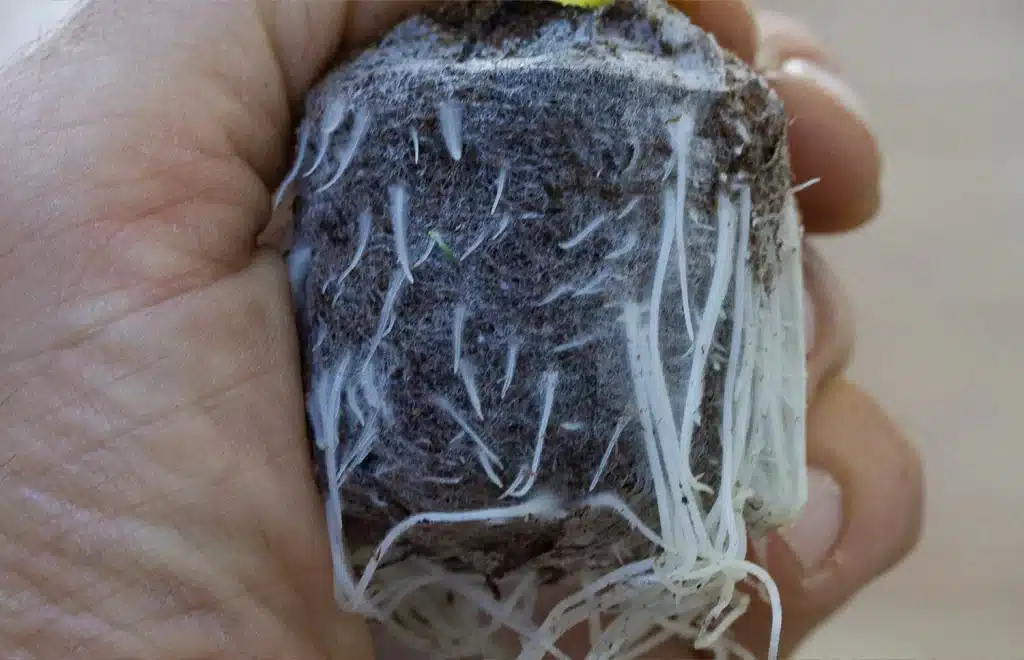
Consider using a high-quality root stimulator once a week to maintain healthy, vigorous roots with optimal nutrient absorption in the soil. Rest assured, if you want to grow your own seeds, this fungus does not directly transmit the disease to the seeds.
A good way to prevent many fungal diseases, such as Septoria, is to start by carefully selecting the highest-quality cannabis seed varieties when preparing your cannabis crops. To do this, it’s essential to choose strains that are resistant to the moisture-related issues discussed here—both during the growth phase and especially during flowering—to ensure a bountiful harvest of high-quality cannabis buds.
Using mulch is also an excellent idea when growing cannabis outdoors, as it helps prevent the spread of spores in the soil—thereby protecting the soil from the spread of rot—and, at the same time, it acts as an excellent soil insulator to counter high summer temperatures while also limiting water evaporation.
Ultimately, this helps protect the soil’s microbial life by effectively limiting water stress. Rotating your crop location from one year to the next can also help prevent this fungus from becoming permanently established in the soil—and, at the same time, help farmers avoid many problems.
It is important to apply at least one preventive treatment using a broad-spectrum fungicide toward the end of the growth period to prevent the characteristic spots caused by this fungus from appearing on your cannabis plants during flowering—and to avoid more serious problems, such as losing some of the resin-filled buds from your harvest. You can also apply a treatment based on neem oil, using a fairly low dosage.
Adding or mixing beneficial (antagonistic) fungi into your soil, compost, or growing medium, such as Trichoderma harzianum , for example, or beneficial bacteria such as Bacillus pumilis, is an excellent step to take to control this fungal infection.