
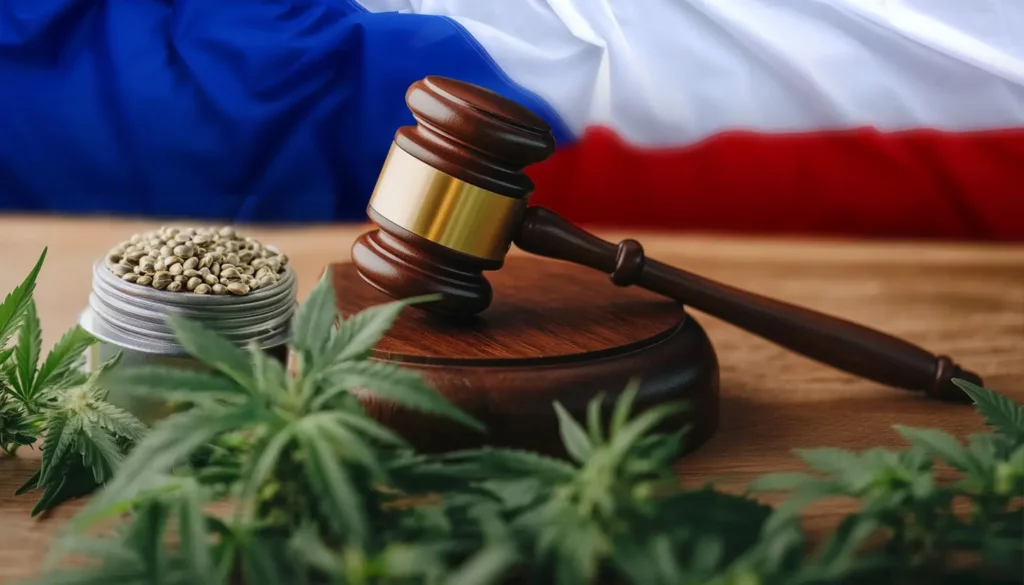
The Czech Republic has recently made headlines across Europe with the Senate’s approval of an unprecedented criminal law amendment regarding cannabis. This significant development paves the way for a new era of cannabis regulation, while sparking sometimes heated debates. An exploration of the motivations behind this change, its practical details, and the varied reactions it has elicited from both the judiciary and civil society actors.
What the cannabis law in the Czech Republic Actually Changes
Until now, Czech cannabis legislation has been somewhat ambiguous, leading to disproportionate prosecutions of those who used it purely for personal purposes. With the recent passage of the Senate amendment, a clear new framework is emerging for a significant segment of the population that uses or cultivates cannabis.
From now on, growing a few plants for personal use no longer carries the risk of a severe criminal conviction. Instead of automatic prison sentences, the focus is now on alternatives such as fines, in order to better distinguish between small-scale amateur growers and actual drug traffickers. An acceptable amount for personal use has even been defined to avoid arbitrary interpretations of the criminal code.


Practical details: possession, cultivation, and penalties
One of the key changes brought about by this reform is the establishment of clear limits: from now on, possessing up to 100 grams at home and 25 grams in public will no longer result in prosecution. This comes as a relief to many individuals who, until now, faced uncertainty during police checks or searches.
If the quantity possessed exceeds the established limit, it remains a criminal offense subject to penalties; however, in such cases, the penalties tend to focus on fines or educational measures. Cases that significantly exceed this limit continue to be handled strictly within the framework of drug enforcement, particularly if there is evidence of trafficking.
- Significant excess: retention of severe criminal penalties
- Domestic cultivation: regulated decriminalization for personal use
A subtle adjustment also allows judges to tailor sentences to each specific situation. The judge thus retains some discretion and can determine whether the purpose of the possession (personal use, family sharing, or sale) warrants special consideration.
An initiative at the heart of a criminal justice reform plan
Beyond the issue of cannabis alone, this legislative change is part of a much broader government initiative aimed at reducing the number of incarcerations, curbing recidivism, and optimizing the resources of the justice system. Putting an end to the automatic punitive model thus signals a clear commitment to rethinking the balance between punishment and prevention.
At the same time, the bill also introduces significant stricter penalties for other modern crimes, particularly those related to the production of illegal content using artificial intelligence. It therefore represents a comprehensive overhaul of criminal policy, in which each offense is classified according to its actual social impact.
Criticism and reservations regarding legalization
The concerns of judicial authorities
Despite overwhelming support among elected officials, not everyone welcomes the cannabis legalization reform without reservation. Several members of the judiciary fear potential loopholes in the law, arguing that illicit networks could exploit certain “gray areas” to facilitate their activities under the guise of legality. The fear of seeing an increase in abuses regarding quantity limits or of investigations being circumvented still lingers.
Another point discussed was whether possessing or transporting cannabis on behalf of others is now less likely to result in penalties, potentially creating more room for discretion among certain intermediaries. In response to these concerns, the ministry has assured that it will maintain targeted oversight while emphasizing the need to evaluate each case on its own merits.
Positive feedback from healthcare professionals and patients
Many advocates of a pragmatic approach to drugs see this as a welcome opportunity to reduce stigma. Decriminalizing individual behaviors that have long been systematically equated with serious crime could relieve pressure on the courts while protecting small-scale users and family-scale growers from harmful stigma.
Some experts also point out that this clarification resolves absurd situations, such as when families were harassed simply for sharing a small portion of their home-grown harvest with no commercial intent. This type of decision thus fosters a more peaceful environment around long-standing practices in the country, setting an example for other European neighbors open to similar reforms.
Potential Consequences and the Future of Cannabis Policy in Central Europe
The movement initiated by Prague has certainly attracted attention beyond the Czech borders. Many are already wondering about a possible ripple effect across Europe, as pressure to modernize is mounting in several neighboring countries where the cannabis debate is progressing rapidly. National strategies vary, however, ranging from regulated tolerance to the maintenance of a strict stance.
In a few years’ time, the concrete results observed in the Czech Republic could fuel discussions at the European level. The impact on recidivism rates, the gray market, and the cost savings in the judicial system will certainly be key points to monitor closely in order to assess the effectiveness of this legal relaxation.