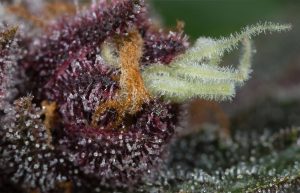
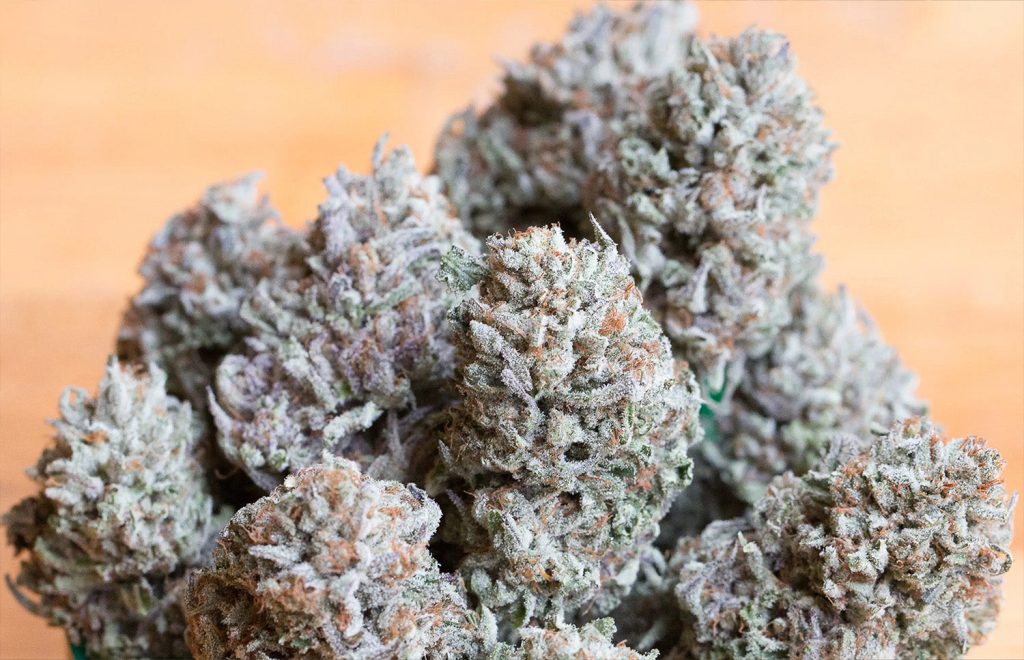
- The terpenes found in the cannabis plant are directly responsible for both the aroma and flavor of the flowers you consume. Furthermore, several recent scientific studies have shown that these compounds also play a complementary, synergistic role with the various phytocannabinoids contained in the plant, particularly in terms of their effects.
- Some fairly recent scientific studies are gradually demonstrating that these chemical compounds also offer health benefits for humans.
- In this article, we’ll cover everything you need to know about the importance of the presence and effects of the various terpenes found in cannabis.
What are cannabis terpenes?
This is a topic that is currently raising many questions within the international cannabis community, and with good reason. From a chemist’s perspective, cannabis terpenes are simply composed of a repeating molecular chain called 5-carbon isoprene. This molecular profile directly influences the aromatic and flavor properties of all plants that produce it. But that’s not all, as it has recently been discovered that terpenes are capable of generating beneficial symbiotic interactions with phytocannabinoids present in the cannabis plant.
Here we can mention the “entourage effect, ” as has already been observed in the analysis of a wide variety of strains with diverse cannabinoid profiles. Today, CBD’s antagonistic effect on THC has been clearly and formally demonstrated scientifically. More specifically, this means that if a cannabis strain contains both THC and CBD—even in unequal proportions— CBD has the ability to counteract the effects produced by THC. It seems incredible, and yet it is a fact.
All of this is to help you understand that, depending on the profile of phytocannabinoids and terpenes contained in any cannabis plant, the aroma, taste, and effects will be shaped by their composition. All of this creates interactive mechanisms between these different elements, leading to significant variations in the properties mentioned. It is precisely this great diversity that offers us multiple possibilities, the various benefits of which are still waiting to be discovered.
We’re talking here about terpenes found in hemp or cannabis, but in reality, these same terpenes can be found in many foods intended for human consumption, particularly in fruits, vegetables, spices, and herbs.
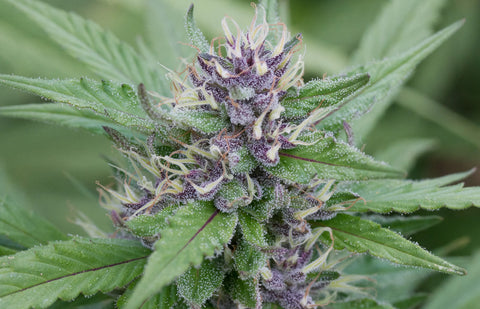
What are the actual properties of terpenes?
For many years, a large number of comprehensive scientific studies have been conducted to investigate the effects and properties of various phytocannabinoids (particularly for THC and CBD) of our favorite plant. However, many mysteries remain regarding terpenes. Here too, a number of rigorous studies have been conducted; however, the scientific evidence gathered remains insufficient to draw definitive conclusions regarding the beneficial properties or effects of terpenes.
Some of these studies confirm that terpenes actively contribute to the “entourage effect” mentioned earlier. In practical terms, this means that they reinforce or amplify the beneficial effects directly produced by the various cannabinoids present in the plant. This is how neuroscientist Ethan Russo demonstrated in a study that terpenes could reduce the adverse effects of THC while simultaneously increasing its therapeutic efficacy. Russo concludes that this close relationship between cannabinoids and terpenes significantly enhances the therapeutic potential of cannabis for various conditions.
As we have known for some time now, all cannabinoids act directly on the receptors of the endocannabinoid system in our bodies. It appears that the same is true for terpenes; we can even say that they may act as amplifiers depending on the composition of active compounds in the plant.
We are thus gradually coming to realize the therapeutic benefits or properties that each terpene potentially possesses, such as anti-inflammatory effects to reduce pain, for example. We are seeing firsthand that these molecules found in hemp are responsible for the nature and expression of various scents, as well as the aroma and taste of the vast majority of our foods, but above all, they ultimately play an important role in our body’s health. It also seems logical that they actively contribute to the benefits provided by aromatherapy.
In fact, it appears that certain terpenes may be able to alter the amount of THC that crosses the blood-brain barrier (a barrier that separates the brain from the bloodstream to prevent potentially harmful substances from reaching the brain). This is essentially how terpenes influence the effects of cannabis on the human body. Other parallel studies suggest that these same compounds may also affect our body’s internal production of dopamine and serotonin.
The effects produced by a terpene can vary; for example, myrcene , which can produce a relaxing and sedative effect, limoneneimproves mental clarity and concentration. Recent studies indicate that the terpene β-caryophyllene has neuroprotective properties that may contribute beneficially to the treatment of neurodegenerative diseases such as Parkinson’s disease.
Although some questions remain, terpenes may offer significant therapeutic value by working in synergy with the various phytocannabinoids found in the cannabis plant. Ultimately, the complexity lies precisely in this area, as there are so many possible combinations regarding the availability or presence of different cannabinoids and terpenes, as well as the proportion of each of these elements at any given time. This is why it is necessary to continue extensive research in this area, in order to discover new, concrete therapeutic possibilities that are validated by the medical community.
-There are three main categories for classifying phytoterpenes :
1) Primary monoterpenes: they consist of 2 isoprene units, in other words, two blocks of 5 units. The best-known monoterpenes are myrcene, alpha-pinene (α-pinene), limonene, beta-caryophyllene (β-caryophyllene), terpinolene, and ocimene.
2) Secondary terpenes or sesquiterpenes : they are composed of 15 carbon atoms. The sesquiterpenes most commonly found in cannabis are Carene (delta-3-carene), caryophyllene oxide, fenchone, humulene, linalool, eucalyptol, bisabolol, nerolidol ( or peruviole), alpha-phellandrene (α-phellandrene), camphene, beta-pinene (β-pinene),alpha, beta, and Y-terpinene (α-β-Y-terpinene), farnesene or terpineol.
3) Tertiary terpenes, or those found in small quantities in the cannabis plant, are: borneol, guaiol, cedrene, camphor, phytol, acetate geranyl geranyl, pulegone, cymene and isopulegol ( menthyl acetate).
What role do terpenes play in the cannabis plant?
The production of terpenes in a cannabis plant is always concentrated in its flowers. This makes perfect sense, since the flowers are, in a way, the plant’s “precious fruits.” Terpenes, in addition to phytocannabinoids —which are also located and produced in the same place, namely inside the glandular trichomes—serve a protective function against potential threats from bacteria, fungi, insects, or many other environmental stressors.
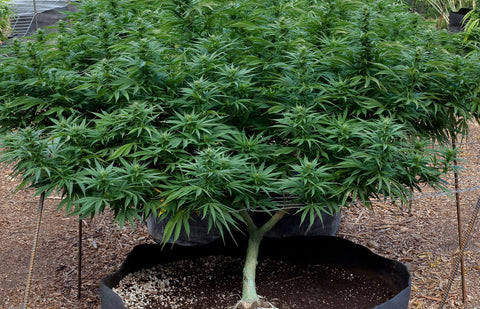
Both the concentration and the composition of the terpene profile expressed by each plant vary significantly, depending on the cultivated genetics and associated growing conditions. In addition to their repellent action against the various pests mentioned above, terpenes also serve to attract pollinating insects, thereby facilitating plant reproduction. Even within the same strain, various factors can lead to certain variations in the production of these compounds, such as: climate, the duration of the maturation period, fertilizers, the growing medium, and also the time of day when harvesting takes place.
All of this leads us to understand that a plant’s terpenic composition is virtually unique, based on observations of these various variations. However, the aromatic profile of a group of plants from the same strain shows strong similarities and thus allows for the concrete identification of the cultivated strain. This is because the terpene combination between the parents of the same genetics is highly distinctive, like a characteristic olfactory fingerprint. This is why we can easily distinguish an Amnesia Lemon from an L.A. Vanilla Cake, for example.
Terpenes and cannabinoids: a symbiotic relationship
Many people believe that terpenes play a direct role in the production of cannabinoids, as they are thought to be composed of terpene building blocks and phenolic groups.
A correlation between terpene and cannabinoid levels appears to have been found in a study conducted under standard growing conditions. This could explain the high concentration of monoterpenes, as well as sesquiterpenes , which form and are stored within the glandular trichomes where cannabinoids are produced.
How are cannabis essential oils extracted?
We can extract cannabis essential oil using a traditional steam distillation method. The steam passes through the plant material, carrying away the plant’s essential oil because terpenes are water-soluble, unlike cannabinoids.
That is why, when distilling cannabis and extracting only the terpenes, the resulting essential oil will have no psychoactive effects.
The procedure is quite simple: simply place the cannabis in a test tube with water, then heat it so that the water turns into steam at a temperature of 100 °C. In this way, the terpenes are captured and carried by the steam to a second glass test tube, where they cool and liquefy again. In its liquid state, the collected essential oil containing the terpenes floats on top of the water, making it easy to separate the two liquids.
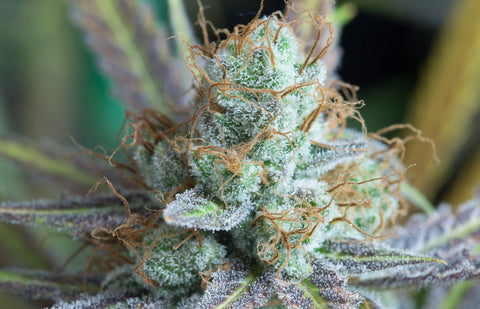
It is important to note that a large quantity of cannabis flowers is required to produce what is ultimately a relatively small amount of essential oil. This explains both its high cost and its limited availability on the market.
What are the different uses of cannabis essential oil?
Cannabis essential oil can be used for:
- Aromatherapy or in the development of a wide variety of cosmetic products (creams, lotions, soaps, massage oils, etc.)
- Enhancing the aroma and flavor while also optimizing the "entourage effect" of your flowers and cannabis extracts
- The production of various food products ( beverages and food)
The various possibilities mentioned here are certainly still greatly underestimated. The cannabis plant still holds many secrets to this day, and we will undoubtedly discover new beneficial uses for cannabis essential oil in the near future.