
In this article, we discuss the boom the Catalan capital is experiencing following the significant rise of numerous cannabis associations since 2013, better known as “ cannabis social clubs .” These clubs believed they had paved the way for a stable and viable form of regulation, but a court ruling ordering their closure came as a bolt from the blue last July in the Mediterranean metropolis.

Barcelona is a very attractive tourist destination for travelers from all over the world. It’s true that it’s a very pleasant city to visit, thanks to the beauty of its historic center—featuring Gaudí’s famous Sagrada Familia, the colorful market on La Rambla, a well-developed harbor area, its numerous and luxurious shops of all kinds, the diversity and exotic flair of its delicious restaurants, hotels, and the vibrant nightlife it has to offer—all set against the backdrop of an ideal Mediterranean climate.
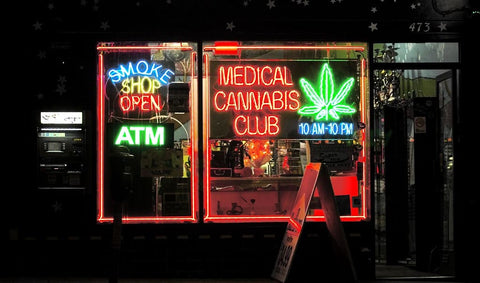
It must also be acknowledged that in recent years it has become a premier destination for all passionate cannabis enthusiasts. With more than 200 cannabis social clubs in the heart of the Catalan capital, you’ll be spoiled for choice. The variety of products on offer is so vast that you’re sure to find something that’s just right for you.
It’s entirely possible to find products with a quality standard close to what’s available in California today. The Spanish now have extensive experience in cannabis cultivation, so their level of knowledge and standards are understandably high. You no longer need to travel to Los Angeles to enjoy “top-shelf” (premium-quality) Californian products—Barcelona is sure to satisfy all your desires.
You could even say that Barcelona’s cannabis scene has far surpassed all the charm of beautiful Amsterdam in this regard. During the Spannabis—Europe’s leading cannabis expo—Barcelona’s many CSCs organize numerous “pop-up” events (short-term activities) throughout the city. This creates a significant buzz within the city’s cannabis community.
Most of these cannabis organizations were founded starting in 2013, and their numbers have continued to grow significantly since then. Their success and reputation are such that many of them have forged close ties with well-known players in the U.S. cannabis industry. The highly renowned “ Cookies ” brand, owned by San Francisco-based rapper Berner, has also set up shop in Barcelona. “The Cookies Fam” recently decided to open a clothing store there, as well as a brand-themed “cannabis social club.” This is anything but a coincidence, as it represents a strategic move into a European city where—unusually—there is tolerance for cannabis is high—a rarity. This is therefore an interesting move by this major California-based group within the European cannabis industry.

A glimmer of hope that brought them a sense of peace emerged in 2016, as the Barcelona City Council had succeeded in passing a zoning ordinance that incorporated regulations for the various CSCs in the city. This regulation contained certain legal requirements that must be met regarding both the establishment and the proper operation of these venues.
Unfortunately, there was a dramatic turn of events last July, as the Supreme Court of Catalonia simply decided to overturn that court ruling, explaining that no municipality has the authority to grant itself the right to establish regulations of this nature.
They argue that such a decision can be adopted if, and only if, it comes directly from the central government in Madrid. The Barcelona City Council had filed an appeal with the Spanish Supreme Court, which rejected it last April. This zoning regulation was the only legal protection available to cannabis clubs in that municipality.
This sad news therefore forced the city of Barcelona to send a registered letter to each association, informing them of the change to their operating rules. It came as a shock to the leaders of the various Barcelona-based organizations when they read this new regulation. The language is clear: they will no longer be able to promote, cultivate, facilitate, or supply cannabis to their members. From now on, these types of establishments are limited to organizing seminars and meetings to provide information to their members. But that’s all they’re allowed to do—in short, this is a mechanism to neutralize these organizations. To top it all off, they’ve been told that numerous inspections will be carried out to ensure that every association is complying with the law.
For now, CatFac (the Federation of Cannabis Social Clubs of Catalonia) has already scheduled a meeting with the City of Barcelona in September to discuss this issue in depth and try to find a solution other than the mass closure of these establishments.
On the other hand, it appears that both Barcelona and its suburbs have experienced a sharp rise in crime over the past five years, with the presence of several national and international criminal organizations. Serious crimes, such as gang-related killings and violent kidnappings for ransom, are becoming increasingly common in the Catalan capital and its suburbs.
Furthermore, a new phenomenon is now emerging in neighborhoods such as Sant Roc in Badalona and La Mina in Sant Adrià de Besós, as certain criminal gangs are increasingly trying to pressure some residents by creating a climate of terror in their neighborhoods, in order to drive them from their homes. All of this is done with the aim of taking over these properties to set up illegal cannabis farms and thereby expand their criminal operations. It seems these organizations know no bounds—where will this criminal rise end?
Being completely objective, what is the solution to this? The return of the black market to the streets and parks of Barcelona, with its share of obscurantism and widespread crime?
Frankly, this does not seem to be a viable solution in terms of either public health or public safety. Once again, the only pragmatic solution is simply regulation for the good of all, accompanied by a comprehensive social program supported by policymakers, in order to reorganize this aspect of society that is currently failing in this Spanish metropolis.