
- Downy mildew is a fungal disease that is fairly common in many agricultural crops, including cannabis cultivation, which is the focus of this article.
- This pathogenic fungus causes an infection within the infected plant, which is associated with various characteristic symptoms that appear as the infection spreads.
- In this article, we’ll clearly explain what downy mildew is, how to detect it in your beloved plants, and how to eliminate it permanently to avoid losing your harvest.
- What exactly is downy mildew?
- What conditions promote the development of downy mildew?
- How can I get rid of downy mildew on my cannabis plants?
It is certain that many growers with some experience in cannabis cultivation have already encountered problems with fungal diseases that cause mold, such as downy mildew, botrytis, powdery mildew, fusarium, and alternaria. These fungi attack cannabis plants gradually, as various symptoms appear progressively within the grow space.
Prevention is by far the best way to avoid any problems related to all of these issues. It’s best to remain highly vigilant, as these pests can lead to others—simply because once cannabis plants’ immune systems are weakened by this mold, harmful insects can easily infest your grow space, whether indoors or outdoors.
Even though a downy mildew infection isn’t the most devastating threat to cannabis cultivation, it’s best to protect and preserve each plant in its entirety, since this mold attacks every part of the plant step by step.
Leaves, for example, can be easily affected, which will gradually disrupt the process of photosynthesis and complicate a whole range of internal metabolic processes, weakening the plants over time and leading to either a partial or total loss of the crop. That is why we are offering some tips on how to handle such a situation.
One of the first and most important pieces of advice we can give you is to carefully select the high-quality cannabis seed strains you plan to buy, paying special attention to the specific characteristics of your climate.
It stands to reason that if you live in an area with high humidity for various reasons, you should choose cannabis strains that are resistant to many of the fungal pathogens that cause mold. This is a basic starting point for preventing rot.
What exactly is downy mildew?
Late blight (Phytophthora infestans) is a pathogenic fungus whose first visible symptoms appear on both the upper and lower surfaces of the leaves, where small spots ranging in color from yellowish to translucent can be observed, as well as a white, powdery residue.
The stems and heads can also be affected; if the heads are contaminated, they will be unfit for consumption because this could cause serious respiratory problems in humans. It is possible to confuse downy mildew with powdery mildew, as the latter exhibits fairly similar symptoms; however, with powdery mildew, the circular spots appear only on the upper surface of the leaves, whereas with downy mildew, both sides of the leaves can be affected by this fungus.
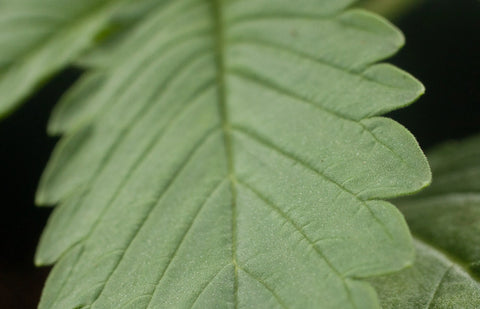
Downy mildew will then cause the leaves to curl upward, before they gradually but surely die. Downy mildew is a harmful fungus that most often spreads through its spores, which attach themselves to and colonize the leaves, facilitating both reproduction and the spread of the disease by forming the characteristic rot on various parts of the plant. The first visible sign will be a slowdown in the plant’s growth or flowering.
Widespread downy mildew infection can spread rapidly within a crop, because even if the mold first appears during the final weeks of flowering, it is entirely possible that this could result in a significant loss of the final yield of the high-quality buds we are all seeking—or even a total loss of the harvest—if the disease is not treated properly and in a timely manner.
It is also important to know that the spores of fungal diseases can remain dormant for a long period of time until all the favorable conditions are finally in place for them to fully develop on plants of all kinds.
What conditions promote the development of downy mildew?
What is actually happening internally within the cannabis plant is that it is already suffering from one or more nutrient deficiencies in its nutritional balance, which weakens its immune system. This rules out any factors related to its environment, and ultimately helps us better understand that each plant gradually loses its ability to resist a potential downy mildew infection.
That is why it is important to pay special attention to your plants’ nutrition by providing them with the right amount of water and nutrients, while carefully monitoring the humidity level. Be careful not to add too much nitrogen to your nutrient solution, as this would accelerate the growth of this fungus.
As we mentioned in the previous chapter, great care must be taken to ensure that this does not lead to related problems, such as the arrival of certain insect pests. Downy mildew is caused by several species of pathogenic fungi.
These factors cause fungal diseases through the action of fungi or molds, which thrive in environments where air humidity is very high and where air circulation and ventilation are insufficient. High humidity alone already provides favorable conditions—or an ideal environment—for the development of significant rot.
Good air circulation and proper air exchange are essential for climate control in the grow space, as it is absolutely crucial to avoid creating pockets of stagnant air in the various nooks and crannies of our indoor cannabis grow operation.
These air pockets provide an ideal environment for the spread of fungal spores throughout each plant. To ensure a successful indoor cannabis grow, it is essential to closely monitor two key environmental factors: relative humidity and temperature fluctuations.
If you maintain stable conditions for these two aspects—both during the growth phase and during flowering—you should be able to avoid many problems. It is also important to prune the foliage to a greater or lesser extent, depending on the varieties you are growing. The goal is to limit moisture buildup at the center of each plant, which can lead to mold growth.
This will promote airflow while also allowing light to pass through, which will simultaneously benefit the potential yield of the delicious, fragrant buds laden with resinous trichomes that each cannabis plant in our garden has to offer. We say this often, but it’s essential to take great care when selecting the varieties of high-quality cannabis seeds you plan to purchase. Make sure their characteristics are well-suited to the climate conditions in your region.
If each plant has too many leaves, there is also a risk of contact transmission—that is, the plants will spread the infection to one another simply through the friction of their leaves, stems, or buds. As we mentioned earlier, fungal spores are highly volatile and invisible to the naked eye, so they can settle wherever they please.
How can I get rid of downy mildew on my cannabis plants?
If you are not familiar with the preventive measures to take, you will likely face the harmful effects of this fungus. That is why we have provided some recommendations below for eliminating these fungi, which could jeopardize the success of our harvest.
Remove fallen leaves and plant debris
First, it is necessary to sanitize the various surfaces of the contaminated parts of the crop and plants (excluding the buds) using water with a high pH between 8.0 and 8.5. The effects of this high-pH water will be very beneficial for our beloved cannabis plants, as the fungal spores will no longer be able to attach themselves to the various sensitive parts of the plants (leaves, stems, buds) to reproduce and colonize the environment.
To do this, please use paper towels or a clean cloth; however, we will be sure to dispose of them far from the growing area once we have finished cleaning. You will also need room-temperature water, especially to remove spores from the plants, in order to avoid any thermal shock to the plants.
Also, be sure to pick up all fallen leaves and other plant debris and quickly take them to a recycling center far from your growing area—just as you would with the rags used during disinfection. Keep in mind that fallen leaves and plant debris provide an ideal habitat for the reproduction and growth of many fungi—such as downy mildew, botrytis, powdery mildew, fusarium, and alternaria—but they’re also a prime destination for many insect pests, which might join in on these unpleasant activities.
Prune the plants as needed
Don’t hesitate to prune all affected parts of the plants, including diseased leaves—those that are drying out, wilting, turning yellow, and gradually dying—as well as the heads, which will be unfit for consumption anyway if they are infected by the fungus, and finally the stems whenever possible.
Of course, be sure to quickly dispose of all this plant waste far from where you’re working. This will also have the added benefit of optimally stimulating the hormones in each plant (auxins and cytokinins, which are important for the structural growth of cell walls) to support their structural development.
Avoid repotting if the plants are sick
If you think about it, it’s certainly best not to transplant your cannabis plants into soil that’s very moist at that point. This makes perfect sense, because when we shake the plants—even unintentionally—to transfer them to a larger pot filled with a new, high-quality potting mix, we’ll be spreading fungal spores across the soil surface or into the potting mix itself.
Caution is needed, as this could lead to new pest problems in the soil—and more specifically, in the roots—which could fall victim to a fungal infection caused by Pythium, for example. A Pythium infection is devastating to roots, as its effects on seedlings lead to their almost certain death within a short period of time.
Pythium, or “damping-off,” is difficult to treat because the problem originates underground, in a part of the plant that is not easily accessible. For people who enjoy growing seeds for various personal experiments, it’s good to know that Pythium can lie dormant in the seeds you’ll harvest.
If you’re growing contaminated plants that will produce seeds you want to save for future use, expect to run into some problems—don’t say you weren’t warned. A certain percentage of the new plants that germinate will develop root rot caused by Pythium at some stage—whether early or late—during their growth or flowering phase.
We must also take certain precautions against a problem that could arise from a lack of knowledge, because since Fusarium and Pythium directly affect the roots in the soil—which are invisible to the naked eye—we might mistake certain symptoms for those caused by viruses, such as the hop viroid, whose symptoms are quite similar to those of the two pathogens mentioned.
Treat Effectively
You can apply a fungicide treatment that works either by contact with plant tissues or systemically—meaning that you mix an organic or chemical product into the nutrient solution used to water the cannabis plants. This is how this type of treatment is absorbed; its active ingredients are distributed throughout all the plant’s organs via the internal water and nutrient transport system, ensuring optimal effectiveness.
We recommend using various contact fungicides, such as cymoxanil, chlorobutanil, or imazalil, as soon as the first rains arrive to provide a protective barrier for the plants. As for systemic fungicides, we recommend treating the plants with metalaxyl, triadimenol, or myclobutanil.
Each product must be applied within a maximum of 72 hours to eradicate these pests from your crops as effectively as possible. Be sure to take the time to carefully read all the information regarding dosages and safety precautions for using these products before applying any treatment. As you’ve likely gathered from this article, prevention is always better than dealing with an infestation.
In short, this is a good reason to keep in mind that if you can maintain proper temperature and humidity levels in your indoor grow space— at the levels required during both the growth and flowering phases—you will drastically reduce the likelihood of these fungal problems occurring in your cannabis crop. Also, make sure there’s enough space between the plants and that air circulates evenly throughout the grow space.