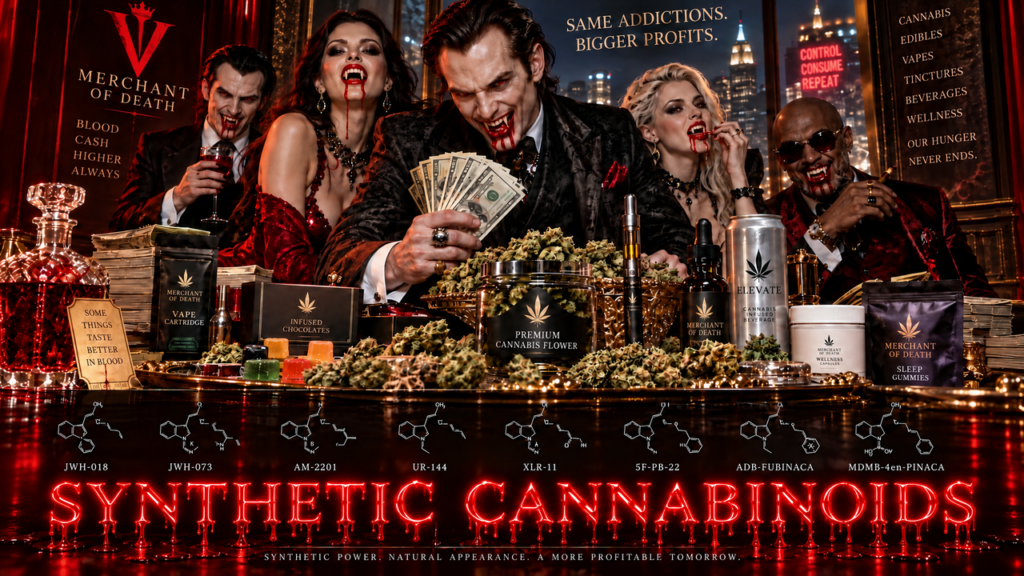
They look almost exactly like CBD, are sold as legal products, and are discreetly vaped even on middle school campuses. Yet, synthetic cannabinoids have nothing to do with the cannabis plant. These lab-made molecules, which are far more potent than natural THC, have become a major concern for health authorities in France and across Europe.
Behind this phenomenon lie unscrupulous manufacturers and retailers who are willing to endanger consumers—often very young ones—for one reason alone: profit. This abuse also threatens the reputation and future of an entire legal industry: the CBD and hemp sector. But that’s not all—the cannabis industry as a whole is directly tarnished by these unscrupulous actors.
What is a synthetic cannabinoid?
Synthetic cannabinoids are chemical molecules manufactured in a laboratory to mimic the effects of THC. The General Directorate of Health describes them as chemicals that replicate the effects of THC, but with greater potency than cannabis. Unlike CBD or THC, they do not occur naturally in the plant, and several are now classified as narcotics in France.
Alongside these fully synthetic molecules, so-called semisynthetic cannabinoids, such as HHC, have emerged. These are chemically modified forms of the cannabinoids found in the plant, which first appeared in Europe in 2022 and are sold as legal alternatives to cannabis. By the end of 2025, 40 such molecules had been identified on European markets. They are often manufactured from CBD: the European Drug Agency (EUDA) is concerned about these substances, which are frequently produced from CBD extracted from hemp with low THC content.
To be more precise or to put it more clearly, what is actually happening is that these malicious individuals are deliberately spraying solutions or liquids containing these synthetic cannabinoids—which, moreover, very often also contain heavy metals and other substances toxic to human health. It is therefore not CBD flowers that are harmful in their natural state, but once they have been enriched with synthetic cannabinoids—that is when the danger, such as potential toxicity to humans, begins.
In today’s market, some CBD flowers are sold at very competitive prices, so the companies in question often purchase low-cost stock from countries like the Czech Republic—which is currently experiencing a significant surge in this industry—or other European countries with excess inventory, and then they directly spray the raw CBD flowers with these toxic solutions containing synthetic cannabinoids. After spraying, a kilo of CBD can be resold at retail for more than ten times its initial price, so you can quickly see the purpose of all this: significant financial profit at the expense of consumers’ health.
At SILENT SEEDS, we are 100% opposed to these synthetic cannabinoids, as they pose a very serious public health problem, and many people experience fainting spells or accidents of varying severity because of them and end up in the hospital. The most serious issue is the inclusion of these dangerous synthetic molecules in products intended for young people: vapes, e-liquids, gummies, flowers, hash, etc.

A Sharp Increase in Viewership
In France, the situation had become serious enough for the General Directorate of Health to issue a national alert in June 2026. Between early 2025 and April 30, 2026, the ANSM recorded approximately 500 reports submitted to drug abuse monitoring centers. More than 70% involved young people aged 13 to 18, mostly boys; 71% of the cases were deemed serious, and two deaths were reported.
The increase is dramatic. According to the head of the Paris Poison Control Center, cited in a parliamentary question, there were a few dozen cases of poisoning per year between 2019 and 2022, compared to nearly 200 in 2024. These products are sold under evocative names such as “PTC” (“blow your mind”), Buddha Blue, Spleen, and K2.
Across Europe, the situation is the same. The EUDA’s 2026 report highlights that the contamination of cannabis-based products with highly potent synthetic cannabinoids and the widespread availability of semi-synthetics are increasing health risks. The agency also notes that vapes or e-cigarettes containing synthetic and semi-synthetic forms of cannabis have been seized in several EU countries.
Health Risks
The primary danger stems from the potency of these molecules. A written question submitted to the National Assembly suggests that PTC has effects comparable to a 95% concentration of THC. Furthermore, the dosages are completely unpredictable: the DGS emphasizes that the compositions and concentrations vary from one product to another.
The reported effects are numerous and sometimes very serious. Psychologically, authorities report hallucinations, panic attacks, suicidal thoughts, or withdrawal symptoms. Doctors also describe prolonged “bad trips,” agitation, impaired consciousness, and seizures. More broadly, the medical literature reports cardiac problems, severe vomiting, and kidney damage linked to these substances, and the EUDA notes that these products increase the risk of physical harm and psychotic symptoms.
Another pitfall: these cases of poisoning are difficult to detect. PTC, which is colorless and sold as e-cigarette liquid, is invisible to the naked eye and eludes cannabis screening tests because it contains no THC. In the hospital, the symptoms are often nonspecific, and these molecules are not routinely tested for in toxicological analyses.
Finally, many victims don’t even know what they’re consuming. According to the DGS, consumers are often unaware of the actual composition of these products, which may contain one or more synthetic cannabinoids classified as narcotics.
Actors driven solely by profit
These products are becoming widespread because manufacturers and retailers have found them to be an extremely profitable market, with no regard for their customers' health.
Product misrepresentation. The most shocking practice involves passing off these substances as legal CBD. The cases of poisoning reported in France are linked to odorless and colorless e-liquids, sometimes marketed as legal—particularly as CBD—but which actually contain highly toxic synthetic cannabinoids. The EUDA has observed the same phenomenon on the illicit market, where certain products sold as cannabis are found to be laced with potent synthetic cannabinoids.
A game of cat and mouse with the law. As soon as one molecule is banned, another takes its place. The case of HHC is a prime example: placed under international control in December 2025, it was immediately replaced by other semi-synthetic compounds such as HHC acetate or HHC-P, illustrating this cycle of creating new substances designed to circumvent the law. These manufacturers aren’t seeking to offer a safe product, but rather to stay one step ahead of regulations.
Low prices and maximum accessibility. Ease of access largely explains the popularity of these products among young people: PTC is available online at a low price—about 10 euros per bottle. The EUDA notes that semi-synthetics are widely available online and, in some countries, in stores, including vape shops and CBD stores.
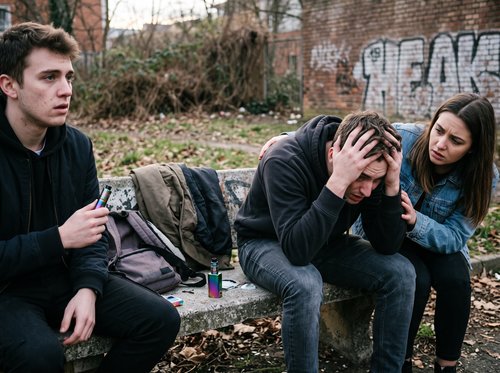
Vulnerable targets. The European agency is concerned that their accessibility and perceived legal status may attract first-time users, including young people and children. Selling a product marketed as legal to teenagers at a low price in innocuous packaging: it’s hard to find a better definition of a cynical business practice.
A Threat to the Legitimate Industry
The first victims are consumers, but the legal hemp and CBD industry—as well as the entire cannabis industry—is also paying a heavy price in terms of stigma and demonization. Every “fake CBD” scandal discredits reputable professionals who comply with regulations, use organic farming methods, are deeply committed to the quality of the products they produce, have their products tested, and keep their customers fully informed with complete transparency.
We are paying the price for the lack of comprehensive regulation of cannabis in Europe; these are clearly the shortcomings of an industry that needs clear and well-structured regulations for all stakeholders at various levels. It is important to emphasize that many companies wish to operate in a way that upholds strong ethical values, but they are still forced to remain discreet or operate in the shadows, wrongly suffering from a misleading negative image that is entirely and erroneously associated with drug trafficking and criminal networks or groups in general.
This misinformation or miscommunication is directly linked to the growing security issues in France, as is currently the case in nearly all European countries. The structural origins of these countries’ concrete societal problems are multifactorial, and cannabis is often presented as one of these causes; however, if we take a deeper international perspective or conduct a more thorough analysis, we quickly realize that the official narrative often serves to mask the causes of the true underlying problems within these countries—something worth pondering.
There is also a regulatory risk. In 2026, the EUDA was tasked with evaluating CBD as a precursor to better understand its role in the production of THC or other psychoactive cannabinoids. In other words, misconduct by a few players could lead to stricter regulations for the entire industry.
In France, some industry observers have expressed regret over a disconnect in the government’s response: while the DGS was issuing warnings about synthetic cannabinoids, the DGAL presented a national control plan in April 2026 targeting CBD products, without including synthetic cannabinoids. This raises questions of consistency or relevance, since synthetic cannabinoids are, in practice, far more dangerous than products made from natural cannabis.
For the cannabis industry—both in Europe and worldwide—the challenge is clear: to clearly distinguish itself from these practices through transparency, traceability, and independent testing. That is why, even while pursuing profit, the team at SILENT SEEDS upholds strong moral and ethical values, with a genuine commitment to public health and respect for human dignity. We will always offer healthy products with enhanced traceability that provide you with a pleasant, premium, and natural experience, while complying with the laws of each country.
SILENT SEEDS We develop cannabis genetics in the form of premium feminized seeds But that’s not all—we are also, and above all, a company in this industry that guarantees quality and safety at every level for consumers.
How to Protect Yourself from This Scourge
There are a few simple steps you can take to minimize the risks:
- Be wary of cheap “CBD” e-liquids with no identifiable brand name that are sold on social media or through intermediaries.
- Request laboratory test results (certificates of analysis) from sellers, and give preference to brick-and-mortar stores and well-known brands.
- Avoid any product with evocative names such as PTC, Buddha Blue, Spice, or K2, or that promises effects “stronger than cannabis.”
- Talk to teenagers about these products, which are often portrayed among young people as harmless.
- If you experience any symptoms after ingestion (seizures, loss of consciousness, agitation, suicidal thoughts), call 15 or a poison control center immediately.
Conclusion
Synthetic cannabinoids illustrate what happens when the pursuit of profit takes precedence over all health considerations. Powerful, unpredictable, and often sold under false labels, they are claiming victims at an increasingly young age and undermining confidence in a legal industry that is striving to become more professional.
In the face of this scourge, reliable, high-quality information remains the best weapon: knowing what you’re buying and from whom, and refusing products whose origin and composition are not guaranteed. For the cannabis industry, it’s also a matter of survival: its future depends on impeccable transparency.
This article is provided for informational and preventive purposes. In case of poisoning, call 15 or your local poison control center.