

- Spain has been a fairly tolerant country when it comes to overall cannabis policies over the past 20 years.
- It was a European country that seemed appealing in this regard, with the emergence of grow shops in the early 2000s and internationally renowned seed banks, an increasing number of cannabis fairs, and the emergence of “Cannabis Social Clubs” across the country, with a particularly strong presence in Barcelona, where many enthusiasts of the plant had been making their cannabis pilgrimage until then.
- CBD flowers and products have also caused quite a stir recently. Lately, it seems that the situation in Spain is changing and that we may even be seeing a reversal of this trend, but what exactly is going on in the land of Don Quixote these days?
The Rise of Spanish Grow Shops
In the late 1990s, a rather unusual new phenomenon began to emerge in Spain: a new kind of store was popping up— grow shops. These shops, stocked with all the equipment needed to grow cannabis (lamps, ventilation systems, grow tents, fertilizers, plant care products, growing media, pots, top-quality cannabis seeds, books, etc.) —and which until then had been seen exclusively in the Netherlands—were gradually arriving in Spain. They appeared and rapidly multiplied in number throughout the country.
Most of them looked like small, somewhat cluttered shops with a slightly mystical atmosphere inside, but in reality, they were very welcoming places where any enthusiast could share their knowledge and experiences, purchase equipment and strains, and enjoy pleasant moments in the company of many friendly cannabis growers at this fabulous “old-school” gathering spot .”
Let’s remember that back then, the internet wasn’t as widely accessible as it is today, so these places were veritable gold mines for enthusiasts of this amazing plant. Information on cultivation and related products was much harder to come by at the time. It was therefore only natural that these products enjoyed unprecedented success.
It appears that over the past few months, certain grow shops located across the country have been facing raids by the Civil Guard, which is cracking down on CBD flowers, among other things, in these establishments. The authorities want to verify that these floral products comply with the legal limit of 0.2% THC, regardless of the CBD content. They are also verifying the traceability of the products’ origin, the corresponding administrative documents, the accounting records, etc.

Some companies have also been accused of complicity or direct involvement in drug trafficking, as is the case with a grow shop in Almería, where 18 people were arrested, including several employees and customers of the business. According to the Spanish police, the grow shop maintained a direct relationship with drug traffickers and acted as “collaborators directly involved in the development of an illegal activity.” In this case, the charges brought against them include several offenses against public health as well as membership in a criminal organization.
The main issue is that there is clearly a lack of legal regulationthat would allow each player to know exactly what options are available to them. This is clearly a dramatic shortcoming of the current Spanish system, a market that has been tolerated for over twenty years and has grown to a considerable size today. However, to date, it has not been governed by any specific, tailored legislation. This is a tragic situation for all stakeholders in the sector.
Given Spain’s geographical proximity to Morocco, a thriving hashish culture has existed there for about forty years—that is, since the post-Franco era (the early 1980s). Even though cannabis has been completely illegal on the Iberian Peninsula for a long time, it is important to recognize that Spaniards are true connoisseurs when it comes to high-quality hashish.
Many people believe that Spain is the new “Eldorado” for cannabis enthusiasts, but in reality, the possession of all narcotics is strictly prohibited, although there is a certain degree of tolerance regarding the consumption or moderate use of cannabis. Spaniards have been heavy cannabis users for decades.
The Rif region of Morocco is well known to all hashish enthusiasts. There is, in fact, an interesting development worth noting here, as Moroccan hashish originally came from a local kif variety called “Beldya,” a well-known endemic strain of kif that is highly regarded by both the Berber people and the Moroccan population in general. However, it faced stiff competition from the emergence of Dutch marijuana hybrids, which yield abundant flower production per plant and have a much higher THC content compared to the local Beldya.
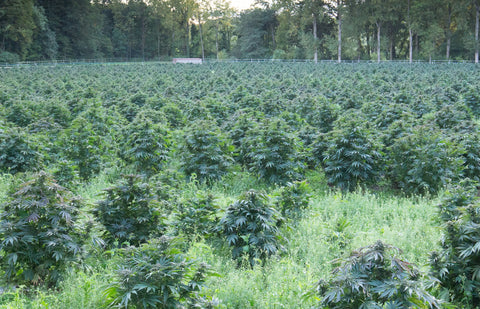
This is why, around 2004, “Khardala” first appeared; while its exact origins are unknown, it appears to be a hybrid between “Beldiya” and an unidentified Dutch hybrid. The use of this variety marked the first major development in Moroccan hashish. Today, we know that a wide variety of modern strains are used to produce hashish, and the properties of their flowers bear little resemblance to what they originally were.
It is important to note that, in Europe, the majority of the illegal cannabis trade consisted of hashish originating from Morocco until the early 2000s. Today, the situation is completely different, as home cultivation has grown exponentially in Europe and worldwide, because consumers are generally more interested in marijuana, and they have naturally become much more demanding about the quality of the finished product than they were before.
The emergence of Spanish seed banks
If we put things into context, at the time, the cannabis scene was largely dominated by the Dutch. It was the early 2000s, Amsterdam was clearly the iconic capital of recreational cannabis in Europe, “the place to be” back then. Every enthusiast had to make a pilgrimage worthy of the name to experience the legendary atmosphere of Dutch coffee shops and succumb to the tempting array of products they offered at the time.
Strain names such as Jack Herer, White Widow, Skunk #1, Super Skunk, Silver Pearl, Super Silver Haze, White Rhino, and Orange Bud were well known, and the growing word of mouth perfectly reflected their appeal as well as the public’s increasing demand.
The most popular cannabis seed banks at that time were Sensi Seeds Bank, Dutch Passion, MR Nice, Serious Seeds, Green House Seeds, KC Brains, Sagarmatha Seeds, Soma Seeds, Homegrown Fantasy Seeds, and Nirvana. All of these seed banks were exclusively Dutch.
This dominance or monopoly lasted only a short time, simply because the success of Spanish grow shops was such that growers’ knowledge and experience quickly advanced throughout the entire peninsula. Furthermore, the political climate in the Netherlands unfortunately took a turn for the worse starting in 2003–2004, with the emergence of a more repressive policy. This led to a sharp slowdown in the cannabis industry in the Netherlands and the relocation of most Dutch companies to Spain.
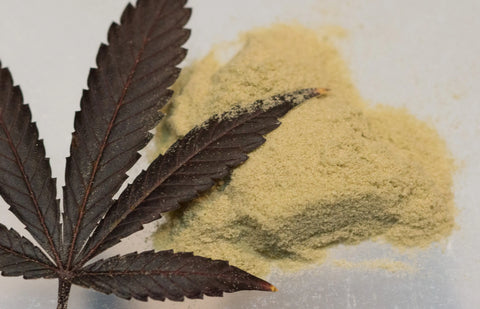
The Spanish, therefore, quickly responded to the Dutch trend and made the most of the opportunity presented to them. So much so that they became leading experts in feminized cannabis seeds—something the Dutch had not yet managed to achieve at that time.
This is how we saw the first cannabis seed banks emerge in Spain around 2005, with the founding of Dinafem, Sweet Seeds, Medical Seeds, Cannabiogen, Resin Seeds, Reggae Seeds, Eva Seeds, and others. It’s worth noting that most of these brands were originally created by entrepreneurs from grow shops. For the most part, they ran both businesses simultaneously, which made perfect sense at the time, as they were at the forefront of this market.
The market response has exceeded all expectations, as most of these seed banks have enjoyed incredible success. The growth of some of them has been so strong and rapid that their popularity has gone global. This has occurred thanks to the worldwide expansion of the Internet and extremely high demand. These Spanish companies have become true international leaders in the field. The legal trade in cannabis seeds in Spain was previously supported by a 2003 ruling by the Supreme Court.
Everything was going perfectly well on the Iberian Peninsula for all companies in this sector until September 16, 2020; however, that date marks a tragic turning point, as it was the day the group POT Sistemak S.L., owner of the brands Dinafem, LaMota and Humboldt Seeds Organization, was subjected to an unprecedented police raid, resulting in the complete cessation of all their operations.
Agents from the Civil Guard and the National Tax Agency raided their warehouses, with the assistance of agents from the Spanish Agency for Medicines and Health Products under the Ministry of Health, and conducted a search pursuant to an order issued by Central Investigating Court No. 6 of the Audiencia Nacional, and carried out by the anti-drug prosecutor’s office of the same judicial body.
The charges against the 18 defendants in this case constitute crimes against public health, membership in a criminal organization, and money laundering. Today, two years after the events, the case is still under investigation, with no further details available. To be continued…
This means that their business model worked for over 20 years, and they were major players in the European cannabis industry. However, no one knows at this point how things will unfold for other companies in the same industry.
The big problem with all this is that some of these companies have experienced explosive growth, driven by strong demand and a growing market; however, there is still no legal or regulatory framework in place today, and that is the root of the problem. You can’t build an empire on shaky foundations. Moreover, it seems there is no political will to address this. This highlights the great fragility of the entire system. Yet we are in an era where legalization seems to be the most logical and pragmatic option for the good of our entire society.
Spanish cannabis fairs are large, vibrant festivals that bring together all the key players in the market since 2002, when the first edition of Spannabis was held at the Palau Sant Jordi in Barcelona.
Before the COVID-19 pandemic, there were about ten cannabis trade shows held annually across the country. These events drew incredible crowds, particularly Spannabis, due to its international reputation. It attracted both the industry’s most renowned companies and massive numbers of visitors from countries such as the United States, Canada, Australia, Colombia, Uruguay, Chile, Argentina, Mexico, China, and Israel, as well as the vast majority of European countries.
With an average daily attendance of over 30,000 visitors, it’s easy to see that this is simply the leading event in the industry in Europe, where a wide range of professionals and passionate experts in the field can come together.
At these festive events, you could meet a large number of industry professionals at their booths, offering a comprehensive range of services (digital marketing and communications, cannabis-related media and advertising, specialized law firms, and other specialized services), as well as all the equipment needed for growing cannabis.

These include, among other things, seeds, fertilizers, grow cabinets, lamps, ventilation systems, automated control systems ( irrigation/lighting/ventilation/CO2), various growing systems ( hydroponics/aeroponics/NFT, etc.), pots, odor control devices ( activated carbon filters/aerosols/gels and deodorizing blocks) and water treatment systems, harvesting machines, furniture, and supplies for proper harvest storage ( cedar wood boxes, decorated glass jars, containers made of hemp or recycled materials), etc.
The industry has grown significantly over the past decade, as there is now a truly comprehensive and practical range of products available for the “perfect budding cannabis grower.”
It was a pioneer in its field, with more than 17 editions held over the past two decades. The city of Barcelona sees massive crowds during Spannabis, with numerous events typically organized by local Cannabis Social Clubs (CSCs). Among other fairs in the sector, around 2008 it was possible to attend the Highlife in Pamplona, Expocannabis in Madrid starting in 2010, Spannabis in Malaga, Growmed (recently renamed Cannamed ) in Valencia, Expogrow in Irun starting in 2012, Expocañamo in Seville, Viñagrow in Villarrobledo, and Intercannabis in Alicante.
The total number of cannabis trade shows is indicative of the sector’s growth and relevance since 2010; it is clear that the cannabis industry is experiencing a surge of interest across all its facets.
All of these events have taken place without a hitch for over 20 years, yet might we not fear that they will disappear in the near future?
We are well aware of the purpose of this type of event, which is to bring together the widest possible range of industry professionals and give the public the opportunity to meet them in person. It is also a festive event, featuring a wide variety of fun activities (concerts, games, etc.) to entertain the public, as well as food and drink stands of all kinds for those who are hungry or thirsty.
All of this contributes to a positive public perception, but the primary role of these cannabis fairs is to promote, facilitate, and invigorate all activities within the sector, with the aim of fostering economic growth and ensuring the long-term viability of this industry as a whole.
From these few lines, we can see that we are facing a great unknown, but above all that anything is possible; that is why it is best to remain objective for now and wait to see how things unfold.
In any case, these trade shows are and remain excellent venues for bringing together passionate customers and industry professionals. When we attend this type of festive event—such as Spannabis in Barcelona, for example—it may seem as though everything is perfectly legal, whereas in reality this in no way reflects the situation permitted by law.
If you do a few Google searches, it’s pretty easy to see just how wide the selection is—from the many varieties of “seeds” to all the products you need to grow your favorite plant—which are available and easily accessible through a plethora of online retailers.
Make no mistake: this is not limited to a single country like Spain, as a European report clearly shows that cannabis use is very high in England & Europe, in Italy, Portugal, the United Kingdom, Germany, Belgium, and many other European countries. All these factors lead us to believe that European drug policy regarding cannabis should be significantly revised, as it is completely outdated and no longer aligns with the current global trend toward the widespread use of hemp.
Spanish cannabis social clubs (CSC)
“Cannabis social clubs” are nonprofit organizations composed exclusively of adults. Each cannabis social club is, in practice , a group of a limited number of members who share, organize, and manage both the production and distribution of cannabis within a closed circle, exclusively for the personal use of their members.
This is a relatively fragile model of cannabis regulation that can be found internationally in countries such as Spain, New Zealand, Belgium, the Netherlands, Slovenia, Uruguay, Germany , and England.
The first cannabis social club to open on the Iberian Peninsula was ARSEC in 1993.
(Ramón Santos Association for Cannabis Studies), followed by the CCCB (Barcelona Cannabis Tasters Club), the MACA (Movement of Cannabis Users for Personal Consumption). These three associations were Catalan, followed by the AMEC (the Madrid Association for Cannabis Studies). All of these associations are part of the history of cannabis in Spain.
Many new cannabis associations began to emerge in 2002 throughout Spain. This was the result of a court ruling that stated that growing cannabis for personal use is not a crime, provided there is no proven intent to traffic it. There are reportedly more than 1,600 cannabis social clubs throughout Spain, reflecting the scale of the phenomenon.
Although much time has passed since the first CSCs emerged, this community-based model remains highly fragile. Public perception of them has become increasingly favorable over time, but that is not enough; only genuine regulation would allow them to look forward to a more secure future. Unfortunately, many people are regularly subjected to police interventions for a variety of reasons these days. This national movement has even succeeded in creating several provincial and regional federations, known as the FAC (federations of cannabis associations).
In recent news, several cannabis social clubs have ended up in court, with convictions handed down following their respective trials. As was the case with the AUETCG (the Asociación de Usuarios para el Estudio Terapéutico del Cannabis de Gandia), which was ordered by the Valencia Court of Appeal to permanently shut down the association, along with a three-year prison sentence for the president and two-year sentences for the secretary and treasurer.
The association “Casa Maria” in Pontevedra was also shut down by the provincial supreme court, resulting in a three-month prison sentence for its two founders. The CSC Acmefuer located in Las Palmas in the Canary Islands was also convicted by the local provincial court, with 13 members
were sentenced to prison terms ranging from 6 to 15 months, along with heavy fines of up to several hundred thousand euros.
The CSCs of Barcelona
Barcelona is a highly attractive tourist destination for travelers from all over the world. It is certainly a city where it is very pleasant to stay, thanks to the beauty of its historic center, including the famous Sagrada Familia by Gaudi, the colorful market by the Rambla, a well-developed port area, its countless sumptuous shops of all kinds, the diversity and exoticism of its delicious restaurants and hotels, and the vibrant nightlife it has to offer—all this in an ideal Mediterranean climate.
It’s also worth noting that in recent years, it has become a top destination for cannabis enthusiasts. With over 200 cannabis social clubs in the heart of the Catalan capital, you’ll be spoiled for choice. The variety of products on offer is so vast that you’re sure to find something that suits your taste.
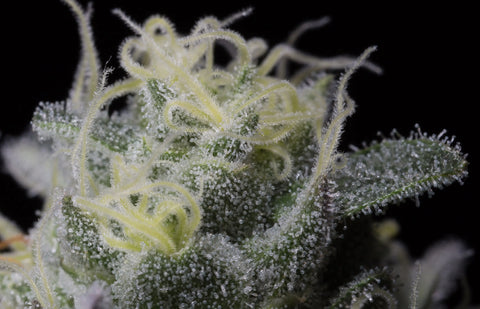
It is entirely possible to find products that meet quality standards comparable to those found in California today . The Spanish now have extensive experience in cannabis cultivation, so their level of knowledge and standards are naturally high. You no longer need to travel to Los Angeles to enjoy top-shelf Californian products; Barcelona is sure to satisfy all your desires.
One could even say that Barcelona’s cannabis scene has far surpassed all the charm of beautiful Amsterdam in that sense. During the Spannabis, Europe’sleading cannabis fair, Barcelona’s many CSCs organize numerous “pop-up” events (short-term activities) throughout the city. This generates significant momentum within the city’s cannabis community.
Most of these cannabis organizations were founded starting in 2013, and their numbers have grown significantly since then. Their success and reputation are such that many of them have forged close ties with well-known players in the U.S. cannabis industry. The highly renowned Cookiesbrand ,owned by rapper Berner, originally from San Francisco, has also set up shop in Barcelona.
“The Cookies ” recently decided to open a clothing store there, as well as a brand-themed “cannabis social club.” This is anything but a coincidence, as it represents a strategic move into a European city where, unusually, there is a high level of tolerance for cannabis. This is therefore an interesting move for this major California-based group within the European cannabis industry.
A glimmer of hope that brought them a sense of relief emerged in 2016, as the Barcelona City Council had succeeded in enacting a zoning ordinance that regulated the city’s various sex clubs. The ordinance set forth certain legal requirements that must be met regarding both the establishment and proper operation of these venues.
Unfortunately, a dramatic turn of events occurred in July 2021, as the Supreme Court of Catalonia simply decided to overturn this court ruling, explaining that no municipality has the authority to grant itself the right to enact regulations of this nature. They maintain that such a decision can be adopted only if it comes directly from the central government in Madrid. The Barcelona City Council had filed an appeal with the Spanish Supreme Court, which rejected it last April. This urban planning regulation was the only legal protection available to cannabis clubs in that municipality.
This sad news has therefore forced the city of Barcelona to send a registered letter to each association, informing them of the changes to their operating rules. It came as a shock to the leaders of the various Barcelona-based organizations when they read the new regulations. The wording is clear: they will no longer be able to promoteor or foster, facilitate or provide cannabis cannabis to their members.
From now on, this type of institution has exclusively the role or the ability to organize seminars and meetings to provide information to its members. But that is all there is to it; in short, this is a mechanism to neutralize these organizations. To top it all off, they are being told that numerous inspections will be carried out to ensure that each association is complying with the law.
For now, CatFac (the Federation of Cannabis Social Clubs of Catalonia) has already scheduled a meeting with the City of Barcelona in September to discuss this issue in depth and try to find a solution other than the mass closure of these establishments.
On the other hand, it appears that both Barcelona and its suburbs have seen a sharp rise in crime over the past five years, with the presence of several national and international criminal organizations . Serious crimes such as gang-related killings and violent kidnappings for ransom are becoming increasingly common in the Catalan capital and its suburbs.
In addition, a new phenomenon is now emerging in neighborhoods such as Sant Roc in Badalona or at the Mina de Sant Adria from Besos, because certain criminal gangs are increasingly trying to pressure certain residents by creating a climate of terror in their neighborhood, in order to drive them out of their homes. All of this is done with the aim of seizing these properties to set up illegal cannabis crops and thereby expand their criminal operations. It seems these organizations know no bounds—where will this criminal rise end?
To be completely objective, what is the solution to this? The return of the black market to the streets and parks of Barcelona, with all the ignorance and widespread crime that entails?
Frankly, this doesn't seem like a viable solution in terms of either public health or public safety. Once again, the only pragmatic solution is simply regulation for the good of all, accompanied by a comprehensive social program supported by the political sphere, in order to reorganize this aspect of society that is currently failing in this Spanish metropolis.
The Spanish government voted to regulate the medical use of cannabis on June 27, though not without difficulty. It took the immense courage of a widely recognized cannabis activist, Carola Perez, who had to participate in numerous parliamentary hearings in order to make her case for the viability of using cannabinoids in medicine. Despite her constant suffering from acute chronic pain following major surgery on her coccyx many years ago, Carola has secured a major victory for countless patients across the country.
Carola has been using several grams of cannabis a week for many years to manage the pain that prevents her from living a normal daily life. It is rare for politicians to consult members of the public when making important societal decisions, and yet that is exactly what happened, as they suffer from a significant lack of understanding on the subject.
The CBD Market in Spain
Cannabidiol, better known as CBD, is actually a cannabinoid that does not produce psychoactive effects. It can even be described as a THC antagonist, meaning that it significantly counteracts THC’s effects when consumed either simultaneously with or after THC. However, it is indeed a phytocannabinoid derived from the cannabis plant, which is found in varying proportions in all hemp varieties listed in the European catalog containing only 0.2% THC.
Anything related to cannabis remains a sensitive topic in today’s society. Although both the UN and the Olympic Committee’s anti-doping commission have reclassified it out of the category of dangerous narcotics, and although it is increasingly credited with beneficial properties ( such as post-workout muscle recovery and improved sleep quality), cannabidiol continues to face challenges. Despite its safety now being sufficiently recognized, CBD still sparks a great deal of harmful controversy—unfairly so.
However, the European Court of Justice recently restored a shred of truth in the Kanavape in the French courts, stating loud and clear that “you cannot ban what is not banned” based on a mere interpretation of the facts. The two young French entrepreneurs, Sébastien Bèguerie and Anthonin Cohen, were then acquitted of the charges against them. In 2014, the company Kanavape sought to market a “CBD vape pen,” whose THC content fully complied with French law (0.2%).
This ruling by the CJEU has been well received by the Spanish courts; however, as it is not currently backed by any clear European regulations on the matter, it may exert some influence but does not carry the same weight as formal legislation. Consequently, the final say rests with the interpretation or assessment of the relevant local court.
Many European countries now sell CBD-derived products such as flowers under clearly defined regulations, without any issues. In Spain, there has been a surge in interest in this cannabinoid since 2020, with the emergence of new companies dedicated to both its production and processing. This has led to a significant number of police raids directly on large-scale production sites in Granada, Almería, Catalonia, and other provinces across the peninsula.
The real problem here is that many people have entered an unregulated industry purely out of economic opportunism, with a profound lack of understanding of the sector and the laws governing it. The tragic outcome is what we are seeing today.
Following the release of the circular from the Ministry of Agriculture, what appeared to be the first steps toward regulation have stalled. More specifically, any company wishing to produce CBD cannabis for any purpose must apply to the Spanish Medicines Agency to obtain a production license, as CBD cannabis remains a controlled substance in Spain at this time.
Recently, the Civil Guard raided numerous “grow shops” and tobacco shops that were selling various CBD-derived products, but it was the flowers that drew their full attention, as they look identical to their tetrahydrocannabinol (THC)-rich counterparts. They simply wanted to ensure compliance with legal limits in the products, as well as administrative and accounting traceability for both suppliers and the establishments visited.
This seems like a fairly significant crackdown by Spain. Is it the result of more than 15 years of lax enforcement, which has led authorities to feel that cannabis is an issue that has completely slipped through their fingers, and that they now want to regain control?
Or that the issuance of medical cannabis production licenses by the AEMPS (Spanish Medicines Agency) is leading to a certain degree of general (re)pression on the part of Big Pharma on all the “underground” players who have made up and shaped this industry for over 25 years?
Or that the European Union has called on the Spanish authorities to significantly reduce crime and curb the overall growth of the cannabis industry within their borders? (With a European anti-drug plan backed by a budget of over 3 billion euros, announced last year)
Unfortunately, we don’t yet have the answer to this puzzle, but these three scenarios are plausible. There is no doubt that Spain has been the most tolerant European country on this issue over the past 20 years, which has led to the widespread chaos we see there today. This is a fact we must acknowledge.
There is one common factor in all of this: the cannabis plant. However, the problem is that it is now found in environments where its legal status varies, with some practices being more acceptable than others and harmful aspects—such as organized crime—leading to unprecedented acts of violence and an ever-growing underground economy.
On the other hand, we must also consider the thousands of workers who now find themselves in a precarious situation—upstanding citizens with strong ethical and moral values who contribute to society and possess both expertise and extensive experience—working in an industry that has yet to receive the recognition it deserves.
These contrasts are worth highlighting to gain a better understanding of the bigger picture. Fortunately, this group of people makes up the majority of the industry; however, this aspect remains largely overlooked—and even invisible to the general public—because these same individuals face significant social stigma and discrimination.
They are clearly victims of unjust marginalization, which is the result of misguided policies. All of this clearly demonstrates the international failure of drug policy—and specifically of hemp in the broadest sense—which reveals a profound lack of understanding on the part of governments, as they are unable to objectively distinguish between its various crucial aspects.
However, it is truly time to open our eyes and realize that THC and CBD each have a beneficial role to play, whether for medical or recreational use of cannabis, just like many other phytocannabinoids found in hemp. It is now necessary for the sale and possession of marijuana to be fully legal, not only in Spain, but also in countries like England & Europe, which is the largest consumer within the European Union.
The bottom line is that cannabis does indeed play a crucial role in our society on various levels; it is now up to our political leaders to grant it the place it deserves through official regulation that is clear, structured, fair, and objective, in line with the needs of today’s society.