
- After legalizing the sale and use of flowers, extracts, food products, cosmetics, veterinary products, and other high-CBD-content derivatives starting in 2017, Switzerland is among the pioneers to have established a presence in this European market.
- Just four years later, in 2021, the Swiss Federal Office of Public Health announced the launch of a national campaign of pilot projects regarding recreational cannabis use by adults.
- News that sent shockwaves through an old, still very conservative Europe…
An international policy better suited to today's reality
Given the international context, which is gradually shifting toward the acceptance of recreational cannabis use by adults, particularly in the United States (starting in 2012) and in Canada (since 2018), the Switzerland is certainly adopting new, progressive, and forward-thinking measures in this area.
Although the law has not yet been passed at the federal level in the United States, the domino effect is already well underway, and federal legalization is now only a matter of time, with a possible timeline in the near future. In Canada, the United States’ powerful neighbor, both medical and recreational cannabis are now available throughout the country.
Many countries around the world are gradually undergoing a similar, albeit at varying speeds, transformation. Some countries in South America are also in the process of developing their medicinal sectors, as is the case with Colombia (since 2015), Uruguay (since 2013), and Mexico (since 2021), and Chile (since 2014), and Peru (since 2017) for now, but these will certainly be followed by other neighboring countries, which will also consider opening up their recreational markets, likely in the near future.
In European countries, progress is still a bit slow to get off the ground, but we are currently witnessing the groundwork being laid for the establishment of the medical cannabis sector within countries of the European Union such as Portugal (since 2018), Spain, Germany (since 2017), France (2021), the United Kingdom (since 2018), Italy (2020), Lithuania, Greece (2018), and Cyprus.
Many products containing CBD are now available over the counter in Switzerland (with a THC limit of 1% or less in flowers) and in Luxembourg, Belgium, and in France, in Italy, in Spain, in the United Kingdom, in Norway, and in Finland, the Netherlands, and Germany, in Austria, in Poland, in Lithuania, in the Czech Republic, in Slovenia, in Macedonia, in Greece and in Turkey.
Similarly, on the African continent, South Africa has legalized cannabis in the broadest sense (recreational, medical, and CBD). Countries such as Zimbabwe and Lesotho , on the other hand, have chosen to allow only medical cannabis within their borders. Over in Asia, South Korea, Thailand , and Sri Lanka now permit the use of medical cannabis. Despite the lack of regulation regarding CBD on the continent until now, it appears that Malaysia and Thailand are seriously considering authorizing this cannabinoid for medical purposes.
A progressive policy is also gaining ground in Oceania, as Australia and New Zealand now permit medical cannabis.
This assessment of the overall state of various international policy developments regarding cannabis in general allows us to observe a certain gradual and positive harmonization in this area. It would appear that whether used for medicinal purposes, for wellness (CBD), or for recreational use, cannabis in the broadest sense is gradually becoming more widely accepted within our society.
It still faces very strong and often unjustified stigma, stemming from a widespread lack of understanding of the plant as well as a negative interpretation of many historical and economic societal factors surrounding it.
Although many governments remain reluctant, the benefits of cannabis are gradually being recognized—first by the medical community, but also by a large number of people who use it as an alternative medicine to alleviate certain conditions for which traditional medical treatments are still not effective enough.
As far as recreational use is concerned, all the evidence clearly shows that recreational cannabis use can be compared to alcohol consumption in our society. From a completely objective standpoint, all that is needed is to develop and implement a policy that is preventive, informative, educational, and thus socially constructive, in order to ultimately establish and develop this new industry on a comprehensive basis.
It is clear that this would require significant changes to various aspects of our society, but rather than being a problem, all the evidence suggests that a policy along these lines would be more effective overall.
The Swiss government has authorized the production, sale, possession, and use of CBD hemp containing less than 1% THC since 2017. The Swiss Confederation is among those countries seeking to reform their drug regulation policies, specifically regarding CBD hemp and marijuana in general.
This seems perfectly logical at present, since cannabis can be classified in the same category as drugs such as alcohol, as both can lead to addiction to varying degrees, even though their effects on human health differ.
It is true that the legalization of hemp is a divisive and timely issue around the world; however, after so many years of relentless opposition, France—and thus the French government—should also consider the potential regulation of CBD hemp as well as cannabis in general, since, incidentally, this country is in fact Europe’s largest consumer of these substances.
Whether we’re talking about Switzerland or France, it seems reasonable to also consider education, prevention, and the protection of young children in our society, since they are the adults of tomorrow. Admittedly, the duchess herself might not be entirely thrilled, but the rest of the world will be…
Everyone has the right to think what they want, but the time has come to be objective and responsive on this issue; it is truly necessary to advance the social rights of the entire global population, in order to respect the individual freedoms of every person, but also—and above all—to drastically reduce the crime associated with this, and thus eradicate a dominant black market that leaves room only for an underground economy with disastrous consequences for our entire society.
Today, the evidence is undeniable: the past 50 years have clearly shown us that various models of prohibition, such as the status quo are not effective solutions, because in addition to the solid reasons mentioned earlier, the lack of health inspections on products is a fundamental issue that tangibly affects product quality, which in turn jeopardizes the public health of users. The outcome is therefore literally negative on every level…
An objective and more practical Swiss perspective
It is undoubtedly for all of these reasons that the Swiss Federal Office of Public Health recently stated that, following a participatory survey of the Swiss population regarding recreational cannabis use by adults, 70% of respondents support future pilot programs for the controlled distribution of cannabis for recreational purposes. This may seem surprising, yet it is indeed a reality. The survey was conducted from late January to early April 2021 among 3,166 adults residing in Switzerland.
The initial objective of this survey was to assess public acceptance of pilot programs for cannabis distribution, as well as the measures the public expects to see in the event of hypothetical full legalization. Their reasons for this are commendable and similar to those mentioned above, namely that they emphasize curbing the black market and overall crime, thereby promoting product quality control, training, education, and the prevention of risky behaviors, as well as the full-fledged establishment of such an industry within our society.
In this participatory survey, the FOPH states that significant consideration will be given to the strict protection of young children and minors in general, as well as to advertising bans and high taxes on cannabis products, in order to ensure positive health outcomes in the event of legalization.
I think it is worth mentioning here that both the Swiss authorities and the Swiss public are demonstrating a certain degree of pragmatism by adapting their societal model with a sense of realism.
Although all of this doesn’t sit well with Madame France, Switzerland is taking a bold stance on the issue of hemp, as they simply realize that opening up and regulating such a legal market will significantly reduce many addictions while protecting young people from them—which is therefore of major public health interest—and will also spur the development of a healthy economy at the same time. This appears to be a response tailored to the needs of their population in this regard, so we can only welcome it.
It is quite easy to see that the population of a country like France is clearly hoping for a change in the law regarding drug regulation in this area, as well as for an expansion of their social rights in these matters. It is true that on January 24, 2022, the French Council of State suspended the portion of the decree banning CBD hemp, which had been quietly implemented on December 30, 2021. This followed widespread disagreement and protests from the hemp union and the Union of French CBD Professionals.
It must be acknowledged that in our neighboring country, the French government is simply burying its head in the sand when it comes to this broad social issue; for even though the cultivation of the plant is strictly prohibited at the moment, the time has come to offer the public a different approach to social rights in this regard. Alcohol has been wreaking havoc in France for many years, yet it is supported by powerful lobbies across the country.
Whether for medical use, wellness, or even recreational purposes, and regardless of its varying concentrations of CBD or THC, hemp—also known as marijuana—should be permitted for a wide and varied range of uses by anyone who wishes to use it, as it now has many identified benefits for the public. However, a two-year national pilot program regarding the plant’s medical use is currently underway.
As Adrian Gschwend, head of the Policy and Enforcement Section at the FOPH: “The central idea is to find a middle ground between a ban and full legalization. The federal government spends 120 million francs a year to enforce this ban, yet it has not been able to stop cannabis use,” Mr. Gschwend continued.
This ban has opened the door to a “dangerous” black market, which generates 582 million francs in revenue each year in Switzerland, he said, citing a yet-to-be-published study by the University of Geneva .”
The Swiss authorities wish, above all, to assess as realistically as possible what the impact of certain stages of legalization and regulation would be in practical terms—including health, safety, and the socioeconomic and economic aspects —of this full-scale pilot program.
In Switzerland, cannabis has been classified as an illegal narcotic since 1951, with a formal ban on its cultivation, production, and sale. Since 1975, consumption has also been a criminal offense.
These pilot trials are expected to begin late this year, and the first interim results will be released around 2024, as Adrian Gschwend noted. Only adults who already regularly use cannabis will be eligible to participate in these pilot projects, with a maximum of 5,000 residents from a single canton.
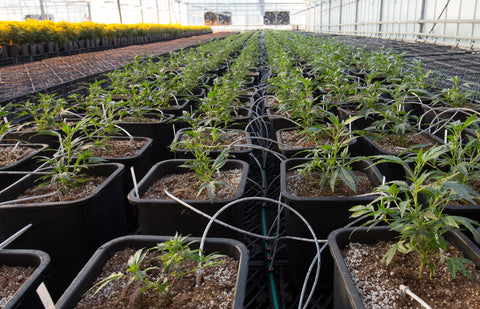
These trials can be conducted by a wide variety of entities, such as municipalities, cities, or universities, for a maximum period of 5 years. They cover all aspects of the sector, ranging from cultivation to consumption, including production and packaging.
The FOPH requires that the products distributed must not exceed a THC concentration of more than 20% and must also comply with the organic farming standards. At the same time, the OFSP requires participants to submit an annual activity report so that it can keep both the public and the current government informed.
These pilot projects are authorized under an experimental provision that was added last fall by the Swiss Parliament to the Narcotics Act. The related ordinance has been in effect since March.
We hope that this pilot project will proceed as smoothly as possible overall and that it will enable Switzerland and its residents to make positive progress on their overall cannabis policies. Furthermore, we sincerely hope that Phytocann will be able to play an active role at the heart of this experiment, thanks to the experience and “premium” expertise already evident across their current product line. Knowing that they use exclusively organic production methods, we wish them a very promising future.