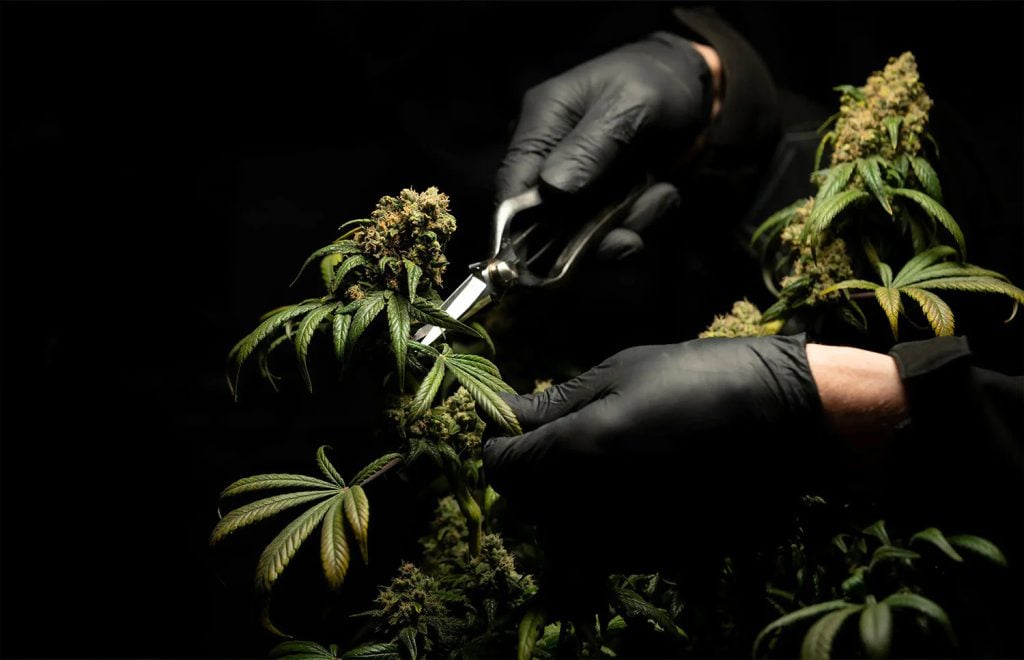
Although cannabis is the most widely cultivated illegal drug in the world, very little is known about its global production, trade, and consumption. This is primarily due to more than a century of global prohibition and the risks associated with researching the cultivation of illegal drugs.
Worse still, the limited data available on cannabis cultivation is often inaccurate, unreliable, and highly controversial. While this situation has always been problematic in terms of knowledge and informed policymaking, it has now become even more acute. As a result, global trends toward decriminalization and legalization are already having consequences, including legislation on cultivable cannabis varieties .
The cannabis plant: what is it?
Cannabis sativa, best known as the source of marijuana, is the most recognizable, notorious, and controversial plant in the world. While the structure of plants may seem much simpler than that of animals, the structural adaptations of C. sativa are highly complex and intelligently designed to fulfill a wide variety of functions.
Cannabis plants vary greatly in height depending on their environment and whether they are bred for their stem fiber (the tallest type). However, they generally range from 1 to 5 meters in height. The main stem is erect, ridged (especially when tall), and somewhat woody on the inside. Additionally, it may be hollow in the internodes (the sections of the stem between the bases of the leaf stalks). Although the stem is more or less woody, the species is often referred to as a herb or herbaceous plant. Herbs and herbaceous plants are defined as lacking significant woody tissue, so these terms are not strictly accurate.
Cannabis: a general term
The term "cannabis" in the broad sense refers to the cannabis plant, specifically:
- its psychoactive chemicals, used in particular as illicit and medicinal drugs,
- its fiber-based products, such as textiles, plastics, and dozens of building materials,
- edible products made from seeds, which are now found in more than a hundred processed foods, and
- all the related considerations.
In practical terms, " cannabis " is a generic term that refers to all aspects of the plant, particularly its products and their use.
What are the different species of cannabis plants?
Cannabis Indica and Cannabis Sativa are the two main varieties of the cannabis plant. There are many other original local varieties of these two types that originate from various regions around the world.
Within each of these varieties, there are a large number of individual strains, each with a different cannabinoid profile and medicinal effect. Since Indica strains contain more chlorophyll than Sativa strains, they grow and mature more quickly.
Pure Sativa
Pure Sativa cannabis is a rarity in the medical marijuana field because these strains are difficult to grow, both indoors and outdoors. Seeds of this type are also hard to find because sellers tend to stock popular varieties, and pure Sativas aren’t as popular. Sativa cannabis seeds mainly come from more equatorial regions (Colombia, Mexico, and Southeast Asia).
They grow as tall, slender plants with narrow leaves and are light green in color. They grow quickly compared to indica strains and can reach heights of 20 feet in a single season. Once flowering begins, they can take 10 to 16 weeks to fully mature. The flavors range from earthy to sweet and fruity.
- The effects of Cannabis sativa
The effects of pure Sativa can often cause paranoia and irregular heartbeat. As a result, pure Sativas are rarely chosen for recreational use. If too much pure Sativa is consumed, it can feel similar to drinking far too much caffeine. The positive effects of Sativas include their uplifting properties, which can help to:
- depression,
- fatigue,
- stimulating appetite,
- pain, and
- to nausea.
Although pure Cannabis sativa seeds are quite rare, they are highly sought after by breeders, who use their genetic stability to create designer hybrid strains.
Sativa-dominant hybrid
These are sativa strains that have been pollinated and crossed by a breeder to meet specific criteria, such as the exotic aromas, flavors, and stimulating effects for which sativas are known. Often, these hybrids contain some indica genetics but are primarily sativa-dominant in nature.
Sativa-dominant hybrid strains are sought after for their energizing effects, often without the paranoia associated with pure Sativa strains. Sativa-dominant strains are uplifting, energetic, and provide a “cerebral high” that is best suited for daytime use. These strains have antidepressant and appetite-stimulating qualities and can be very valuable as medicine in this regard.
Pure Indica
Pure Indica strains originally come from the world’s hashish-producing countries, such as Pakistan, Afghanistan, Morocco, and Tibet. They are short, dense plants with broad cannabis leaves that often grow a darker green, containing more chlorophyll and fewer secondary pigments. For your information, secondary pigments protect the plant from excessive sunlight.
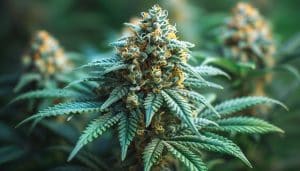
After flowering begins, pure Indica seeds mature in 6 to 8 weeks and are better suited for indoor cultivation because they do not grow as tall as Sativas. Their flowers will be thick and dense, with flavors and aromas ranging from pungent skunk to sweet and fruity. Indica plants have by far the most soothing, sedative, and relaxing effect. Users typically turn to Indicas for insomnia and severe pain later in the day because they produce a strong, cloud-like high.
Indica-dominant hybrid
In terms of medicinal value, these are the best and most highly regarded. Today’s “Kush” strains are an excellent example of these types and are by far the most popular. They tend to possess many qualities that both growers and consumers find appealing.
As a result, most medical marijuana is an Indica hybrid. Because of their higher CBD levels—a result of crossbreeding with Cannabis Ruderalis—these strains are also beneficial. They are used as a sleep aid for those suffering from injuries, insomnia, or severe inflammation.
Ruderalis
Cannabis Ruderalis is a subspecies of Cannabis, just like Cannabis Indica and Cannabis Sativa. It is native to Central Russia and possesses very unique and distinctive qualities. Ruderalis has very low THC (tetrahydrocannabinol) content and is almost never grown for recreational purposes. Its high CBD (cannabidiol) content makes this strain increasingly popular as a parent plant for medicinal strains. Ruderalis is particularly interesting because it flowers based on age rather than the light cycle. This is known asautoflowering. This means that even when grown indoors under 24 hours of light, it will automatically begin to produce flowers according to its own genetic schedule.
Thus, when crossed with an indica or a sativa, these strains are highly likely to autoflower and have a higher CBD content. Ruderalis is also quite resistant to damage caused by insects or diseases. Cannabis ruderalis and its genetic advantages have radically changed the way geneticists and seed breeders create strains.
Cannabis seeds: What does global legislation say?
The perception of arguments in favor of cannabis legalization continues to evolve rapidly. Despite this, the cannabis seed market remains vibrant. For example, England & Europe the largest consumer of cannabis in Europe to date. It is therefore not uncommon to see online stores offering collectible cannabis seeds in England & Europe. While websites selling cannabis seeds continue to grow in number, many people wonder whether the product is legal or not.
Is cannabis legal?
The truth is that cannabis is permitted for consumption, cultivation, and sale, but only on the non-negotiable condition that the THC content does not exceed 0.3%. In fact, cannabis seeds whose THC content does not comply with this rule are psychoactive. They affect brain function and produce a “high” in users. As a result, most experts in various countries have compiled a list of legal cannabis strains . Most of these are derived from Cannabis sativa.
It is considered safer because it has a low THC content; conversely, its high CBD content makes it widely used, particularly in the medical field. Finally, any species of cannabis plant may be grown provided that the THC content is 0.3% or less. If this condition is not met, then any use of plants of this species is considered illegal.
Cannabis cultivation in England & Europe professionals: what does the law say?
French law did not previously distinguish strictly between the different varieties of hemp. Recently, a clear distinction has been made between hemp—that is, cannabis intended for industrial use—and cannabis grown for the extraction of cannabinoids. As a producer, the cultivation of cannabis is governed by laws. The main provisions of these laws are listed below.
- Cultivated species must belong to one of the varieties of Cannabis sativa L. authorized for cultivation.
- The THC content of the resulting plants must be 0.3% or less.
- Cannabis seeds must be obtained from the central hemp growers' cooperative.
Private individuals, on the other hand, are subject to a strict ban under French law. Therefore, private individuals are prohibited from germinating or planting cannabis seeds, even for personal use. Failure to comply may result in penalties.
So, which cannabis cultivation systems are permitted?
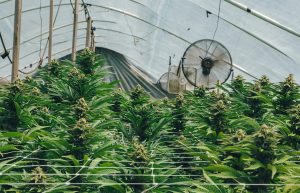
Answering this question requires reviewing the current laws in each country. But the good news is that cannabis cultivation systems are virtually the same in all countries that have legalized its cultivation. There are three main types of legal cannabis cultivation systems based on current regulations: indoor cultivation, mixed-light cultivation, and outdoor cultivation. These three production systems can, of course, impact the environment in different ways.
What are the environmental impacts of cannabis cultivation systems?
Indoor and mixed-system cannabis cultivation may require higher levels of external inputs (such as energy and fertilizers) but are also associated with higher yields. They also help alleviate concerns about ecosystem degradation. Outdoor farms may require fewer resource inputs.
However, poor management or an unsuitable location can disrupt surrounding ecosystems. Indoor and outdoor cultivation systems may be associated with risks of air pollution from biogenic volatile organic compounds (BVOCs), which can act as precursors to ozone formation. To date, these various concerns have not been the subject of systematic research.
Furthermore, in practice, there are countless variations and combinations among production systems. For example, on a single farm, mother cannabis plants may be kept indoors. Conversely, cloning may take place in mixed-light environments, while mature plants are grown outdoors.