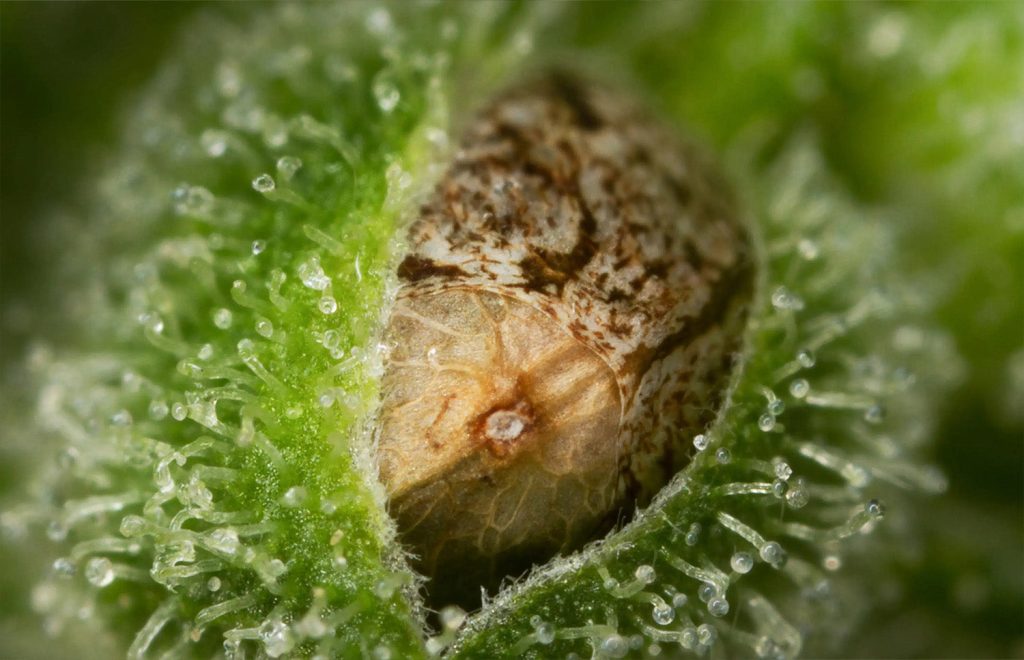
- Fusarium is a fungus capable of causing widespread devastation in many agricultural crops, as it causes fusarium wilt, a devastating fungal disease.
- The consequences of this pest are devastating, as it prevents the cannabis plant from receiving nutrients by blocking the xylem, which halts the flow of sap that carries water and various nutrients.
- In the article below, we explain in detail what Fusarium is, how to detect its presence in a crop, what preventive measures to take to avoid its occurrence, and what solutions are available to eliminate it.
- What is fusarium?
- How can you detect the presence of Fusarium in a cannabis crop?
- What preventive measures should be taken to prevent its onset?
- What are the best ways to control Fusarium?
Most experienced growers know full well that growing cannabis plants is far from a smooth sail in many respects. Depending on whether the crop is grown indoors or outdoors, a wide variety of factors vary in their respective environments.
Of course, you need to have a solid understanding of cannabis cultivation in general—including the different strains—in order to make the best choice when it comes to purchasing high-quality hemp seeds.
It is also important, above all else, to thoroughly research the resistance of these cannabis seeds to potential infections by pathogenic fungi—such as Fusarium, among others— or to potential attacks by various species of parasitic insects.
What is fusarium?
Fusarium belongs to a group of filamentous fungi called Nectriaceae, which includes no fewer than thirty pathogenic fungal species. Fortunately, not all 30 of these species affect plants.
The downside is that, among all these species, Fusarium oxysporum attacks cannabis plants in a part that is vital to their nutrition and survival: the roots embedded in the soil. Since there is a certain balance at the heart of the plant world, this fungus potentially affects only certain plants, as it can even play a beneficial role for some of them.
Some scientists have put forward a theory suggesting that this species likely originated from another harmless strain associated with the outer layer of plant roots, known as the cortex. According to them, a mutation in this fungus initially allowed it to penetrate the plant’s vascular tissue, thereby replacing its previous survival mechanism.
Fusarium is one of the most dangerous pathogens affecting cannabis plants. This is undoubtedly why some governments around the world use this fungus as a means of combating drug trafficking. Their method is quite simple: they spray all illegal cannabis crops from the air to eliminate them.
Fusarium is one of those particularly insidious fungal diseases, as it seriously affects cannabis plants grown from even the highest-quality seeds—whether they are in the vegetative or flowering stages—simply because infections caused by this rot are localized in the lower, underground portion of the soil or growing medium, specifically at the base of the stem and in the root system.
How can you detect the presence of Fusarium in a cannabis crop?
Fusarium is one of the pathogenic fungi that causes a disease known as fusarium wilt. This infection attacks the underground root system at the roots and stem base of cannabis plants, completely halting their ability to absorb water and nutrients. The harmful effects will quickly become apparent, as the hemp plants will appear weakened, with leaves that gradually wilt and dry out, ultimately leading to their complete death. Harvesting will then become a distant pipe dream.
Once the fungus comes into contact with the root cortex, Fusarium penetrates the xylem. Cannabis plants are completely dependent on this vascular tissue, as it allows for the irrigation and transport of sap—containing the necessary water and nutrients—through the stem to all parts of the cannabis plant.
If hemp plants grown from high-quality seeds do not receive essential nutrients such as nitrogen during the growth phase, or phosphorus during the flowering phase—and the same applies to water—then we must admit that, in the absence of these vital resources, a beautiful, bountiful harvest of large buds generously covered with high-quality resinous trichomes is definitely compromised by the presence and attack of these pathogenic fungi.
The main visual signs that should alert you to a Fusarium infection in your indoor or outdoor crop are yellowish, wilted leaves and a significant slowdown in your plants’ growth or flowering. You may also notice rot on the roots, stems, and even the flower heads. The roots beneath the soil surface will turn red.
You will need to make a cross-section of the xylem in the stem to confirm the infection by checking for a change in color (darkening) within the xylem. You’ll need to pay close attention to the outside of the stems, because if you see orange, pink, or whitish fungal growth, then you can be sure you’re dealing with a Fusarium-type fungal infection.
You will also notice the stems swelling; they may crack and split due to the pressure caused by the growth of this fungus. At the same time, you will see the rot spreading throughout the plant, as well as its necrotic effect on the main stem.
What preventive measures should be taken to prevent its onset?
The onset of the fungal disease fusarium wilt has more long-lasting effects in an outdoor environment. This is quite easy to understand, because once it has taken root deep in the soil, it is not easy to eliminate it quickly and permanently. We recommend that you carefully follow the preventive measures we outline below.
If you’re growing cannabis plants outdoors and your crop has been affected by this fungus, you’ll need to find another plot of land with healthy soil, as it will take many years for this type of mold to be completely eradicated. The spores will remain in the soil for a very long time, benefiting from the insulation and protection provided by the subsoil, which significantly increases their ability to lie dormant in this natural environment. This clearly means that a high risk of potential infection will persist at that location for many years to come.
Growing hemp in pots of an appropriate size is certainly one of the best ways to prevent spores from developing in the growing medium and, subsequently, to keep mold from spreading to the stems, leaves, and buds of our beloved plants. Growing in pots also helps prevent excess moisture in the growing medium by allowing for precise watering and nutrient application.
If, following an unfortunate crop loss—whether from a crop grown outdoors or indoors—you end up with a certain number of affected plants, you must immediately dispose of those damaged plants at a waste disposal facility located far enough away from your home. This must be done to prevent spores from reestablishing a fungal colony, which could lead to a recurrence of the same devastating outbreak.
Introduce beneficial fungi directly into your soil, such as Trichoderma harzianum or other mycorrhizal fungi. These fungi have antagonistic properties, meaning they neutralize the harmful effects of pathogens. As a result, they significantly improve soil microbial activity, which not only provides plants with better distribution of water and nutrients but also strengthens their immune systems against a wide range of diseases.
It is very beneficial to introduce these beneficial fungi as a preventive measure when preparing your soil; this way, they can trigger biological defense mechanisms, creating the best possible conditions for the plants’ establishment and ensuring a successful growing season.
Another important point is that you should regularly measure the pH of your soil or growing medium, since Fusarium is a fungus that thrives in acidic soils. Be sure to maintain a stable temperature and appropriate humidity levels at every stage of growth and flowering. Try to keep the temperature at the level of the growing medium below 29–30 °C.
Also, be sure to maintain good air circulation indoors. Keep in mind that plants need less water during the last two weeks of flowering, which will also help limit moisture buildup. All these tips will help you avoid many symptoms and problems.
What are the best ways to control Fusarium?
Unfortunately, there is still no miracle cure available today to permanently eliminate this fungus from our hemp crops. No organic treatment is currently available, and the same is true for any potential chemical treatment. The best course of action is therefore to limit its occurrence by following these preventive measures to the letter and with the utmost rigor.
One final, very important recommendation for your health: never consume buds infected with fungal diseases, as you could experience symptoms consistent with serious respiratory illnesses. It’s always better to be safe than sorry…