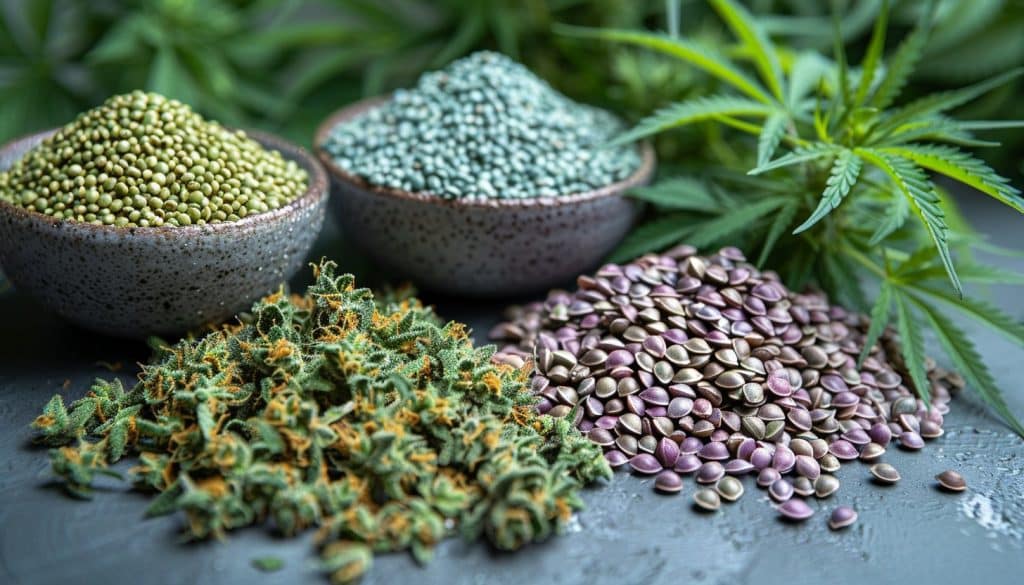
When exploring the vast and diverse world of cannabis, it’s common to encounter confusion regarding the terminology used, particularly when it comes to seeds. Cannabis seeds and CBD seeds, although derived from the same plant, are intended for distinct purposes, which influences their selection and cultivation. This article details the major differences between these two types of seeds to provide clarity for both hobbyist and professional growers.
Definition of cannabis seeds
Cannabis seeds are produced by pollinated female plants. They can give rise to plants capable of producing a wide range of psychoactive compounds, primarily THC (tetrahydrocannabinol), the substance responsible for cannabis’s psychotropic effects. These seeds are highly diverse, with a wide spectrum of strains influencing both their physical characteristics and their effects. They play a crucial role in cannabis biodiversity and enable the production of new varieties that meet specific needs, such as hardiness, yield, or specific potency.
Definition of CBD seeds
CBD seeds refer to seeds grown specifically to produce high levels of CBD (cannabidiol), a non-psychoactive substance valued for its medicinal properties without altering mental state. These seeds are selected from cannabis plant varieties that are genetically predisposed to produce mostly CBD and little or no THC. Growers of these seeds often focus on therapeutic applications, harnessing the benefits of CBD in the treatment of various conditions such as anxiety, pain, and epilepsy.
Key Differences Between Cannabis Seeds and CBD Seeds
The fundamental difference between these two types of seeds lies in their specific chemical composition: while cannabis seeds offer a broader spectrum of potential effects due to the diverse presence of cannabinoids, CBD seeds are bred to maximize cannabidiol levels. Thus, the choice of seed will directly affect the type of cultivation (recreational, medical) and the appropriate cultivation methods.
chemical profile
A key distinguishing factor is the chemical profile. CBD seeds are optimized to minimize THC—known for its recreational effects—while maximizing CBD, which is sought after for its therapeutic benefits. In contrast, traditional cannabis seeds are selected to produce a variety of cannabinoid profiles, which can result in plants with varying levels of THC and CBD.
legal aspect
The legal landscape also varies significantly depending on the type of seed. In many regions, laws differ markedly between THC and CBD, with THC often subject to stricter regulations. It is crucial for growers to understand these legal differences to avoid legal complications when growing plants from these different seeds.
How do I choose between these seeds?
To decide which type of seed is best suited to your situation, consider the purpose of your cultivation. Is it for personal use? Medical use? Recreational use? The answer greatly influences which type of seed is considered optimal.
agronomic considerations
In addition to chemical profiles and legal implications, agronomic conditions such as climate, soil, and available space must be taken into account. Each type of seed has specific requirements that can determine its viability in your growing environment.
End Use of Seedlings
- Medical Culture: Choose CBD seeds to maximize the benefits without any intoxicating effects.
- Recreational Use: Choose cannabis seeds with a high THC content.
- Research and Development: Hybrid seeds developed for specific traits may be required for certain studies.
With the right information and a clear understanding of your goals and local environment, choosing between cannabis seeds and CBD seeds should lead to a successful and rewarding grow.