Regenerative agriculture refers to farming and grazing practices that, among other benefits, help reverse climate change by rebuilding soil organic matter and restoring biodiversity in degraded soils—which leads to both carbon sequestration and improved water quality.
More specifically, regenerative agriculture is a holistic approach to land management that harnesses the power of photosynthesis to close the carbon cycle and enhance soil health, crop resilience, and nutrient density. Regenerative agriculture improves soil health, primarily through practices that increase soil organic matter.
This not only enhances the diversity and health of soil biota, but also increases biodiversity both above and below the soil surface, while increasing water retention capacity and sequestering carbon at greater depths, thereby reducing climate-damaging atmospheric CO2 levels and improving soil structure to reverse human-caused soil loss, which threatens civilization.
Research continues to reveal the harmful effects on the soil from tilling, the application of agricultural chemicals and salt-based fertilizers, and carbon extraction. Regenerative agriculture reverses this paradigm to build the future.
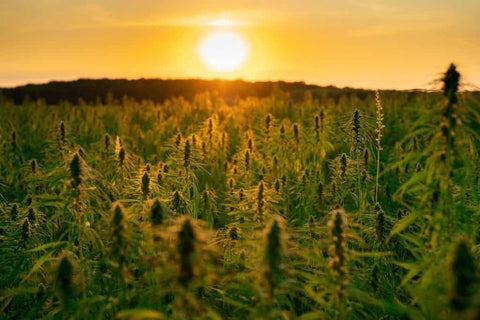
The Impact of the Cannabis Industry on the Environment
The loss of fertile soil and the planet’s biodiversity, along with the disappearance of seeds and indigenous knowledge, pose a mortal threat to our future survival. According to soil scientists, at the current rate of soil destruction (decarbonization, erosion, desertification, chemical pollution), within 50 years, we will not only suffer serious public health consequences due to a decline in food quality—characterized by reduced nutritional value and a loss oftrace elements , but we will literally no longer have enough arable land to feed ourselves.
Unless we protect and restore the soil across our 4 billion hectares of cultivated farmland, 8 billion hectares of pastureland, and 10 billion hectares of forest, it will be impossible to feed the world, keep global warming below 2 degrees Celsius, or halt the loss of biodiversity.
What are the benefits of regenerative agriculture for cannabis growers and consumers?
The cannabis industry is growing, and so is its potential for pollution. Like any other crop, the cultivation of cannabis has an impact on the environment. Regenerative agriculture could be the natural answer to the need for more sustainable cannabis products. Read on to learn how your cannabis cultivation can also be regenerative.
Converting a cannabis crop into a regenerative one requires some effort. Setting up an entirely new regenerative farm requires even more effort. However, regenerative agriculture offers certain benefits that could be properly monetized. Here are the main benefits for consumers of cannabis products derived from regenerative agriculture:
- Improving the flavor of products
- Higher concentration of beneficial compounds
- No chemical residues
- New locally adapted strains and genetic lines
Here are the potential benefits of regenerative agriculture for farmers, citizens, and all other stakeholders:
- Helps restore ecosystems and the natural balance of the soil
- Natural prevention or reduction of pests
- Reducing water consumption
- Reduces energy consumption
- Eliminates chemical fertilizers and pesticides

Can regenerative cannabis farming help combat climate change?
Even though the cannabis industry is only a small part of the larger agricultural market, at the local level, every grower can make small changes to reduce their environmental impact.
Small steps toward a more sustainable cannabis economy have been taken in various parts of the world. In California, a new award has been created to recognize cannabis growers who use regenerative farming techniques: the Regenerative Cannabis Farm Award. More importantly, people are starting to ask where their cannabis comes from and how it is grown.
More and more organic cannabis growers are entering the scene, while millions of people are already growing their own cannabis at home in a sustainable way. The cannabis and hemp industry should adopt regenerative farming practices whenever possible, in order to have a positive impact on both people and the environment. By leading by example, the cannabis industry can lend even more legitimacy to the plant.
How Regenerative Agriculture Can Help Cannabis Growers Improve Their Sustainability
Commercial agriculture and farming practices can be hard on the environment, stripping the soil of its natural nutrients, reducing water retention, destroying symbiotic ecosystems, and ultimately inhibiting plant growth after years of forced, intensive farming. Regenerative agriculture focuses on maintaining and improving soil quality, biodiversity, and crop yields through sustainable planting and harvesting methods.
After a harvest, commercial farmers are forced to restore and repair the soil they have damaged with synthetic fertilizers and chemicals. In regenerative agriculture, every step of the process helps prevent nutrient loss and enhances the soil’s natural ability to support plant life by strengthening the soil network, thereby reducing the need for artificial chemicals and harsh pesticides.
The foundation of regenerative agriculture is to “close the loop,” meaning to try to reuse or recycle resources at as many stages as possible in the cannabis plant’s life cycle .
The initial cost of launching such a system can be high, but its supporters argue that the benefits are worth it in the long run.
For indoor and outdoor growers, this includes:
- The use of living soil that does not require the addition of nutrients.
- Collect wastewater for reuse.
- Reduce energy consumption by using cooler outside air to lower the temperature in an indoor growing facility or greenhouse.
- Implement an integrated pest management system using certain insects, mites, and organisms.
- Use eco-friendly packaging.

Conclusion:
Cannabis’s reputation couldn’t be greener. Not only is it a plant that produces oxygen and absorbs carbon dioxide, but its use in alternative medicine and its hippie ethos are often associated with the environmental movement.
However, cannabis plants consume about twice as much water as corn, soybeans, wheat, and grapes, according to a study published in 2021 in the Journal of Cannabis Research. Furthermore, indoor cultivation requires significant lighting and climate control, making it particularly energy-intensive.
A major part of the industry’s environmental challenge stems from the plant itself: Not only does this sun-loving plant require more light than many other crops, but it is also extremely sensitive to humidity during the final weeks of flowering. This can promote mold growth and necessitates energy-intensive dehumidification systems.