
Table of Contents
The vegetative stage of cannabis
The vegetative phase, or growth period, is a critical stage in cannabis cultivation. It is during this stage that young plants develop their structure, build up their foliage, expand their root system, and store the energy needed to produce abundant, high-quality flowers. When managed properly, this period lays the foundation for a successful harvest, whether grown indoors, outdoors, or in a greenhouse.
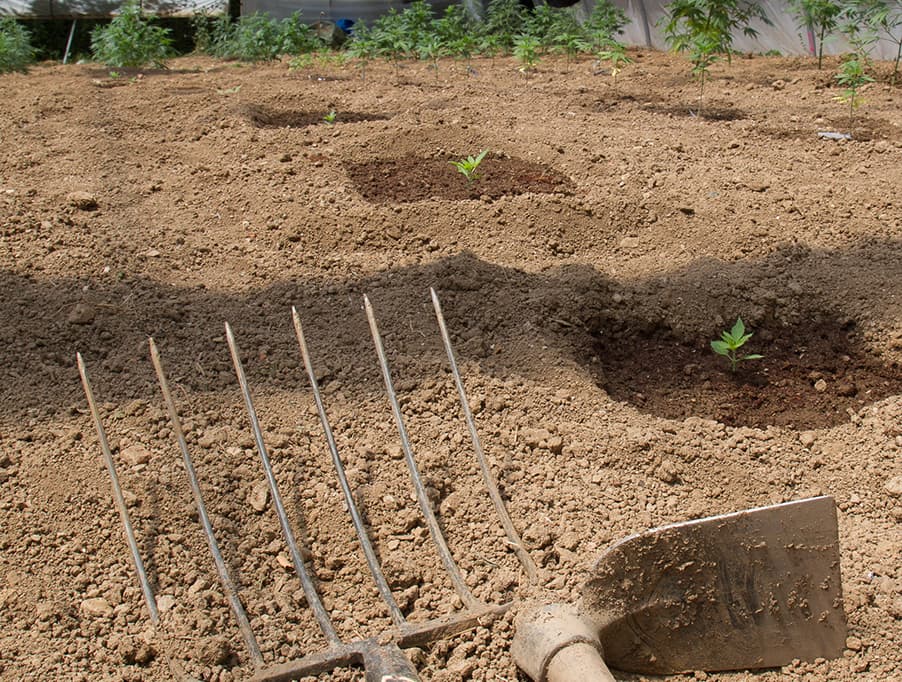
In this comprehensive guide, you’ll learn how to create an optimal growing environment, control growing parameters, and stimulate the growth of your cannabis plants while avoiding the most common mistakes. Simply put, this is the period during which the plant’s structure develops, ensuring it’s in the best possible condition to yield a generous, high-quality harvest. The growth period is therefore crucial for the rest of the process.
What is the vegetative phase?
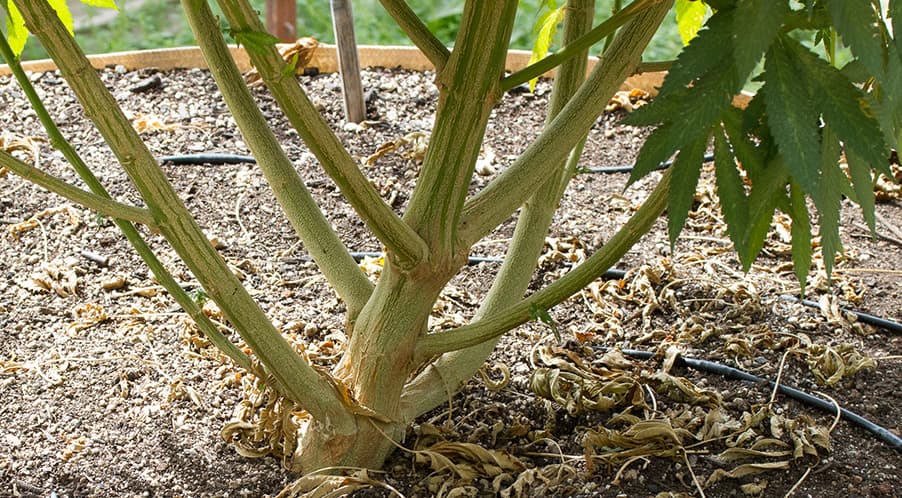
The vegetative phase begins immediately after the initial stages of germination and seedling development. Once the young plants have developed their first true leaves and begin to grow taller, they enter this crucial phase. This cycle can last between 3 and 8 weeks, depending on the grower’s goals, the type of strain (photoperiod or autoflowering), and environmental conditions.
During this period, the plant channels all its energy into producing chlorophyll, stems, leaves, and roots. No buds are visible yet: this is a preparatory phase. Every node, every leaf, and every centimeter of height gained represents a potential future flowering site. The better the plant’s structure, the better equipped it will be to support a large number of flowers .
Why is this phase so important?
The vegetative phase is much more than just a transitional stage. It directly determines your crop’s yield potential. A plant that has had time to fully develop before flowering will have a dense canopy and a vigorous root system, capable of efficiently absorbing water and nutrients.
This is also the only time when it is possible to train and manipulate the plant’s structure without compromising its yield. Trellising, topping, or pruning are best performed during this phase, as the plant then has all the energy it needs to recover from the stress caused by these techniques. Once flowering begins, these interventions become risky.
Create an optimal environment
(photo or illustration of farming equipment)
The success of the vegetative phase depends on controlling several key factors. First, the ideal temperature ranges from 22 to 28°C during the day, with a slight drop at night. In any case, the temperature should not fall below 15 to 16°C indoors at night, as this would cause the plants’ metabolic rates to drop sharply and their growth to slow down drastically.
Relative humidity, on the other hand, should remain between 60 and 70% throughout the entire vegetative period. However, it is best to lower this during the final week of growth, aiming for closer to 60% or lower if possible, before beginning the flowering period. This will help limit conditions conducive to the appearance of certain pests, fungi, or mold.
Regarding lighting, photoperiodic varieties require a constant light cycle of at least 18 hours per day to continue growing. They therefore have a 6-hour dark period as a rest phase. Some crops go up to 20 or even 24 hours of continuous light; this applies to autoflowering varieties.
However, beyond 20 hours of light, numerous tests have shown that such long lighting periods cause stress in cannabis plants. Modern LED lights are well-suited for this phase, as they emit a light spectrum rich in blue— ideal for stimulating vegetative growth—while producing little heat.
Indoors, it is crucial to ensure proper air circulation in order to prevent the formation of hot spots— isolated pockets of air with varying humidity and temperature levels—as well as areas where moisture accumulates, which can lead to mold growth. It is essential to achieve a harmonious, consistent climate by maintaining optimal air quality (air exchange, temperature, and relative humidity) within the space, in order to provide ideal growing conditions for your plants.
To achieve this, you need to equip your garden with high-performance, high-quality air treatment equipment that is suited to the capacity of your growing space. We recommend investing in durable, high-performance equipment that also ensures a certain level of safety for your home.
Here is a list of the main electrical devices and other essential items you’ll need for growing cannabis:
- Air injector
- Air extractor
- Activated carbon filter
- Several fans
- Air conditioning system (optional)
- Climate control and management system
- Humidifier
- Dehumidifier
- LED light(s) (germination/growth/blooming)
- Safe electrical installations and equipment
- Mini greenhouse
- Pots of various sizes for growing (1L, 3L, 4L, etc.)
- Final pots for flowering (7L, 10L, 11L, 15L, 20L, 25L, etc.)
- Light, unfertilized potting mix for the first 3 weeks of growth
- Peat pellets, rock wool cubes, or small pots (for germination/sowing)
- High-quality potting mix for growth and flowering
- A range of high-quality fertilizers, preferably organic or other types (mineral or organo-mineral).
Limitez l’utilisation des traitements chimiques contre les nuisibles et les champignons (pathogènes), privilégiez l’usage des prédateurs et des alternatives biologiques pour lutter contre ces fléaux, pour préserver votre santé et l’environnement.
Limitez l’utilisation des traitements chimiques contre les nuisibles et les champignons (pathogènes), privilégiez l’usage des prédateurs et des alternatives biologiques pour lutter contre ces fléaux, pour préserver votre santé et l’environnement.
Vous avez besoin d’un intracteur d’air pour le renouvellement en air frais, d’un extracteur d’air couplé à un filtre à charbons adapté, pour acheminer l’air vicié vers l’extérieur, tout en filtrant efficacement les odeurs pour l’entourage proche. Vous avez besoin aussi de deux ventilateurs que vous devez placer transversalement dans les deux coins opposés de votre espace de culture au niveau de la canopée pour favoriser un meilleur brassage de part en part.
Il est également nécessaire de mettre un ou plusieurs ventilateurs à hauteur de la canopée, selon la dimension de votre espace de culture, afin de casser la barrière d’air chaud située entre la partie haute de vos plants et la lampe, afin d’éviter d’éventuelles brûlures sur les fleurs les plus hautes.
Il faut aussi mettre un ou plusieurs ventilateurs au sol, afin d’éliminer les poches d’air isolées situées dans les parties basses de la pièce. Un autre point important, encore une fois selon la taille ou configuration de votre espace de culture et le climat de votre zone géographique, il est possible que vous ayez besoin d’un système de climatisation de l’air, afin d’obtenir des valeurs climatiques bénéfiques et plus précises pour le développement optimal de vos plantes de cannabis.
Un appareil électronique pour la gestion du climat, pouvant relever tous les paramètres techniques essentiels, vous est très utile pour une gestion précise de cette partie.
Selon votre région géographique, il est possible que vous ayez besoin d’un humidificateur d’air lors des premières semaines, et que par la suite votre espace de culture trouve ensuite une autre inertie avec la présence des plantes grandissantes lors des prochaines semaines.
Il est également important de vous équiper d’une ou plusieurs lampes à LED de grande qualité, vous garantissant des performances à la hauteur de vos attentes et du travail réalisé, c’est pour cela que l’équipe de SILENT SEEDS vous recommande les systèmes d’éclairage de la marque Suisse F.O.G (Future Of Grow), qui ont été l’objet de nombreux tests par nos équipes et qui offrent des résultats de la meilleure qualité à différents niveaux. F.O.G est une entreprise helvète qui propose des lampes appartenant à un standard de qualité de premier ordre, qui peuvent couvrir toutes les étapes de la culture du cannabis avec brio.
L’utilisation d’un déshumidificateur efficace peut être également nécessaire, surtout pour les 4 dernières semaines qui précèdent la récolte, afin d’éviter d’avoir des pertes importantes qui seraient dûes à l’apparition d’un champignon comme le botrytis, par exemple. Même si cela concerne la floraison, mieux vaut anticiper son achat, car c’est un dispositif qui peut s’avérer très utile à différents moments, notamment si vous résidez dans une région humide.
Cela peut sembler logique, mais il en va sans dire que pour votre propre sécurité et celles de vos voisins, nous vous recommandons fortement de veiller à ce que votre habitation dispose d’une installation électrique sûre avant de débuter votre activité passionnante et divertissante, car sinon vous vous exposeriez à différents risques sécuritaires, qui pourraient entraîner des conséquences graves, tant au niveau de votre intégrité physique que matérielles, pouvant aboutir également vers des poursuites judiciaires plus ou moins lourdes, il vaut mieux savoir les éviter.
C’est la même chose lors de l'acquisition de matériel électrique, pensez investissement sur le long terme et sécurité, en achetant du matériel de bonne qualité vous serez toujours gagnant à la finalité. La sécurité n’a pas de prix !
Vous avez également l’utilité d’acheter une mini-serre pour la réalisation de vos semis, lors des deux premières semaines. Une mini-serre, vous permet d’obtenir facilement les conditions idéales (humidité élevée) pour atteindre votre objectif initial, tout en maîtrisant votre budget.
Nous vous préconisons de porter votre choix préférablement sur un terreau allégé et non fertilisé pour la réalisation de vos semis, car une terre enrichie en fertilisant à ce stade pourrait entraîner des brûlures, voire la perte nette de vos semis. Une fois que vos graines de cannabis auront germées, il est possible que vous souhaitez utiliser des pastilles de tourbes, des cubes de laine de roche, des petits godets ou pots, ou bien des “plugs” ou bouchons neutres de culture, il existe un large choix disponible sur le marché.
Choisir une gamme de fertilisants de qualité est une chose très importante, car de cela va dépendre la qualité et l’origine des nutriments avec lesquels vont être alimentées vos chères plantes de cannabis, c’est pour cela que nous vous recommandons de porter votre choix vers une gamme d’engrais organique.
Il faut garder à l’esprit que vous travaillez quotidiennement au contact des vos plants, et que par la suite vous allez consommer votre récolte, il est donc préférable de nourrir vos plantes avec des éléments naturels sains, pour votre propre santé comme pour la préservation de notre chère planète. Même chose concernant la lutte contre les nuisibles et les éventuels champignons pathogènes, avec un peu de recherche, il existe de nos jours de nombreuses solutions naturelles intégrées très efficaces (prédateurs biologiques, champignons bienfaiteurs, bactéries etc.).
Concernant le terreau, là aussi, il est préférable d’acheter un mélange de terre de bonne qualité, afin que vos plants se sentent bien pour se développer pleinement, avec des éléments tels que de la tourbe blonde, de la perlite ou encore de la sphaigne pour améliorer la capacité en rétention d’eau comme d’aération du sol, ce sont des aspects importants dont il faut tenir compte. Veuillez éviter ces terreaux à bas coûts, pleins de fertilisants chimiques, destinés aux seules fleurs ornementales dont on accorde une seule fonction décorative, n’oubliez pas que vous allez consommer votre récolte en finalité, c’est donc fondamental pour votre santé encore une fois.
Un des éléments les moins chers et qui a pourtant toute son importance à l’heure de la culture, ce sont les pots, qu’ils soient fabriqués à partir de plastique, en tissu géotextile ou bien en terre cuite, il en existe une très grande diversité de modèles différents sur le marché, selon vos besoins. Les pots en plastique sont certainement les plus utilisés pour l’activité qui nous concerne, certainement pour leur prix, leur résistance et le très large choix de modèles disponibles également.
Les pots en toile géotextile sont certainement ceux offrant les meilleures performances, car ils offrent une grande capacité d’aération/oxygénation, qui permet d’optimiser et d'accélérer les métabolismes de la plante. Les pots en terre cuite, plus traditionnels, ont tendance à disparaître, certainement à cause de leur poids et de leur fragilité, et qu’il existe un choix assez étroit de modèles également.
Watering and Fertilization During Growth
(photo or illustration illustrating watering)
Watering requires special attention during the vegetative phase. Too much water can suffocate the roots and cause rot, while insufficient watering can stunt growth. A good rule of thumb is to water when the top few centimeters of the soil feel dry to the touch.
Here’s a simple tip that works well: weigh your pot by hand after watering the plant, and then do the same with a plant that hasn’t been watered yet—either with a pot of exactly the same size, or with the same plant the next day. In no time, by repeating this process several times in a row, you’ll easily get a feel for it and quickly sense your plants’ water needs naturally.
All experienced growers use this method; it’s far more reliable than any technical device. The only drawback is the number of plants you’ll need to water; obviously, if the volume to be managed is too large, you’ll need an automated irrigation system, etc.—this applies particularly to production on a certain scale.
Choosing clean water with a pH adjusted between 6.0 and 6.5 is also essential to ensure optimal nutrient absorption. The plant’s nutritional needs change at this stage. Nitrogen becomes the key element, as it supports chlorophyll production and stimulates leaf growth. A fertilizer suitable for the vegetative phase, with an NPK ratio close to 3-1-1, is recommended.
However, dosage must be approached with caution. Too much fertilizer can cause an excess of salts in the soil and burn the roots. It is necessary to be vigilant and cautious, as many cannabis strains have different needs. It is better to fertilize lightly but regularly, rather than overloading the soil all at once. Look for reliable information on this subject.
Training and shaping plants
(photos and illustrations of the different methods)
The vegetative phase is the ideal time to shape the structure of your cannabis plants. There are various pruning, trellising, and bending techniques that, depending on the strain being grown, can optimize yield and thus maximize your harvest. Be careful, however, as differences can arise from one method to another when applied to the same strain.
Additionally, it’s important to know that all cannabis strains have different tolerances or reactions when these various cultivation techniques are used; this is why we always recommend first testing them on a single plant to verify whether they are beneficial for the specific strain in question.
SOG or Sea of Green
The " sea of green" growing method simply involves growing a large number of cannabis plants that are induced to flower at an early stage, following a very short growth period (1 to 2 weeks for clones or autoflowering strains, and 3 to 4 weeks for feminized photoperiod seeds).
Generally speaking, growers using this method employ pots ranging in size from 3 to 5 liters maximum, in order to effectively limit the size of the plants. Pot size and limited growth time are the two factors that enable perfect management of this specific cultivation technique, which aims to optimize your final harvest yield in a limited growing space. The concept is to grow as many plants as possible in a small space.
SCROG or Screen of Green
The Screen of Green (SCROG) growing method involves placing a laminated grid (typically 10x10 cm) in the middle of the growth period, so that the various branches of a single plant can be easily worked on and bent.
To put it simply, to use the SCROG method, you just need to secure each branch to the grid so that all the branches—and especially the buds— receive the same amount of light by being positioned at exactly the same height. A SCROG setup looks a bit like a horizontal green carpet.
The major benefit of the SCROG growing method is that it controls and standardizes plant height, ensuring that all exposed parts receive an equal amount of light. It is clearly a growing method that allows all growers to significantly optimize both the quality and final yield of their harvest. SCROG is fairly easy to set up and allows you to achieve superb results; however, you must position the mesh at the right time, otherwise you risk damaging your precious cannabis plants.
Topping
Topping is a technique that involves pruning a shoot from the stem. As a result, the plant directs its energy toward the next two shoots. First, the central stem is topped, which causes the secondary stems to grow by triggering a compensatory response specifically in that area.
FIM or Fuck, I Missed It
The FIM pruning method—which stands for “Fuck It, I Forgot!”—was discovered by accident by a grower who simply forgot to perform the necessary steps at the right time. This method allows for better control over the plant’s size and promotes more uniform growth throughout the plant, particularly in the secondary branches, to compensate for the absence of a central stem. We recommend topping and FIM no more than three times per cycle to avoid putting excessive stress on the plants.
Super Cropping
Super Cropping is an aggressive pruning technique for cannabis plants, as it places significant stress on each plant; it is quite similar to the first two techniques described above. The concept, in broad terms, is to divert energy from the main stem to the secondary branches, with the ultimate goal of maximizing the production of main buds.
However, this does not involve cutting the main stem, but rather pinching the stem firmly between the fingers to cleanly break the fibers inside without damaging the outer layers. The initial result may show one or more drooping branches, but subsequently, the natural stimulation of the plant’s growth hormones (auxins and cytokinins) typically leads to a potential increase in final yield.
LST (Low Stress Training)
LST, or Low-Stress Training, is based on the idea of forcing the central stem to grow horizontally rather than vertically. The main stem is then laid flat parallel to the ground and held in this position with ties. As a natural consequence, the plant is then forced to continue growing close to the ground.
As a result, the lower branches receive an abundant amount of light, which ultimately encourages them to grow toward the light. LST is clearly a gentle training method that causes little stress to cannabis plants in general. The major benefit for the plant is the high exposure of all its parts to light, which ultimately leads to a significant improvement in flower production.
Pruning of lower branches
Pruning the lower branches of your plants has the benefit of drastically improving flower and resin trichome production on the upper parts of the plants, ultimately resulting in a more consistent final yield with larger, more compact, and therefore heavier buds. Perform this at least 2 weeks before the plants enter the flowering stage.
This pruning method allows you to effectively reduce the production of small buds, which were unable to develop further due to a lack of light because they were too far from it. Pruning the lower branches therefore offers the possibility of optimizing both the quality and quantity of your harvest—results guaranteed.
Extreme defoliation or "Schwazzing"
Extreme defoliation, also known as “Schwazzing” in the U.S., simply involves stripping a plant of most of its leaves. This practice effectively stimulates both lower and upper growth hormones, though the results vary depending on the cultivar.
It is a method that can work, yet many people have moved away from it because the vast majority of growers have realized that results vary significantly from one strain to another. Some cannabis strains show excellent results, while others exhibit genetic mutations, significant slowdowns in their development even after recovering from the stress, and may even become hermaphroditic plants in some cases.
Extreme defoliation generally yields the best results on stable cannabis hybrids and the greatest intolerance on modern polyhybrids, but there are exceptions, which is why conducting small-scale tests is necessary.
It is important to give the plant time to recover after each intervention or application of any of the growing methods mentioned above.
If you use a trellising method, do not trigger flowering immediately: wait until the plant regains its vigor, usually between 3 and 6 days later. This ensures better structure and more abundant flowering. It is essential to keep this in mind to see the beneficial effects.
Indoor, outdoor, or greenhouse growing: what are the differences?
(photo, illustration, or symbols representing indoor, outdoor, or greenhouse settings)
Indoor growing offers complete and precise control over environmental conditions. Temperature , humidity, and photoperiod—everything can be adjusted as needed to maximize growth. However, it requires a greater investment in equipment and energy.
Outdoors, the plant follows the natural rhythm of the seasons. The vegetative phase begins in the spring and continues until daylight hours naturally shorten in late summer. It is therefore crucial to start early—ideally in April or May—to allow for sufficient growth before flowering. Sun exposure, inclement weather, and pests are factors that require close monitoring.
Greenhouse cultivation combines the advantages of both systems. It allows growers to make use of natural light while protecting plants from extreme conditions. With a greenhouse equipped with supplemental lighting and ventilation systems, it is even possible to extend or shorten the vegetative phase as desired.
Final tips for successful vegetative growth
Regular observation is your best ally; try to notice any small changes or developments in your plants, as well as in your equipment. A plant that turns yellow, wilts, or becomes stunted is showing signs of stress or a deficiency. Adjust your parameters gradually, without making sudden changes. Check the soil pH regularly, monitor the roots if you suspect overwatering, and watch for signs of pest infestations and the appearance of any fungi.
Don’t forget the importance of space, either. Plants that are too close together will shade each other, limiting their growth. That’s why it’s best to determine the optimal capacity of your space in terms of the number of plants you can grow, because sometimes more is less—and therefore counterproductive. If you use methods like SOG (Sea of Green) or SCROG (Screen of Green), be sure to carefully plan the layout of your plants according to your growing area.
Always keep your growing space perfectly clean; this protects you from many problems related to pathogens and pests. Try to be precise in all your actions, taking the right steps at the right time. To become an expert grower, you must be in harmony with your plants, have a keen sense to quickly sense their needs, and promptly detect any abnormalities. It’s also important to keep in mind that it’s the management of a multitude of details that gives you a competitive edge and ultimately leads you to excellence.
The vegetative stage of cannabis is the foundation upon which your entire harvest depends. A plant that is well-nourished, well-lit, properly watered, and well-trained during this period will be much better equipped to produce abundant, high-quality flowers. By understanding your plants’ specific needs at this stage, you’ll be one step ahead in ensuring the success of your grow.